Your machine isn't the problem. The bean is. Selecting premium espresso beans is a roaster's promise of balance. It's a commitment to a profile that withstands pressure. It's the foundation of a syrupy extraction. You want consistency. You want a morning ritual that works every time. Since 1999, we've mastered the craft of the artisan roast. We know what it takes to bridge the gap between a home kitchen and a professional cafe experience.
It's easy to feel lost in a sea of roast dates and complex terminology. You've likely experienced the disappointment of a shot that's too sour or lacks body. We'll change that. This guide provides the expertise needed to select and brew beans for a superior result. We'll cover the 2026 SCA standards, the difference between blends and single origins, and how to identify peak freshness. You'll learn to pull shots with thick crema and refined flavour. Your journey to mastery starts here.
Key Takeaways
- Understand that "espresso" defines a specific roast profile engineered for high-pressure extraction, not a separate plant species.
- Master the choice between consistent house blends for a reliable daily cup and the unique, seasonal profiles of single origin coffees.
- Learn to select premium espresso beans by matching tasting notes and body to your preferred milk-based or black coffee ritual.
- Recognise the importance of the "resting" period to ensure your beans have degassed for a syrupy, balanced extraction.
- Implement professional standards for freshness by prioritising specific roast dates over arbitrary best-before labels.
What are Espresso Beans? Defining the Artisan Standard
Any coffee bean can be an espresso bean. Technically. But the label on a bag represents a roaster’s specific intent. It signals a development profile designed to withstand nine bars of pressure. We select espresso beans based on their ability to shine in a concentrated 30ml shot. This isn't a different plant species. It's a different philosophy. We choose beans that offer structural integrity under stress. The aim is a syrupy texture that holds its own when paired with milk.
Extraction happens quickly. Usually in under 30 seconds. This requires the bean to be more soluble than a light filter roast. We push the development slightly further in the drum to ensure the water can pull out sugars and oils effectively. Without this extra development, the shot tastes thin, sour, or grassy. The goal is a perfect equilibrium. We balance bright acidity with deep sweetness and a clean finish. It’s about creating a profile that tastes as good in a classic flat white as it does in a short black. The 2026 SCA standards reinforce this, emphasising precise extraction ratios and water chemistry to achieve this balance.
Arabica vs Robusta in the Espresso Context
Specialty roasters in Australia almost exclusively use 100% Arabica. It's about quality. High-altitude Arabica offers complex sugars and refined acidity. Old-school blends often used Robusta to create thick, rubbery crema. We've moved past that. The modern artisan standard prioritises a cleaner cup. We want the nuanced notes of stone fruit or cocoa. We avoid the woody harshness of low-grade fillers. Arabica provides the elegance that defines a premium home brew. This commitment to quality remains even as global market prices fluctuate.
The Anatomy of an Espresso Roast
Roasting is a precise science. The Maillard reaction is the hero here. This chemical process develops the browning. It creates those sought-after chocolate and caramel notes. In the specialty world, a "Dark Roast" is never an excuse for a "Burnt" bean. We aim for a rich profile that remains inherently sweet. Carbonised beans are a failure of the craft. Solubility is the final metric. A well-developed bean allows your machine to extract flavour without a struggle. It makes the craft of the perfect shot accessible for your morning ritual. Consistency is the hallmark of our process. Every roast is a commitment to that standard. We focus on the mastery of the product.
The Roaster’s Dilemma: Espresso Blends vs Single Origins
The choice between a blend and a single origin is the first decision in your daily ritual. Blends represent the roaster’s signature. They are a deliberate combination of origins. We use them to achieve a specific profile that a single farm cannot provide alone. This is where the artisan’s hand is most visible. It's about balance. It's about reliability. While the previous section established that any bean can be roasted for espresso, the blend is where we engineer that roast for absolute consistency.
Why Blends Rule the Australian Cafe Scene
Australia has a unique coffee culture. We love milk-based drinks. A flat white needs a specific foundation. Blends provide the necessary body. They cut through the sweetness of the milk without losing their character. We often use a Brazilian base for chocolate and nuttiness. Then we add a bright Ethiopian or Colombian highlight for complexity. This ensures your espresso beans deliver the same flavour in January as they do in July. Consistency is our standard. It's why we've focused on perfecting wholesale-grade espresso blends since 1999. A well-crafted blend is a reliable partner for your morning routine.
Exploring Single Origin Espresso
Single origins are a different pursuit. They are a snapshot of a specific time and place. You taste the soil. You taste the altitude. These beans are best enjoyed as short blacks or long blacks. Milk can often mask the delicate floral or fruity notes that make these coffees special. However, they can be challenging. They are seasonal. The profile shifts as new harvests arrive. You might find intense acidity or vibrant citrus notes. It’s an exploration for the curious palate. It requires a willingness to adjust your grinder as the bean evolves.
Stability versus discovery. That is the trade-off. A blend is a promise of a familiar, high-quality cup. A single origin is a seasonal guest with a unique story to tell. Both have a place on your bench. The key is knowing which one matches your mood and your machine’s capabilities. Whether you choose a blend or a single origin, the quality of your espresso beans remains the most critical factor in your home brew. We prioritise the mastery of the roast to ensure both options meet the premium standards our customers expect.
Choosing the Best Coffee Beans for Your Daily Ritual
Selecting the right espresso beans is not just about quality. It's about context. Your morning ritual dictates your selection. A flat white drinker requires a different profile than a short black enthusiast. Start by assessing your standard order. The interaction between coffee and milk is a science of balance. The interaction between coffee and water is a pursuit of clarity. We've refined our roasting process since 1999 to cater to both paths. We focus on the mastery of the roast to ensure your choice leads to a superior result.
The Milk-Based Framework (Flat Whites, Lattes, Cappuccinos)
Australians have a well-documented preference for milk-based espresso. The flat white is our benchmark. For these drinks, the coffee must have structural integrity. We recommend espresso beans with a medium-dark roast profile. This ensures the coffee isn't lost in the milk. Look for tasting notes like caramel, cocoa, and toasted nuts. These flavours complement the natural sweetness of steamed milk. Avoid high-acidity beans for these drinks. Intense citrus notes can often make milk taste sour or "off" rather than vibrant. You want a syrupy base that creates a rich, cohesive cup. It's about achieving a heavy body that persists through the last sip.
The Black Coffee Framework (Short Blacks, Long Blacks)
Short blacks and long blacks offer no place to hide. Clarity of flavour is the priority here. You are looking for the pure expression of the bean. Medium roasts are often the superior choice for black coffee drinkers. They preserve the delicate fruit, floral, and citrus notes that a darker roast might mask. Focus on the finish. A premium artisan roast should be clean. It should never leave an ashy or smoky aftertaste. This is where you can explore the nuances of stone fruit, berry, or jasmine. It's an opportunity to appreciate the meticulous work of the producer and the roaster in a concentrated format.
Your equipment also plays a role. A high-quality burr grinder is essential for exploring lighter specialty roasts. These beans are denser. They require precision to dial in correctly. If your home setup is more modest, a traditional espresso roast is often more forgiving. It’s easier to achieve a consistent extraction every morning. Price is a reflection of this craft. Investing in specialty-grade beans ensures fewer defects and higher sweetness. It transforms a simple caffeine hit into a premium experience. Quality is a choice. Mastery is the result. We provide the foundation for that success.
Freshness and the "Roast Date" Rule
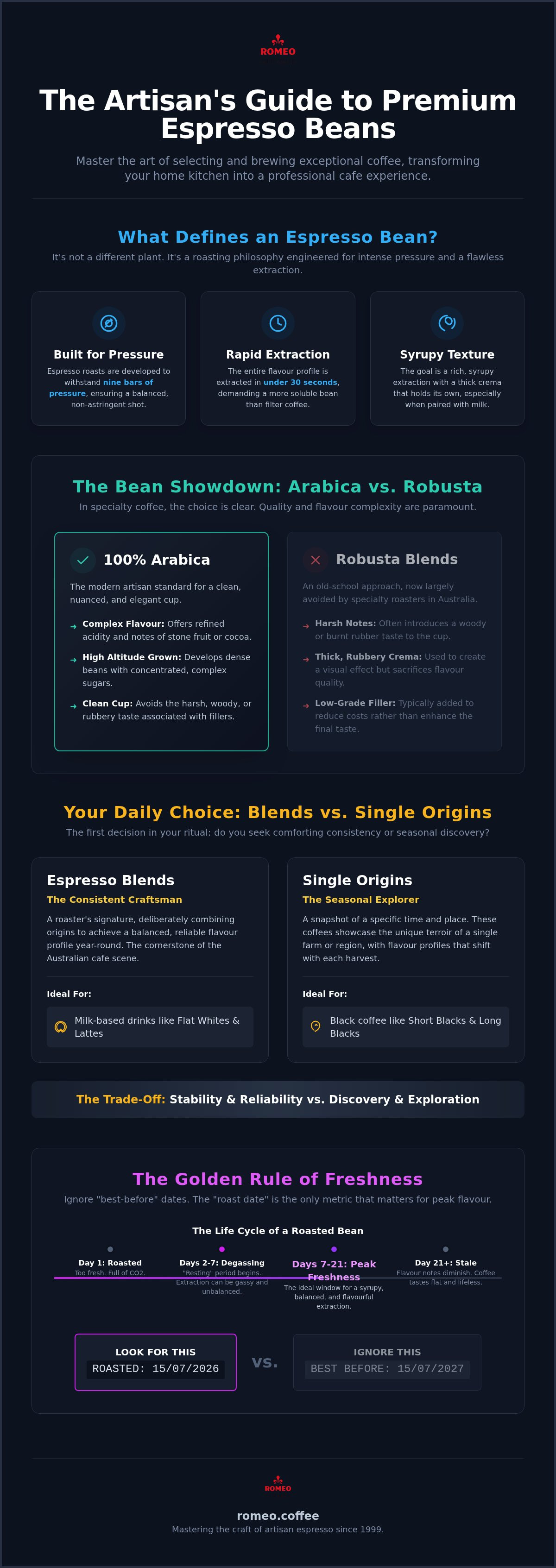
"Fresher is better" is a common misconception. In the specialty world, "Day 1" coffee is a liability. Espresso requires patience. It needs time to settle. We call this the "resting" period. Without it, your espresso beans will behave unpredictably. They will resist extraction. The result is often a shot that lacks sweetness and depth. We've seen this mistake often since 1999. Patience is a component of the craft.
Understanding Degassing
During roasting, CO2 builds up inside the bean. This gas is vital for crema. But too much of it is problematic. It creates physical resistance to water. If your beans are too fresh, you'll see the "volcano" effect. The coffee bed expands rapidly in the basket. The shot runs fast and uneven. It tastes thin and metallic. For a syrupy extraction, the gas must escape. This is degassing. Most artisans recommend waiting at least 7 days post-roast. The sweet spot for peak flavour usually falls between 14 and 21 days. An authoritative tip: write the "open date" on your bag. It helps you track the bean's evolution after the seal is broken. Proper degassing ensures the solubility we discussed in earlier sections is fully realised.
Airtight Storage: Myths vs Reality
Oxygen is the enemy of flavour. Heat and light follow closely. Many home brewers mistakenly use the fridge or freezer. This is a mistake. It introduces moisture. It kills the volatile aromatics that define premium coffee. Your beans should live in a cool, dark cupboard. Use an airtight container. Specialty bags usually feature a one-way valve. This allows CO2 to escape without letting oxygen in. It is a simple but essential piece of technology. Store your beans in a cool, dark cupboard in an airtight container to preserve volatile aromatics. This protects the meticulous development of the roast.
Consistency starts with the roast date. We ensure every bag reflects our decades of experience in the Australian market. You deserve a predictable morning ritual. Experience the difference of meticulously rested coffee. Buy premium espresso beans directly from our Melbourne roastery. We prioritise the mastery of the product so you can focus on the mastery of the shot. Quality is never an accident. It is the result of high standards and disciplined storage.
Romeo Coffee Roaster: Premium Espresso Beans Since 1999
Romeo Coffee Roaster has been a fixture in the Australian specialty landscape since 1999. We don't follow trends. We set standards. Our heritage is built on a simple premise: consistency is the ultimate expression of craft. While others chase fleeting industry buzzwords, we focus on the mastery of the roast. This long-term perspective allows us to deliver espresso beans that perform reliably in your kitchen, day after day. We've spent over 25 years refining our process. It is a discipline of small-batch roasting and meticulous quality control. Every batch is a testament to our history. Every bag is a promise of quality.
The Romeo Coffee Roaster Difference: Craft Over Hype
Heritage matters. In a market crowded with new roasters, our experience since the late 90s provides a foundation of certainty. We source only specialty-grade Arabica. This is a non-negotiable standard. Each origin is selected for its specific contribution to the final cup. We look for clarity. We look for sweetness. We look for the structural integrity required for high-pressure extraction. Romeo Coffee Roaster provides wholesale-grade quality directly to the home consumer. This ensures your daily ritual is supported by professional-standard ingredients. We don't rely on flashy packaging. We rely on the quality of the bean.
Bringing the Cafe Experience Home
A great home brew shouldn't be a matter of luck. It should be a predictable outcome of quality inputs. Our espresso beans are engineered specifically for the home environment. We understand the nuances of domestic grinders and machines. We've adjusted our development profiles to ensure our blends remain forgiving yet sophisticated. This is more than a transaction. It is a partnership in craft. We provide the beans. You provide the technique. Together, we achieve a cafe-quality result in a domestic setting. We bridge the gap between the professional barista and the home enthusiast. Our expertise becomes your advantage.
Our curated selection is designed for those who value tradition and excellence. Whether you prefer a rich, chocolate-driven blend for your flat white or a vibrant single origin for a short black, the standard remains unchanged. We bring decades of expertise to every bag. It is a commitment to the Australian coffee culture we helped build. We focus on the mastery of the product so you can enjoy the mastery of the shot. Experience the reliability of a roaster that has stood the test of time. Experience the quiet authority of Romeo Coffee Roaster espresso beans.
Elevate Your Home Extraction
The path to a cafe-quality shot is defined by precision. It begins with the bean. You now understand the necessity of the resting period and how roast development influences solubility. Selecting premium espresso beans is no longer a matter of chance. It is a deliberate choice. You have the framework to match your selection to your morning ritual. Whether you prefer the structural integrity of a house blend or the seasonal vibrance of a single origin, the standard remains the same. Mastery is the result of disciplined selection and high standards.
Romeo Coffee Roaster has been perfecting this craft since 1999. We prioritise specialty grade Arabica. We focus on consistency. Our team provides wholesale-grade quality for the home enthusiast, ensuring your equipment has a partner that values craft as much as you do. We offer national shipping across Australia to bring this artisan standard to your door. Shop our curated range of artisan espresso beans and refine your daily ritual. The perfect shot is within reach. It is time to stop settling for inconsistent results and embrace the artisan standard.
Frequently Asked Questions
What is the difference between espresso beans and regular coffee beans?
Espresso beans aren't a different species. They represent a roaster's commitment to solubility and balance under pressure. We roast them slightly longer than filter beans to develop sugars that withstand fast, high-pressure extraction. This ensures a syrupy body rather than a thin, acidic cup. It is about the artisan’s intent to create a profile that shines in a concentrated 30ml shot.
Can I use any coffee beans in my espresso machine?
You can. However, filter-roasted beans often lack the development needed for high-pressure extraction. They may taste grassy or overly sharp in the cup. Premium espresso beans are specifically engineered to provide a balanced result in a short timeframe. Using the right roast level reduces the struggle of dialling in your machine and ensures a consistent, high-quality morning ritual.
How long do espresso beans stay fresh after the bag is opened?
Oxygen begins degrading flavour immediately once the seal is broken. For the best experience, consume your beans within two to three weeks of opening. Store them in an airtight container in a cool, dark place. Avoid the fridge. Moisture and kitchen odours will compromise the delicate oils. Consistency in storage is as important as the quality of the artisan roast itself.
Is a single origin or a blend better for an espresso-based latte?
Blends are generally superior for milk-based drinks like lattes or flat whites. They provide the necessary body to cut through the sweetness of the milk. A single origin may lose its nuance or taste sour when diluted. Our blends are crafted to offer reliable notes of chocolate and caramel that persist through the last sip of your daily latte.
Why does my espresso taste sour even with premium beans?
Sourness is usually a sign of under-extraction. Even with premium espresso beans, a shot can fail if the water doesn't pull enough flavour. Check your grind size. It may be too coarse. Alternatively, your water temperature might be too low. Aim for the 2026 SCA standard of 90 to 96 degrees Celsius to ensure a balanced, sweet extraction without the sharp acidity.
Should I buy whole beans or pre-ground coffee for espresso?
Whole beans are the only choice for the serious home barista. Ground coffee has a massive surface area exposed to oxygen. It goes stale in minutes. Grinding fresh ensures the volatile aromatics and oils are captured in the cup. It allows you to adjust the grind size to match the specific needs of your machine and the age of the bean.
How much caffeine is in a standard double shot of espresso?
A standard double shot typically contains between 120 and 150 milligrams of caffeine. This varies based on the bean variety and the extraction yield. While Arabica generally has less caffeine than Robusta, the concentration of an espresso shot provides a significant impact. It is a potent delivery of flavour and energy designed for the sophisticated daily ritual.
What are the best coffee beans for a rich crema?
Freshness and roast level are the primary drivers of crema. Beans roasted between 7 and 21 days ago provide the ideal amount of CO2 for a thick, golden layer. Medium-dark roasts often produce more visible crema due to the oils developed during the Maillard reaction. High-quality Arabica delivers a fine-textured crema that indicates a well-executed extraction and superior roasting standards.