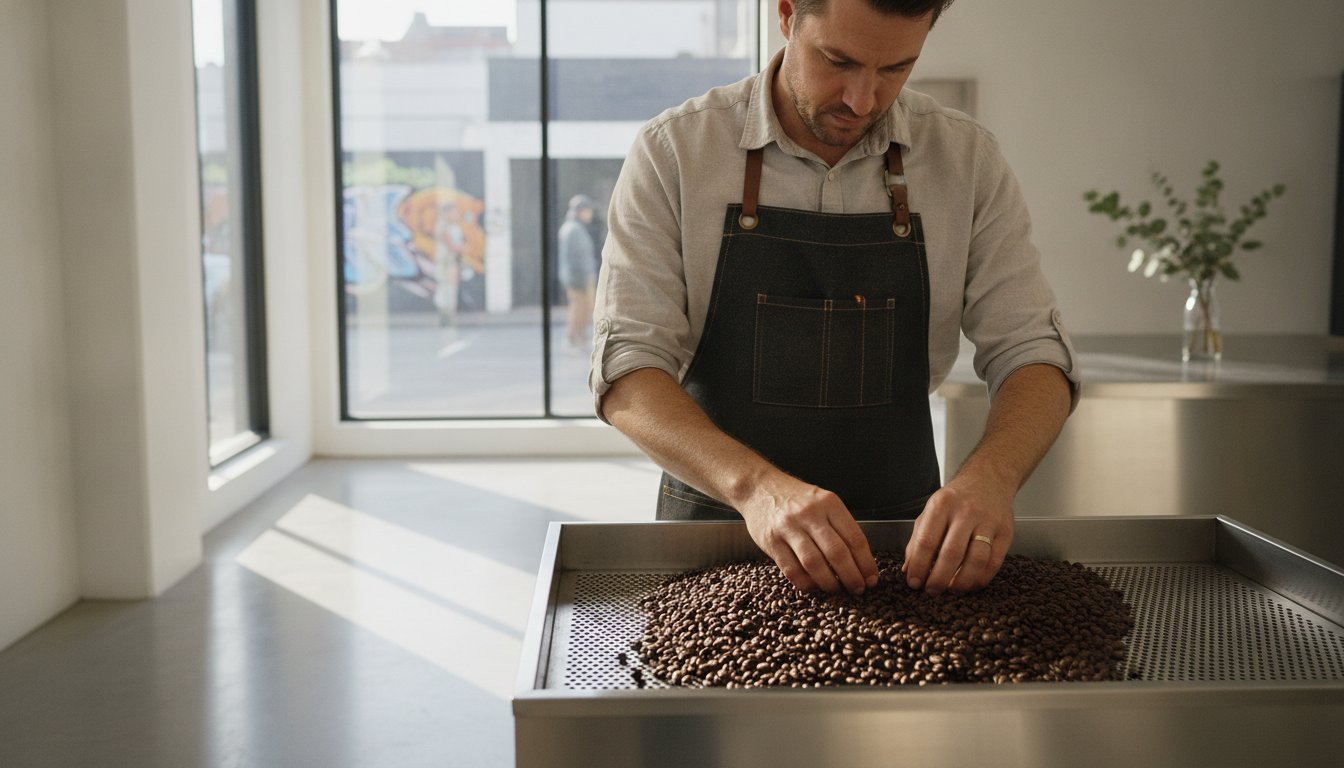
What if the 'premium' label on your coffee bag is little more than a marketing suggestion? Australians drink 16 million cups every single day. Yet many still struggle with inconsistent flavours and confusing industry jargon. You know the frustration of a bitter, flat brew despite the 'Single Origin' tag. It's a lack of transparency that stops you from enjoying the best. True specialized coffee is different. It's a measurable standard of excellence from soil to cup. This guide will help you master that standard with confidence. Drawing on decades of roasting experience, we'll demystify the rigorous SCA grading system and the ethics behind every bean. We'll show you how to identify complex flavour profiles and avoid the pitfalls of supermarket blends. By the end, you'll know exactly how to find a reliable Australian roaster for a consistent supply. Quality isn't a mystery. It's a craft. Let's explore the standards that define excellence.
Key Takeaways
- Identify the technical standards of specialized coffee by understanding the SCA grading system and the 80-point threshold for excellence.
- Discern the impact of small-batch roasting and the Maillard reaction on preserving the flavour integrity of every bean.
- Choose with confidence between the balanced consistency of espresso blends and the distinct terroir of single origin coffees.
- Elevate your home ritual by mastering the critical roles of grind precision and water quality in the brewing process.
- Connect with a legacy of Australian craftsmanship that has defined premium roasting standards since 1999.
Beyond the Tin: What Defines Specialized Coffee?
Excellence isn't an accident. In the world of premium beans, it's a measurable standard. Most Australians are familiar with the convenient tins found on supermarket shelves. This is commodity coffee. It's mass-produced for volume, not character. specialized coffee sits at the opposite end of the spectrum. It represents the top tier of global production. In the local market, you'll often hear the terms 'specialized' and 'specialty' used interchangeably. Both refer to a commitment to quality that begins at the farm and ends in your cup. It's about precision. It's about craft.
The difference lies in the process. Commodity coffee relies on consistency through blending away defects. Artisan-roasted beans celebrate unique characteristics. This shift from bulk buying to a focus on the individual lot has redefined the Australian coffee landscape. We don't just want caffeine. We want a narrative of quality and ethical sourcing.
The 100-Point Quality Scale
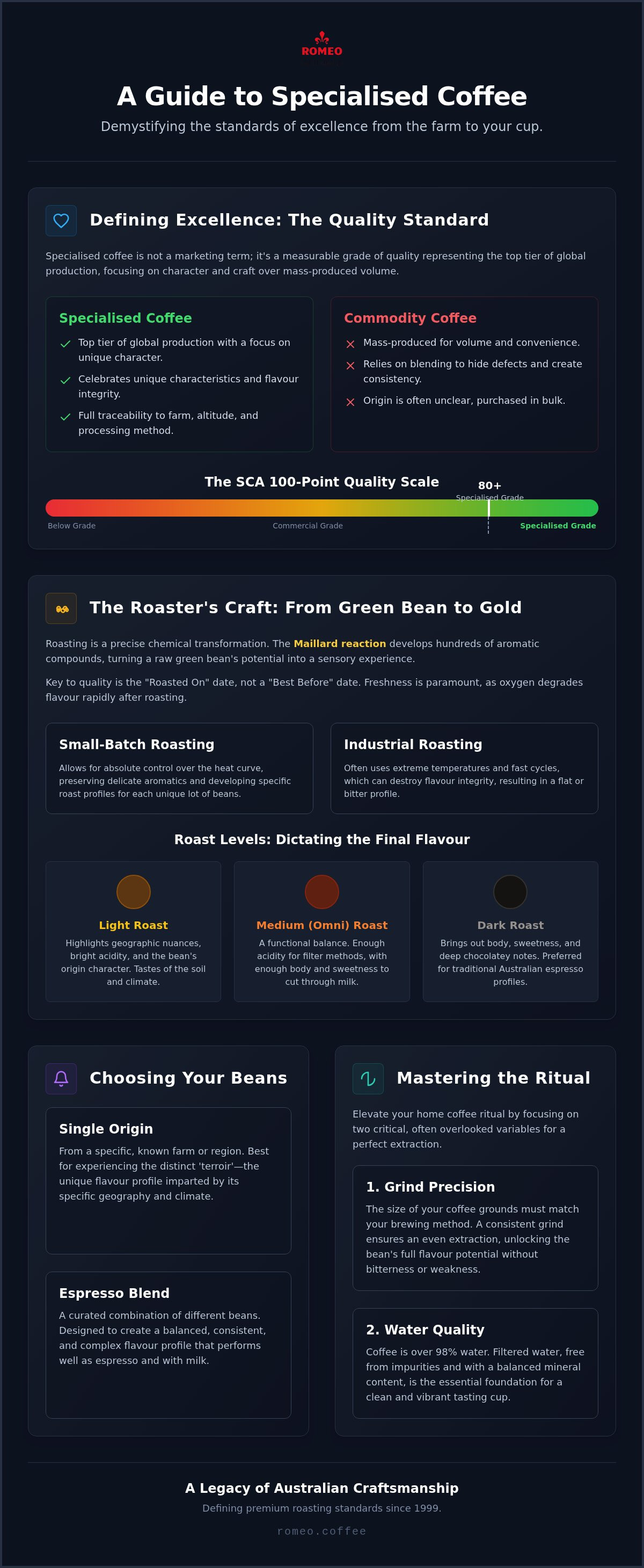
To understand the technical side, one must look at the grading system. Professional evaluators, known as Q-graders, assess every batch. They analyse sensory attributes including aroma, flavour, acidity, and body. This isn't a matter of opinion. It's a rigorous, standardised audit of the bean's potential. To understand the history and global context of these standards, many look to the foundations of What is Specialty Coffee? to see how the industry evolved. A coffee achieves specialty status only when it secures a score of 80 points or higher on the standardised 100-point scale. This high bar ensures that only the most exceptional crops earn the label of specialized coffee.
Traceability and the Producer Relationship
Transparency is the hallmark of the premium sector. Knowing the specific farm, altitude, and processing method isn't just for enthusiasts. It's the key to flavour consistency. When we move away from bulk purchasing toward direct-trade models, everyone wins. The Australian consumer receives a superior product with a clear origin. The global farmer receives fairer compensation for their labour and expertise. This relationship fosters a sustainable cycle of excellence. It ensures that the high standards we've upheld since 1999 continue to thrive. Traceability isn't a trend. It's the foundation of trust between the roaster and the drinker.
The Roasting Process: Transforming Green Beans into Gold
Roasting is where potential meets precision. It is a complex chemical transformation. The Maillard reaction is central to this stage. It occurs when heat triggers a reaction between amino acids and reducing sugars. This process creates the hundreds of aromatic compounds we associate with a premium cup. For specialized coffee, this stage is critical. We don't just apply heat; we curate a sensory experience. Every bean has a story. Our job is to tell it clearly.
Small-batch roasting is non-negotiable for quality. It allows for absolute control over the heat curve. Large-scale industrial roasting often relies on extreme temperatures and fast cycles. This approach destroys delicate aromatics and results in a flat, bitter profile. Artisan roasters focus on the integrity of the bean. We develop specific roast profiles for every individual lot. This high-level control is vital for producing specialized coffee that stands out in a crowded market. It ensures the final product reflects its unique origin.
Freshness is the ultimate metric of quality. Forget "best before" dates. Look for the "roasted on" date on your packaging. Coffee begins to degrade the moment it leaves the roaster. Oxygen is the primary enemy of flavour. Peak vibrancy usually occurs within a specific window of time. To experience this level of precision, you can explore our range of artisan espresso beans. We roast to order to ensure you receive the product at its peak.
Light vs. Dark Roast: Preserving Origin Character
Roasting levels dictate the final sensory experience. Light roasts are analytical. They highlight the geographic nuances and acidity of the bean. You taste the soil, the altitude, and the climate. Darker roasts are structural. They are often preferred for traditional Australian espresso profiles. These bring out body, sweetness, and deep chocolate notes. The medium "omni-roast" seeks a functional balance. It offers enough acidity for filter methods and enough body to cut through milk.
Consistency Through Craft
Achieving consistency is the roaster's greatest challenge. We use advanced software to track every second of the roast cycle. Yet, technology is only a tool. The master roaster uses sensory skills to make real-time adjustments based on the beans' behaviour. This expertise is guided by standards from the Specialty Coffee Association. Seasonal changes also play a role. As an agricultural product, bean availability and moisture content shift throughout the year. We must adapt our profiles constantly to maintain a consistent flavour. After roasting, a 24-hour resting period is essential to allow the beans to degas and stabilise.
Espresso vs. Single Origin: Which Should You Choose?
Deciding between an espresso blend and a single origin isn't a matter of quality. It's a matter of intent. specialized coffee encompasses both categories with equal rigour. An espresso blend is a deliberate construction. It's designed for balance. It's built to interact with milk perfectly. Conversely, a single origin is a snapshot. It comes from one specific farm or region. It showcases a unique terroir. Your choice depends on how you drink your coffee. It depends on what you value in your daily ritual. Both paths lead to excellence.
A common misconception suggests that blends are a way to hide inferior beans. This couldn't be further from the truth in the artisan sector. Every component must meet high standards to contribute to the final profile. Recent UC Davis Coffee Center research highlights how even minor defects in green beans can compromise the entire batch. A master roaster selects each origin in a blend with purpose. They seek a synergy that a single bean cannot achieve alone. It's about creating a whole that's greater than the sum of its parts.
The Anatomy of a Premium Espresso Blend
Blends are the backbone of the Australian cafe industry. They offer reliability. A roaster combines beans from different regions to create a complex, multi-layered profile. One bean might provide a chocolatey base. Another adds a touch of citrus acidity. A third contributes a syrupy mouthfeel. The goal is a signature profile that tastes the same in January as it does in June. This consistency is vital for wholesale supply. It's why your local cafe can deliver that familiar, comforting flat white every day. It's a testament to the roaster's palate and technical skill. A great blend is a masterpiece of calibration.
Single Origin: A Journey of Geographic Flavour
Single origin beans are for those who seek adventure. They offer a direct connection to the land. You'll experience the vibrant, floral notes of an Ethiopian lot. Or perhaps the heavy, nutty body of a crop from Brazil. These beans are seasonal. They are often limited-edition harvests. Because their flavours are so distinct, they're best enjoyed as black coffee. A filter brew or a long black allows the nuances to shine without being masked by milk. Choosing a single origin means embracing variety. It means exploring the diverse world of specialized coffee one region at a time. It's a fleeting experience that celebrates the unique conditions of a single harvest. It's coffee in its most transparent form.
Mastering the Ritual: Brewing Specialized Beans at Home
The journey from farm to roastery is exhaustive. Yet, the final link in the chain of excellence happens in your kitchen. Brewing specialized coffee is a precise discipline. It requires more than just high-quality beans. It demands respect for the variables that dictate extraction. If you neglect the details, you lose the nuances we've worked so hard to preserve. Precision is the difference between a functional caffeine hit and a sensory experience.
Equipment matters. A burr grinder is non-negotiable. Blade grinders shatter beans into inconsistent shards, leading to uneven extraction. You want uniformity. Water quality is the hidden variable. Your cup is 98% water. If your tap water is hard or chlorinated, it will mask the delicate aromatics of the bean. Use filtered water for clarity. Ratios are equally vital. Aim for a standard starting point of 60 grams of coffee per litre of water. Adjust from there. Finally, storage is key. Keep your beans in a cool, dark place. Use the original packaging with a one-way valve to prevent oxidation. Freshness is fleeting. Protect it.
The Essential Home Brewing Kit
Your choice of method dictates the body and clarity of the brew. The French Press offers a heavy, textured mouthfeel through immersion. The V60 provides high clarity and highlights bright acidity. The Aeropress is the versatile middle ground. Regardless of the tool, weighing your coffee is essential. Volumetric measurements like spoons are inaccurate. A digital scale ensures consistency every morning. If you're using paper filters, choose high-quality, oxygen-bleached versions. They ensure a clean cup without a papery aftertaste.
Five Steps to a Perfect Pour
- Step 1: Use fresh, filtered water. Aim for 92 to 96 degrees Celsius, just off the boil.
- Step 2: Grind your specialized coffee immediately before brewing. This preserves the volatile aromatics.
- Step 3: Bloom the grounds. Pour a small amount of water to saturate the bed and wait 30 seconds. This releases trapped carbon dioxide.
- Step 4: Maintain a steady, circular pour. Avoid the edges of the filter to ensure an even extraction through the coffee bed.
- Step 5: Decant and wait. Allow the coffee to cool slightly. Flavours open up as the temperature drops, revealing the true character of the origin.
Excellence in brewing is a skill honed over time. To start your journey with the right foundation, buy specialized coffee beans online from our curated selection.
Romeo Coffee Roaster: A Legacy of Australian Craft
Romeo Coffee Roaster was established in 1999. We are an Australian artisan roastery with over 25 years of technical expertise. We've seen the Australian coffee landscape transform. Throughout this evolution, we've remained a standard-bearer for quality. We don't chase fleeting trends. We focus on the mastery of the product. This authoritative artisan approach ensures quality over hype. Every single time. Our heritage is built on a shared appreciation for high standards and consistency. We've grown from a local operation to a provider with national reach. Today, we supply premium specialized coffee to homes and cafes across the country. Reliability is our signature.
Our commitment to the craft is deeply rooted in our history. We function as a trusted guide for those who value tradition and excellence. We lead by example. We focus on the product rather than loud self-promotion. This quiet confidence comes from decades of successful roasting. We understand the Australian palate. We know what it takes to deliver a superior cup in a competitive market. Our wholesale partnerships are built on this foundation of trust and proven performance.
Sourcing with Integrity
We select our producers with meticulous care. Quality and sustainability are the primary drivers of our sourcing strategy. We focus exclusively on premium Arabica beans to ensure a refined espresso experience. Our roasting process remains small-batch. This is the only way to maintain the absolute integrity of the specialized coffee we produce. It allows for total control over the flavour profile. We roast to order to ensure maximum freshness. Our expertise allows us to navigate seasonal changes without compromising on the final taste. It's a process defined by precision and respect for the raw material.
Your Partner in Coffee Excellence
We cater to every level of the coffee journey. For the home barista, we offer 1kg bags of our signature espresso blends and single origin lots. For the industry, we provide a robust wholesale coffee supply. We understand that a cafe's reputation relies on the consistency of the beans they grind. We deliver that consistency every morning. Our longevity in the Australian market is a testament to our reliability. We've stood the test of time because we never compromise on our standards. Whether you're brewing a single cup or serving hundreds, we are your partner in excellence. Experience the difference of Romeo Coffee Roaster today.
Elevating Your Daily Ritual
Excellence in coffee is not a matter of chance. It is the result of rigorous standards and meticulous craft. You now understand the technical benchmarks that define specialized coffee, from the 80-point SCA threshold to the chemistry of the roast. Whether you choose the balanced profile of an espresso blend or the distinct terroir of a single origin, the quality of the bean remains paramount. Mastering your home brewing technique ensures these efforts are preserved in the final extraction.
Since 1999, Romeo Coffee Roaster has upheld these exact standards. We provide premium single origin and espresso blends with the consistency only decades of experience can provide. Our Melbourne-based roastery ensures fast national shipping across Australia, bringing artisan quality directly to your door. Browse our range of artisan-roasted specialized coffee beans. Your journey toward a superior cup begins with the right foundation. Embrace the craft. Enjoy the results.
Frequently Asked Questions
What is the difference between specialized coffee and supermarket coffee?
Specialized coffee is defined by its SCA score of 80 or higher. Supermarket coffee is commodity-grade. It's mass-produced for shelf-life and volume. We focus on flavour integrity and traceability. You get a product that celebrates its origin rather than a generic, dark-roasted blend designed to hide defects. It's a choice between industrial convenience and artisan craft.
Does "specialized coffee" always mean it is expensive?
Quality requires investment. While the price is higher than commodity options, it reflects fair compensation for farmers and meticulous roasting. You aren't just paying for caffeine. You're paying for a transparent supply chain and a superior sensory experience. It's an accessible luxury that rewards the palate and supports the global coffee community.
How should I store my specialized beans to keep them fresh?
Oxygen and light are the primary enemies of freshness. Keep your beans in their original packaging or an opaque, airtight canister. Store them in a cool, dark pantry. Don't put your beans in the fridge or freezer. The moisture and odours will compromise the delicate oils and aromatics we've worked to preserve.
Is specialized coffee better for espresso or filter brewing?
It excels in both. We tailor our roast profiles to suit the method. Espresso blends are crafted for structural balance and milk compatibility. Filter roasts prioritise clarity and geographic nuance. Your choice should reflect your equipment. Both methods benefit from the high standards of specialized coffee beans.
What does "Single Origin" actually mean on a coffee bag?
Single origin refers to beans sourced from a single farm, cooperative, or region. It offers a snapshot of a specific terroir. Unlike blends, which seek a consistent year-round profile, single origins celebrate seasonal variety. You taste the unique soil and climate of a specific lot. It's the most transparent way to experience coffee.
Can I buy specialized coffee beans online for national delivery in Australia?
We provide national delivery across Australia from our Melbourne roastery. Buying specialized coffee online ensures you receive beans shortly after they've been roasted. We roast to order to guarantee peak vibrancy. This direct-to-consumer model bypasses long warehouse storage times common in traditional retail.
Why do some specialized coffees taste sour or acidic?
Acidity is a desirable trait in premium Arabica. It's often described as brightness or fruitiness. If the taste is unpleasantly sour, the extraction is likely too fast. Adjust your grind finer or increase your water temperature. High-quality beans should offer a clean, crisp finish that balances sweetness with character.
How often should I receive new beans if I want the freshest cup?
Aim for a fresh supply every two to four weeks. Coffee is a fresh agricultural product. It peaks in flavour between seven and twenty-one days after roasting. Receiving regular, smaller batches ensures you're always brewing within this window of excellence. Consistency is easier to maintain when your raw material is at its best.