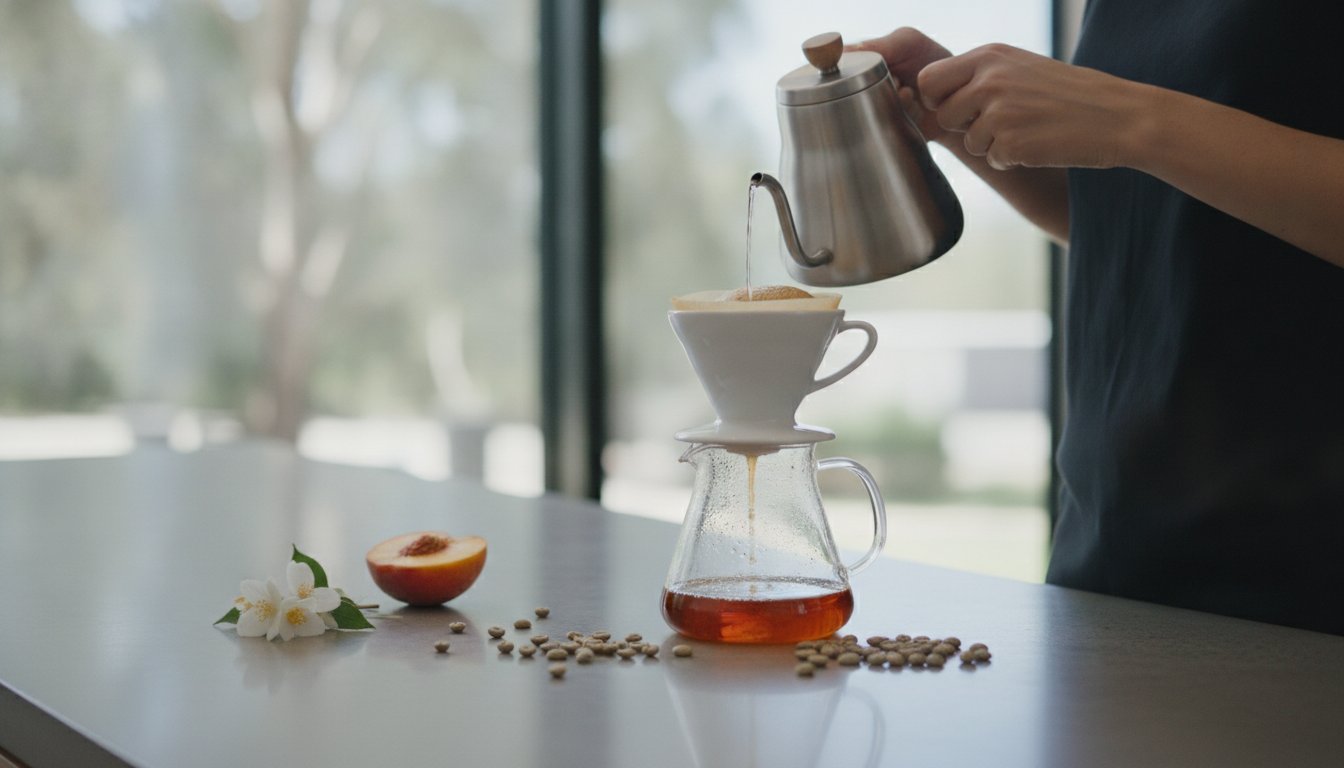
Light roasting isn't a lack of development. It's a commitment to transparency. Pure. Honest. Unfiltered. It's the only way to hear what the bean says before the heat drowns out its heritage. To truly understand what is a light roast coffee, one must look past the surface. You've likely encountered a cup that felt thin or sharp. You might have mistaken its vibrant acidity for unpleasant sourness. It's a common frustration for those used to the heavy, oily profiles of traditional blends. We understand that transition. It requires a shift in perspective and technique.
This guide promises to bridge that gap. We'll explore the technical science of the "First Crack" and the meticulous process of preserving delicate flavour notes like jasmine and stone fruit. You will learn to distinguish the unique characteristics of geographic origin from the roasting process itself. We'll also master the precise brew ratios and temperature controls required to avoid over-extraction. Prepare to transform your morning ritual into a masterclass in terroir and craftsmanship. It's time to brew with intent and appreciate the bean in its most authentic form.
Key Takeaways
- Understand what is a light roast coffee. Prioritise origin character over the roasting process.
- Identify the "First Crack". This technical milestone marks the moment moisture escapes to define the bean's structure.
- Distinguish vibrant acidity from sourness. Learn to uncover complex notes of florals, citrus, and stone fruits.
- Master extraction variables. Use higher temperatures and precision grinding to unlock the bean's dense cell structure.
- Ensure quality. Select single origin beans with a roast date within 14 days to guarantee peak freshness.
Defining the Light Roast: Origin Over Process
Light roast coffee represents a philosophy of restraint. It is minimal intervention in its purest form. The objective is simple. We aim for maximum origin character. In the specialty world, the roaster acts as a translator. We don't want to impose our own flavour on the bean. Instead, we preserve the unique terroir of the coffee plant. This includes the soil, the altitude, and the specific climate where the fruit grew. To understand what is a light roast coffee, one must view it as a celebration of the farmer's craft. It is the most authentic expression of the bean's geographic heritage. This is the standard we have upheld at Romeo Coffee Roaster since 1999.
The Visual and Physical Indicators
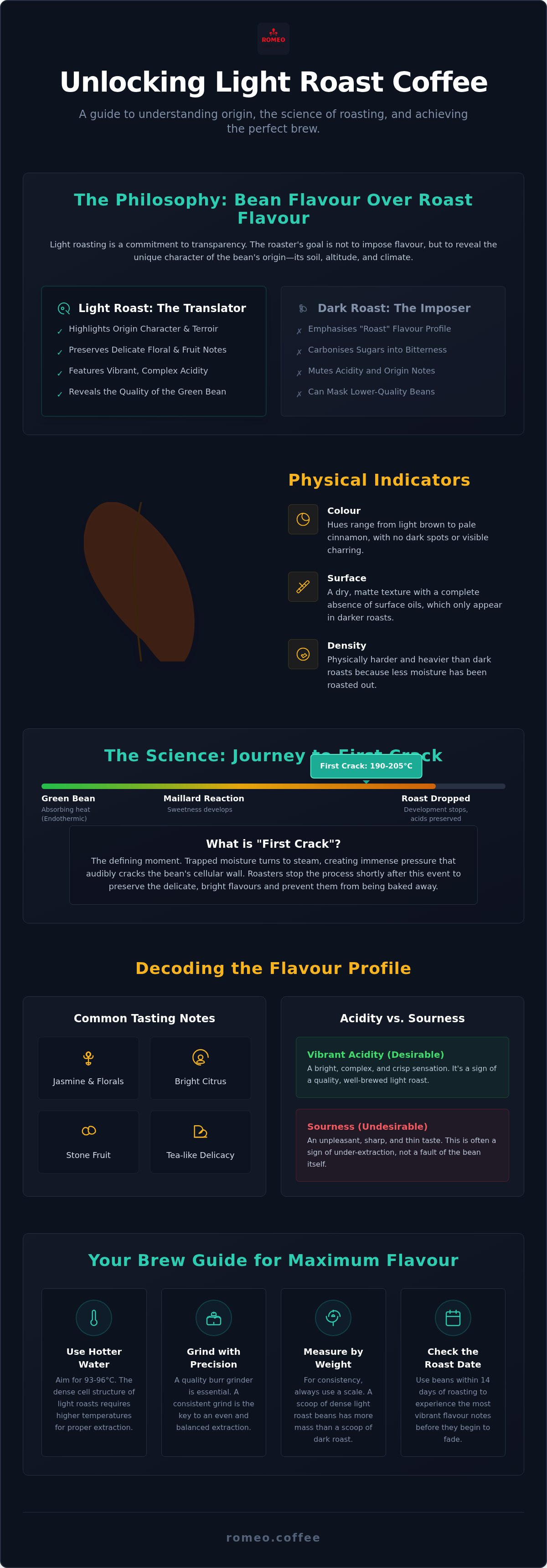
A light roast is easily identified by its matte finish. There is a complete absence of surface oils. This isn't an accident. Oils only migrate to the surface when the bean's cellular structure is compromised by high heat and prolonged exposure. In a light profile, sugars remain internalised. This results in several distinct physical traits:
- Colour: Hues range from light brown to pale cinnamon.
- Surface: A dry, non-reflective texture without any oily sheen.
- Density: The beans are physically harder and heavier.
The coffee roasting process determines how much moisture and organic mass is retained. Because less water is driven out, these beans are significantly denser than their dark counterparts. They require more force to grind. This density is a physical record of the bean's preserved integrity. It's the reason light roasts often yield more complex results during extraction.
The Philosophy of Transparency
Specialty roasters choose light profiles for premium single origin beans to maintain transparency. Roasting should reveal, not mask. Darker roasts often hide defects or low-quality origins behind a wall of carbon and smoke. We take the opposite approach. We roast to highlight the producer's meticulous work. This marks a fundamental shift from "roast flavour" to "bean flavour". When asking what is a light roast coffee, you're really asking for a direct connection to the source. It is an honest cup. It's a profile that demands high standards from the start. You cannot hide a poor crop behind a light roast. Every nuance is exposed. This commitment to quality ensures that the final cup reflects the excellence Romeo Coffee Roaster has pursued for decades.
The Science of the First Crack
The roasting timeline is a journey of chemical metamorphosis. It begins with raw, green seeds. As heat increases, the bean undergoes a series of complex reactions. To define what is a light roast coffee, we must focus on the precise window between the end of the Maillard reaction and the conclusion of the first crack. This usually occurs when internal temperatures reach between 190°C and 205°C. At this stage, the Maillard reaction has developed essential sweetness, but the sugars have not yet begun to caramelise into bitterness.
The "First Crack" is the defining moment for specialty roasters. It is an audible pop, similar to the sound of breaking a pencil. This occurs because moisture trapped inside the bean turns to steam, creating immense internal pressure. When the cellular wall finally gives way, the bean expands and releases its energy. Stopping the roast shortly after this event preserves the delicate organic acids that provide brightness. Decoding the Flavour Profile of a light roast requires stopping the heat before these compounds are destroyed by carbonisation. It is a game of seconds and degrees.
Endothermic vs. Exothermic Heat
Initially, the roasting process is endothermic. The beans absorb energy from the drum. Around the first crack, the reaction becomes exothermic. The beans begin to release their own heat. This is a critical stage. Roasters must manage the "Rate of Rise" to ensure the bean develops evenly without scorching. We "drop" the beans into the cooling tray almost immediately after the first crack finishes. This maintains bean integrity. It ensures the final cup tastes of the farm, not the roaster. If you're looking for this level of precision, our Single Origin coffee selection highlights this technical mastery.
Caffeine and Density Myths
A common misconception suggests that roasting level significantly alters caffeine content. Scientific consensus shows that caffeine is remarkably stable. It survives the heat of the drum. The real difference lies in density. Light roast beans are smaller and heavier because they contain more moisture. If you measure your coffee by volume, a scoop of light roast will contain more individual beans than a scoop of dark roast. Consequently, that cup will have more caffeine. If you measure by weight, the caffeine content remains virtually identical. Precision brewing starts with a scale, not a spoon. Understanding what is a light roast coffee means appreciating these subtle physical realities.
Decoding the Flavour Profile: Acidity, Body, and Terroir
The sensory profile of a light roast is defined by clarity. It is a departure from the heavy, caramelised notes of traditional espresso. When people ask what is a light roast coffee, they are often surprised by the complexity. It isn't a "weaker" cup. It is a more detailed one. The primary characteristic is vibrant acidity. We refer to this as brightness. It mimics the snap of a crisp apple or the zest of a lemon. This is distinct from sourness. Sourness is a result of poor brewing. Brightness is a virtue of the bean's genetic potential.
The body of a light roast is notably different. Expect a tea-like mouthfeel. It is crisp, clean, and refreshing. This lighter structure is intentional. It ensures the palate isn't overwhelmed by heavy oils or carbon. This transparency allows the terroir to take centre stage. Terroir encompasses the soil, altitude, and climate of the farm. In a light roast, these environmental factors become perceptible. You aren't just tasting a roast level. You are tasting a specific hillside in Ethiopia or a volcanic plot in Guatemala.
The Role of Organic Acids
Light roasting is a delicate balancing act. It preserves the organic acids that define specialty coffee. Citric, malic, and phosphoric acids are the building blocks of brightness. Citric acid provides citrus-forward notes. Malic acid offers the sweetness of stone fruit. Phosphoric acid adds a velvet-like sparkle. The chemical changes during coffee roasting must be managed to keep these compounds intact. If the roast goes too long, these acids degrade. A successful light roast maintains a perfect tension between these acids and the bean's natural sugars.
Common Tasting Notes
Identifying the flavour profile often depends on the geographic origin. Because we prioritise what is a light roast coffee for its transparency, the regional signatures are clear:
- African origins: Expect vibrant stone fruits, blueberries, and floral aromatics.
- Central American origins: These often feature soft cocoa, toasted nuts, and red berries.
- Ethiopian beans: Signature notes include jasmine, bergamot, and a black tea finish.
These flavours are delicate. They require a refined palate and precise brewing to fully appreciate. We select our beans based on these inherent traits, ensuring the roast level never overshadows the producer's work.
How to Brew Light Roast Coffee for Maximum Flavour
Light roasts are physically dense. They don't give up their flavours easily. To master what is a light roast coffee in the cup, you must apply more energy during extraction. This means focusing on two critical variables: heat and time. Unlike dark roasts that dissolve quickly, light beans require sustained thermal energy to break down their complex cellular structure. If your water is too cool, you'll end up with a thin, grassy brew that lacks the sweetness we've promised.
Precision equipment is non-negotiable. A high-quality burr grinder is your most important tool. You need uniform particles to ensure every grain extracts at the same rate. Inconsistent grinds lead to "muddy" flavours where sourness and bitterness compete. Water chemistry also plays a vital role. Use soft, filtered water. Hard water contains minerals that can block the extraction of delicate organic acids. Clarity is the goal. For the best results, start with our Single Origin coffee and follow the steps below.
The Step-by-Step Pour-Over Method
Pour-over brewing is the gold standard for light profiles. It highlights the tea-like body and floral aromatics. Follow this methodical approach:
- Step 1: Grind size. Aim for a medium-fine setting. It should feel like table salt between your fingers.
- Step 2: Water temperature. Use water just off the boil. Aim for 94°C to 96°C to maximise extraction energy.
- Step 3: The bloom. Pour 30g of water over the grounds. Wait 30 seconds. This allows trapped gases to escape, preventing "channelling".
- Step 4: The pour. Add the remaining water in steady, circular motions. Keep the water level consistent to ensure even saturation.
Ratios and Extraction Timing
Consistency relies on a scale. Start with the "Golden Ratio" of 1:16. This means 15g of coffee for every 240g of water. It provides enough solvent to pull out the complex sugars without over-diluting the aromatics. Your total brew time should land between 3:00 and 3:30 minutes. If the result tastes sharp or sour, your grind is too coarse. If it feels dry or unpleasantly bitter, go coarser next time. Small adjustments lead to perfection. Understanding what is a light roast coffee is only half the battle. The rest is found in the precision of your pour.
Selecting Your Next Single Origin Roast
Selecting the right bean requires a discerning eye. Look for labels marked "Filter Roast" or "Light Roast". These terms indicate a profile designed for clarity and high acidity. Freshness is paramount. Always check the bag for a roast date. We recommend consuming beans within 14 days of roasting for the best experience. Beyond this window, the volatile aromatics begin to dissipate. You lose the very essence of what is a light roast coffee, its vibrancy. A stale bean cannot deliver the floral or citrus notes promised by its origin.
It's also vital to understand the intended use. While premium espresso beans are developed for pressure and milk, light roasts are crafted for transparency. They serve different purposes. One offers richness and structural body. The other offers a window into the bean's genetic heritage. Mixing them up often leads to disappointing results. A light roast in a standard espresso machine can taste thin and unpleasantly sharp if the equipment isn't calibrated for high-density beans.
Washed vs. Natural Process
Processing defines the flavour trajectory. The method used to remove the fruit from the seed changes the final chemical composition. Understanding these differences helps you choose the right bean for your palate.
- Washed process: The fruit is removed before drying. This results in a clean cup with high acidity. It's the purest expression of terroir. These beans are best for pour-over methods.
- Natural process: The fruit dries on the bean. Expect a heavier body and intense, wine-like fruitiness. These beans often suit immersion methods like the Aeropress.
- Honey process: A middle ground. It balances the sweetness of naturals with the clarity of washed coffees.
Your choice of brewing equipment should influence your selection. Clearer methods favour washed beans, while immersion can handle the funkier notes of a natural process.
The Romeo Coffee Roaster Standard
We have been roasting specialty grade beans since 1999. Our approach is rooted in artisan mastery. We source high-grade seeds through ethical, quality-focused partnerships. We don't just buy coffee. We support producers who share our commitment to excellence. This ensures absolute consistency across every batch. When you choose Romeo Coffee Roaster, you are tasting a meticulously curated product. It's the result of decades of experience and a deep respect for the craft. Understanding what is a light roast coffee means recognising the human effort behind the bean.
Elevate Your Daily Ritual
Mastering the nuances of light roast coffee requires a shift in perspective. It's a move away from the comfort of carbonisation toward the clarity of terroir. We've explored how the "First Crack" preserves the organic acids that define specialty beans. We've also detailed the precision needed in your brewing ritual to avoid the pitfalls of under-extraction. Understanding what is a light roast coffee is more than a technical exercise; it's a commitment to experiencing the bean in its most authentic form.
Quality begins with the source. Since 1999, we've focused on meticulous selection and small-batch roasting. Our specialty grade beans are roasted with precision in Australia to ensure that every cup reflects the producer's hard work. If you're ready to move beyond the ordinary, it's time to refine your selection. Explore our curated selection of single origin coffee beans and discover the difference that artisan mastery makes. Your journey into the vibrant world of specialty coffee has only just begun.
Frequently Asked Questions
Does light roast coffee have more caffeine than dark roast?
Caffeine levels remain stable during the roasting process. It's the density that differs. Light roast beans are smaller and heavier than dark roasts. If you measure by volume using a scoop, a light roast contains more beans and therefore more caffeine. However, if you measure by weight, the caffeine content is virtually identical. Understanding what is a light roast coffee requires this distinction to ensure a consistent and balanced caffeine intake.
Is light roast coffee less bitter?
Light roast coffee is significantly less bitter than dark roast. Bitterness is often a result of caramelisation and carbonisation during prolonged roasting. Because a light roast is stopped shortly after the first crack, these bitter compounds haven't fully developed. Instead, you experience a vibrant acidity and sweetness. This clarity allows you to appreciate the bean's natural profile without the smoky interference of the roasting drum. It's a cleaner, more refined experience.
Can I use light roast coffee for espresso?
You can use light roast coffee for espresso, but it requires technical precision. These beans are dense and difficult to extract. You'll need a high-end grinder and water temperatures near 96°C to unlock the sugars. Without these adjustments, the shot may taste unpleasantly sharp. Many purists prefer light roasts as filter coffee to better appreciate the delicate florals that espresso pressure can sometimes overwhelm. It's a matter of choosing the right tool for the profile.
Why does my light roast coffee taste sour?
Sourness is usually a sign of under-extraction. Because light roasts are dense, they require more energy to release their flavour. If your water is too cool or your grind is too coarse, the water won't pull out the necessary sugars to balance the acids. To fix this, try using water just off the boil or a finer grind setting. This ensures you fully capture the complexity of what is a light roast coffee. Precision leads to balance.
What is the best brewing method for light roast coffee?
Pour-over methods like the V60 or Chemex are widely considered the best for light roasts. These methods use paper filters that remove oils and sediment, resulting in a clean cup that highlights the bean's acidity. The controlled flow allows for precise extraction of delicate floral and citrus notes. While immersion methods work, the clarity provided by a pour-over is unmatched for those wanting to experience the bean's true origin character. It's the standard for specialty brewing.
Should I add milk to light roast coffee?
Adding milk to a light roast coffee is generally discouraged by specialty enthusiasts. The delicate organic acids and floral aromatics are easily overwhelmed by the fats and sugars in milk. While a dark roast provides a bold flavour that cuts through, a light roast is designed for transparency. To truly appreciate the meticulous work of the producer, it's best enjoyed black. This reveals the subtle stone fruit and tea-like qualities without any unnecessary masking.
How should I store my light roast beans to keep them fresh?
Store your beans in an airtight container in a cool, dark place. Light roasts are sensitive to oxygen and moisture, which can quickly dull their vibrant acidity. Don't use the fridge or freezer, as temperature fluctuations cause condensation. A dedicated coffee canister with a one-way valve is ideal. This allows CO2 to escape while preventing oxygen from entering. Proper storage ensures your single origin beans remain peak-fresh for up to 14 days after opening the bag.
How long should light roast coffee rest after roasting?
Light roast coffee should rest for five to ten days after roasting. During this period, the beans undergo degassing, where trapped carbon dioxide is released. Don't brew too early, as this gas can interfere with water contact and lead to uneven extraction. While dark roasts degas quickly, the dense structure of a light roast requires more time to stabilise. This patience is rewarded with a much smoother and more balanced flavour profile in every cup you brew.