The word Arabica on a bag is not a guarantee of excellence. It is a prerequisite. While 68% of Australians drink coffee daily, many still struggle to distinguish between a marketing label and a truly specialty roast. High-quality arabica coffee beans offer a complexity and acidity that lower-grade varieties cannot match. Industry jargon often creates more confusion than clarity. You need facts, not fluff.
You deserve consistency in your morning ritual. It’s disheartening to invest in premium beans only to face inconsistent extraction or flat, muted flavours. This guide, drawing on Romeo Coffee Roaster's 27 years of roasting expertise, simplifies your selection process. You will learn to identify superior beans, understand specific flavour expectations, and master the variables of home espresso. We provide the technical clarity needed to move beyond the "premium" tag. Whether you are sourcing for a daily flat white or a precise pour-over, the right knowledge ensures your investment in quality is never wasted. Master the nuances of the world’s most sought-after species and achieve café-quality results in your own kitchen.
KEY TAKEAWAYS:
- Unlock the secrets to selecting superior arabica coffee beans.
- Understand the flavour profiles and characteristics of premium roasts.
- Master home espresso techniques for consistent, café-quality results.
Key Takeaways
- Understand why Arabica serves as the global benchmark for specialty coffee and how its highland origins dictate its superior quality.
- Identify the complex acidity and sweetness that define premium arabica coffee beans to ensure a refined sensory experience in every cup.
- Learn the technical differences between Arabica and Robusta, focusing on chemical composition and the impact on espresso crema.
- Master the selection process by prioritising "Roasted On" dates over "Best Before" labels to guarantee peak freshness for home brewing.
- Gain the confidence to navigate industry jargon and justify the investment in high-grade single origin and espresso blends.
What are Arabica Coffee Beans? Understanding the Gold Standard
Arabica is the definitive standard for quality. It represents the premium species of the Coffea plant family. Originating in the misty highlands of Ethiopia, it eventually travelled through the Arabian Peninsula and across the globe. Today, it dominates the Australian specialty market. It is prized for its elegance. It is valued for its depth. Most coffee professionals consider it the only species suitable for high-end espresso and single origin drinking.
Growing arabica coffee beans is a meticulous endeavour. The plants are fragile. They demand specific conditions. High altitudes are essential. Stable temperatures are required. Unlike the more resilient Robusta, Arabica is susceptible to pests and weather shifts. This fragility is why it commands a premium price. It is a crop for the patient. It is a crop for the dedicated. In Australia, where café culture is a matter of national pride, this investment in quality is non-negotiable.
The Botanical Characteristics of Arabica
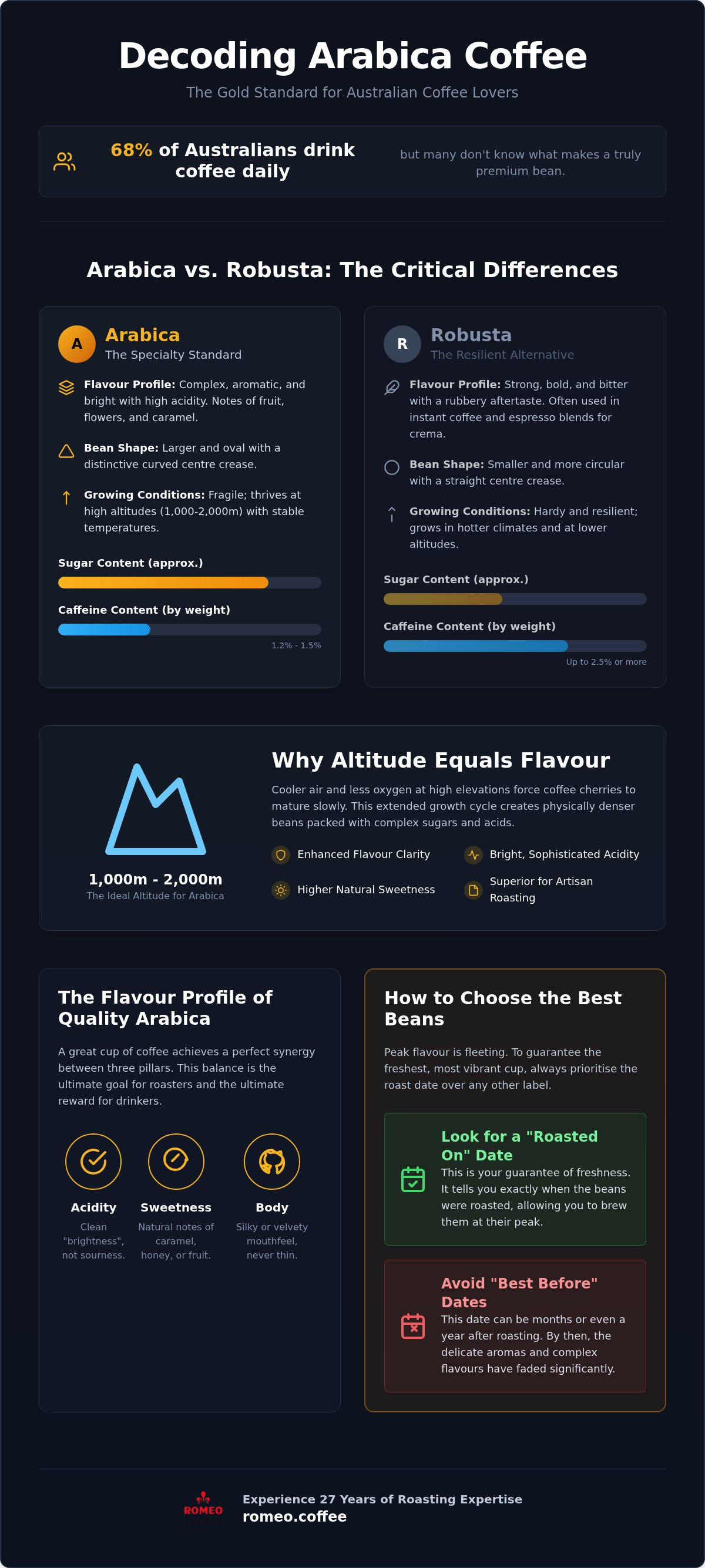
Visual identification is straightforward. The beans are typically oval. They feature a distinct, curved crease. The plants thrive between 1,000 and 2,000 metres above sea level. This elevation is critical for development. Botanically, Arabica contains significantly less caffeine than other species. It typically holds about 1.2% to 1.5% caffeine by weight. This results in a smoother profile. It lacks the harsh, rubbery bitterness associated with lower-grade coffee. The chemical composition also includes more lipids and nearly double the sugar concentration of its counterparts.
Why Altitude Equals Flavour
Altitude is the primary architect of taste. At higher elevations, the air is cooler. Oxygen is thinner. These factors force the coffee cherries to mature slowly. This extended growth cycle allows complex sugars and organic acids to develop within the seed. It is a process of refinement. The plant focuses its energy on fewer cherries, resulting in a more concentrated flavour profile.
Bean density is the direct result of this slow maturation. High-altitude arabica coffee beans are physically harder and more compact. This density is a roaster’s greatest asset. A dense bean reacts predictably to heat, allowing for a more articulate roast profile. The benefits of high-density beans include:
- Enhanced flavour clarity and distinct notes.
- Higher concentration of natural sugars for sweetness.
- Bright, sophisticated acidity.
- Superior structural integrity during the artisan roasting process.
Dense beans withstand the heat of the drum more effectively. They allow for precise flavour extraction during the brewing process. The result is a cup that is bright, clean, and unmistakably premium. This is why specialty roasters prioritise high-altitude lots. It is the foundation of a superior home brew.
The Flavour Profile: What to Expect from Your Cup
Arabica offers a sensory depth that other species cannot match. It is defined by its diversity. One cup might taste of wild jasmine. The next might evoke dark cocoa and toasted hazelnuts. This variety stems from the complex chemical makeup of the bean. It is a sophisticated profile. It rewards the attentive drinker. The aroma alone can be transformative, often carrying notes of flowers, fruit, or spice long before the first sip.
Acidity is the hallmark of quality. In the coffee world, we call this "brightness." It is not to be confused with sourness. Pleasant acidity provides a clean finish. It mimics the tartness of a green apple or the zest of a lemon. This brightness balances the natural sugars found within the bean. For those seeking this refined equilibrium, exploring single origin coffee provides a direct window into these specific traits.
Acidity, Sweetness, and Balance
Balance is the ultimate goal of the artisan roaster. We look for a synergy between three pillars: acidity, sweetness, and body. Natural sweetness in Arabica often presents as caramel, honey, or panela. When roasted correctly, these sugars caramelise. They soften the brightness. The result is a harmonious cup. It feels complete. It leaves a lingering, pleasant aftertaste. The mouthfeel should be silky or velvety, never thin or astringent.
Regional Flavour Variations
Terroir dictates the final character. The soil composition and local climate leave a permanent mark on the bean. Understanding these regions helps you predict the experience in the cup.
- African Arabica: Renowned for its vibrancy. Expect high-toned acidity. Notes of bergamot, blueberry, and stone fruit are common. It is often tea-like and delicate.
- Central and South American Arabica: These arabica coffee beans are typically clean and approachable. They offer consistent notes of milk chocolate, roasted almond, and brown sugar. They are the versatile workhorses of the Australian specialty industry.
- Asian and Pacific Arabica: Varieties from regions like Sumatra or Papua New Guinea are full-bodied. They are syrupy. They often display earthy, spicy, or even herbaceous characteristics. They provide a weight on the palate that is both grounding and complex.
Each region offers a distinct narrative. By selecting beans based on origin, you can tailor your home brewing experience to your specific palate. This is the essence of the specialty movement. It is about transparency. It is about choice.
Arabica vs. Robusta: The Critical Differences
Arabica is an investment in flavour. Robusta is a commodity of volume. These two species account for the vast majority of global production, yet they occupy opposite ends of the quality spectrum. The distinction is not merely botanical. It is chemical. It is sensory. Understanding these differences is essential for any coffee lover seeking a premium experience.
The price gap between these species is substantial. High-grade arabica coffee beans command a premium because the plant is selective. It requires specific conditions, as established in our discussion on altitude and climate. Robusta, as the name suggests, is hardy. It grows at lower altitudes and resists disease with ease. However, this resilience comes at a cost to the palate. It is a sacrifice of quality for the sake of yield.
Quality over Quantity
Bitterness defines the Robusta experience. This is largely due to its high concentration of chlorogenic acids and caffeine. These compounds serve as a natural defence against insects, but they translate to "burnt rubber" or "woody" notes in the cup. They lack the nuanced acidity and sweetness found in higher-grade species. This is why specialty roasters in Australia almost exclusively source Arabica. We prioritise clarity. We value complexity.
While some traditional Italian-style blends occasionally include high-quality Robusta to boost caffeine or body, we find it compromises the integrity of the profile. It masks the delicate floral and fruit notes that define a premium roast. For a truly elevated experience, we focus on wholesale coffee supply that is 100% Arabica. It is the only way to ensure a clean, sophisticated finish.
Chemical Composition and Health
The chemical architecture of the bean dictates the quality of your espresso. Arabica contains nearly double the sugar concentration of Robusta. These sugars are essential for the caramelisation process during roasting. They provide the natural sweetness that balances the cup. Without these sugars, the coffee requires milk or additives to be palatable.
Lipid content is another critical factor. Arabica contains approximately 60% more lipids, including essential fats and oils. These oils are responsible for carrying aromatic compounds to the nose and creating a silky, persistent crema. A superior crema is not just about thickness. It is about the quality of the oils trapped within the bubbles. Caffeine levels also differ drastically. Arabica typically contains 1.2% to 1.5% caffeine, whereas Robusta can reach 2.7%. Lower caffeine levels allow for a smoother drinking experience. It reduces the "jittery" sensation and the harsh, astringent finish often associated with lower-grade commercial coffee. By choosing Arabica, you are choosing a refined chemical balance.
How to Choose and Buy Premium Arabica in Australia
Buying arabica coffee beans in Australia requires a shift in perspective. You must ignore generic marketing. You must seek transparency. The Australian specialty market is one of the most sophisticated in the world. As a result, "premium" is a common claim. It is often unsubstantiated. True quality is found in the details. A professional roaster provides data, not just adjectives. You need to know the story behind the bean to understand the value in the bag.
Reading the Label Like a Professional
Look for the altitude. As established, 1,000+ metres is the benchmark for density and refined acidity. Check the processing method. Washed beans offer a clean, articulate profile. Natural process beans provide intense fruitiness and a heavier body. Specialty Grade certification is a technical distinction. It indicates a score of 80 or above on the 100-point SCA scale. If a roaster doesn't mention the grade, it is likely commercial-grade coffee. Transparency is the ultimate indicator of quality. If the label names the specific farm, washing station, or varietal, the quality is likely superior.
Distinguish between your goals. Choose single origin coffee for a pure expression of terroir. These are best for black coffee drinkers who value clarity. Opt for an espresso blend if you prioritise a consistent, balanced profile for milk-based drinks. Blending allows a roaster to maintain a specific flavour profile year-round, regardless of seasonal shifts in harvest.
Whole Bean vs. Pre-Ground
Freshness is non-negotiable. Oxygen is the enemy of flavour. Pre-ground coffee loses its aromatic complexity within minutes of exposure. It goes flat. It becomes bitter. For the best experience, invest in a quality burr grinder. It ensures uniform particle size. It preserves the volatile oils within the bean until the moment of extraction. Peak freshness occurs between 7 and 21 days post-roast.
Always check for a "Roasted On" date. A "Best Before" date is a retail formality. It tells you nothing about the chemical state of the coffee. Store your beans in a cool, dark place. Use an airtight container with a one-way valve. Avoid the fridge. Moisture and odours will compromise the delicate profile of your arabica coffee beans. Proper storage preserves the investment you've made in high-grade coffee. It ensures every cup meets the standard of the artisan roaster.
The Romeo Coffee Tradition: 25 Years of Arabica Excellence
Romeo Coffee Roaster began in 1999. We are Melbourne-born. We are artisan-led. For over 25 years, we have refined the art of the roast. Our focus has always remained on high-grade arabica coffee beans. We don't chase trends. We don't use aggressive marketing. We rely on the quiet authority of a superior product. This longevity is a testament to consistency. It is a commitment to the craft that defines the Australian specialty scene.
Our national reach ensures that this expertise isn't confined to a single city. We serve Australia-wide. From bustling city cafés to quiet home kitchens, we deliver the same standard of excellence. Every batch is an opportunity to showcase the potential of the bean. We respect the effort invested by the producers. We honour that effort through meticulous heat control and sensory evaluation. This is the standard we set decades ago. It is the standard we maintain today.
Sourcing with Integrity
Relationships are the foundation of our supply chain. We work with top-tier producers globally. These are partners who share our obsession with quality. Our selection process for arabica coffee beans is rigorous. We look for clarity. We look for sweetness. We look for a story that translates into the cup. Whether we are selecting for a seasonal single origin or a complex espresso blend, the criteria remain the same. Quality is the only metric that matters. We prefer the substance of the roast over the noise of the industry.
Elevate Your Daily Ritual
Your morning coffee should be a moment of excellence. It is a daily ritual that deserves the finest ingredients. We invite you to explore our curated range. Each selection is designed to highlight the nuances of the species. For businesses, our wholesale coffee supply offers more than just beans. It offers a partnership rooted in 27 years of industry leadership. We provide the consistency your customers expect. We provide the expertise your baristas need to succeed.
Mastery is a journey, not a destination. We continue to learn. We continue to improve. The standards we set in 1999 remain our guiding principles. It is about the pursuit of the perfect extraction. It is about the shared appreciation for a job well done. Experience the craft of Romeo Coffee Roaster and discover the difference that a quarter-century of dedication makes to your brew.
Master Your Morning Extraction
Selecting the right coffee is a matter of technical precision and sensory awareness. You now understand that altitude dictates bean density and that density is the foundation of flavour clarity. High-grade arabica coffee beans are a prerequisite for any meaningful home espresso experience. Look beyond the marketing. Prioritise the roast date. Trust in the transparency of specialty-grade sourcing to ensure your daily ritual remains consistent and refined.
Since 1999, Romeo Coffee Roaster has focused on these exact standards. We provide national Australian delivery of beans sourced with meticulous care. Our artisan process ensures that every bag reflects our 27 years of roasting expertise. You have the knowledge to distinguish between the mediocre and the exceptional. It is time to apply it to your brew. We invite you to discover our artisan-roasted Arabica beans and experience the difference of true craftsmanship. Your pursuit of the perfect cup starts with the right bean. Enjoy the journey toward a more sophisticated palate.
Frequently Asked Questions
Is 100% Arabica coffee always better than other blends?
The label is a baseline, not a guarantee. 100% Arabica simply means no other species are present. It doesn't account for the quality of the harvest or the precision of the roast. Low-grade Arabica exists in the commercial market. However, for those seeking specialty flavour and refined acidity, it remains the essential starting point. Quality depends on the specific grade and the artisan's skill.
Why is Arabica coffee more expensive than Robusta?
Cultivation is a high-risk, high-reward endeavour. Arabica plants are delicate. They demand high altitudes and specific climatic conditions to thrive. They are more susceptible to pests and disease than hardier species. The lower yield per hectare and the increased labour required for highland harvesting drive the price. You're paying for the difficulty of the process and the superior flavour it produces.
Does Arabica coffee have less caffeine than other types?
Yes, it contains significantly less caffeine. Most arabica coffee beans test between 1.2% and 1.5% caffeine by weight. In contrast, Robusta can reach levels of 2.7%. This lower concentration is a benefit for the palate. It results in a smoother cup with less bitterness. It also provides a more balanced experience for those sensitive to the jittery effects of high-caffeine beverages.
What are the best brewing methods for Arabica coffee beans?
Versatility is a core strength of this species. Espresso is the definitive choice for Australian café culture. It highlights the bean's natural sweetness and body. Filter methods like V60 or Chemex are superior for single origin selections. These manual methods allow the delicate floral and fruit notes of your arabica coffee beans to be expressed clearly. Match your grind size to the specific contact time of your equipment.
How can I tell if my coffee beans are actually Arabica?
Visual inspection provides the first clue. Arabica beans are generally oval with a distinct, curved crease. Robusta beans tend to be rounder with a straight crease. Beyond the physical, look for roaster transparency. A reputable artisan will list the altitude, origin, and varietal on the bag. This level of detail is rarely found on lower-grade commercial products. Trust the data provided by the roastery.
What does "specialty grade" Arabica actually mean?
It is a technical distinction of excellence. Specialty grade refers to coffee that scores 80 points or higher on the 100-point SCA scale. The beans must be free of primary defects. They must exhibit unique flavour characteristics in the cup. This grade represents the top tier of global production. It ensures that the coffee has been handled with care at every stage of the supply chain.
How should I store my Arabica beans to keep them fresh?
Oxygen and light are the primary threats to quality. Store your beans in an airtight, opaque container in a cool, dark cupboard. Avoid the fridge or freezer. Temperature fluctuations cause moisture to build up inside the bag. This moisture degrades the volatile oils and mutes the flavour. Use a container with a one-way valve to allow gases to escape while keeping oxygen out.
Can I use Arabica beans for both espresso and filter coffee?
Yes, the species is suitable for all preparation styles. However, the roast profile often dictates the best use. An espresso roast is usually more developed to cut through milk and balance acidity. A filter roast is often lighter to preserve the bright, tea-like qualities of the origin. Check the roaster's notes on the packaging. They'll guide you toward the intended brewing method for that specific batch.