Your morning ritual deserves better than guesswork. Australians consume 16 million cups of coffee every day, yet many home brewers still struggle with inconsistent roasts and stale results. It is time to refine your selection process. When you look to buy coffee beans, you are not just purchasing a commodity. You are investing in a meticulous craft. Precision. Consistency. Excellence. These are the markers of a true speciality brew.
The frustration of confusing terminology is real. Washed versus natural. Light versus dark. These labels often obscure the quality they should define. You want the cafe experience in your own kitchen. This guide provides the clarity needed to master the art of selection. We will break down roast profiles, origin characteristics, and the nuances of the Australian coffee landscape. You will learn how to match the right bean to your specific machine. We will explore the science of freshness and the heritage of artisan roasting. Prepare to transform your daily brew into a professional standard.
Key Takeaways
- Understand why Australian specialty coffee sets a global benchmark and how to identify genuine quality beyond marketing labels.
- Decode the impact of geographic origin and processing methods to accurately predict flavour profiles before you brew.
- Learn to match specific roast profiles to your equipment to avoid common pitfalls like bitterness in espresso or thinness in a plunger.
- Discover how to buy coffee beans with confidence by prioritising "roasted on" dates and understanding the critical degassing period for peak flavour.
- Gain the technical knowledge required to transition from a casual consumer to an informed home barista with professional-grade results.
The Landscape of Specialty Coffee in Australia
Australia sets the global standard for espresso culture. It is a reputation built over decades. Coffee here is a ritual. A daily necessity. Approximately 16 million cups are consumed across the country every day, yet the quality of your morning cup depends entirely on the raw material. The bean is the foundation. Without a premium source, even the best technique is irrelevant. When you choose to buy coffee beans, you are selecting the potential of the final brew.
There is a distinct divide between commodity coffee and the artisan craft. Supermarket shelves are often filled with beans roasted months ago. They lack character. They lack soul. Artisan roasting preserves the delicate volatiles that define a superior cup. It is the difference between a mass-produced product and a curated experience. True quality starts with a commitment to the highest standards of sourcing and roasting.
What Defines Specialty Grade Coffee?
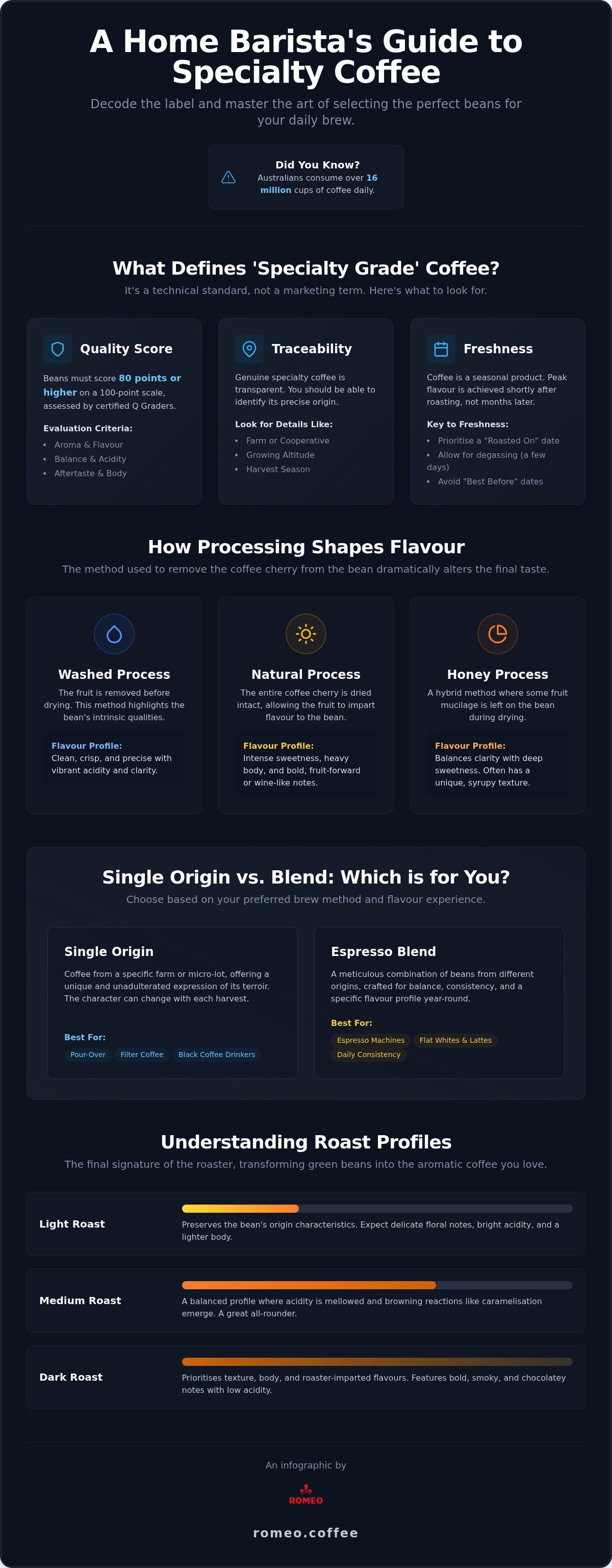
Specialty coffee is more than a marketing claim. It is a technical designation. To earn this title, beans must score 80 points or higher on a 100-point scale. This grading is performed by certified Q Graders. They evaluate aroma, flavour, balance, and acidity. Only the top tier of global production makes the cut. This rigorous process ensures that only the most exceptional crops reach your grinder.
Traceability is equally vital. You should know the farm, the altitude, and the exact harvest season. Freshness is non-negotiable. Specialty coffee is a seasonal agricultural product. It should be treated with the same respect as fresh produce. Knowing the origin allows you to appreciate the unique terroir that shapes every sip.
Why Buy Coffee Beans from an Artisan Roaster?
Mass production prioritises volume over nuance. Artisan roasting focuses on the profile. At Romeo Coffee Roaster, we have refined this process since 1999. It requires a human element. A master roaster monitors every second of the cycle. They adjust for humidity and account for ambient temperature. Small-batch roasting ensures every bag meets a rigorous standard that industrial machines simply cannot replicate.
Consistency is the true hallmark of a seasoned roastery. It is easy to roast one good batch; it is difficult to repeat that excellence every day for over 25 years. When you buy coffee beans from a dedicated artisan, you are paying for that expertise. You are buying reliability. You are securing a cafe-quality result for your home machine every single morning.
Decoding the Label: Origin, Process, and Roast Profile
A coffee bag label is a blueprint for taste. It reveals the meticulous decisions made by the farmer and the roaster. To buy coffee beans with confidence, you must learn to interpret these technical details. The label is not just marketing. It is a data set that predicts the sensory experience in your cup. Understanding these variables allows you to select a profile that aligns with your specific palate.
Geography provides the first layer of character. Altitude is the primary driver of bean density. High-grown beans develop slowly. This results in concentrated sugars and vibrant acidity. Volcanic soils provide the mineral foundation for complex profiles. When you buy coffee beans, the origin tells you the story of the environment where the cherry matured.
Processing methods further refine the flavour. The way the fruit is removed from the seed changes everything. It is a critical stage of the craft. Consider these three primary methods:
- Washed Process: The fruit is removed before drying. This highlights the bean's inherent acidity and clarity. It is clean and precise.
- Natural Process: The cherry remains intact during drying. Expect intense sweetness and heavy, wine-like body. It is bold and fruit-forward.
- Honey Process: A hybrid approach. It retains some fruit mucilage to balance clarity with deep sweetness. It offers a unique, syrupy texture.
Roast levels are the final signature. Roasting is an art of heat management. Light roasts preserve delicate floral notes and acidity. Medium roasts introduce browning reactions like caramelisation. Dark roasts prioritise texture and bold, smoky depth. Each level serves a different purpose in the brewing process.
Single Origin vs Espresso Blends
Single origin coffee offers an unadulterated view of a specific farm or micro-lot. It is a singular expression of terroir. These are often best enjoyed black to appreciate their unique character. Espresso blends are different. They are meticulously composed for balance. A blend ensures consistency across the seasons. It provides the structural strength needed to cut through milk. Choose a Single Origin coffee for a reflective weekend pour-over, and an espresso blend for your daily flat white.
The Flavour Profiles of Major Coffee Regions
Geography dictates the broad strokes of flavour. African beans, particularly from Ethiopia or Kenya, are renowned for floral aromas and bright, citrusy acidity. They are often described as tea-like. South American origins, such as Colombia or Brazil, offer the classic profile of chocolate, nuts, and rich caramel. These are the crowd-pleasers. Asia-Pacific coffees, like those from Sumatra, are distinct. They are heavy-bodied, earthy, and often carry spicy or herbal notes. Understanding these regions helps you narrow your search for the perfect bag.
Matching Your Beans to Your Brew Method
Brewing is a precise science. Your equipment dictates the bean's performance. You cannot expect a delicate filter roast to excel under the high pressure of an espresso machine. It will fail. Matching the roast profile to your method is the only way to achieve a balanced extraction. When you buy coffee beans, you are selecting a specific chemical potential. The goal is to unlock it correctly. With 65% of Australians now owning a coffee machine at home, understanding this synergy is the difference between a mediocre cup and a professional standard.
Grind size and contact time are the primary levers of flavour. Espresso requires a fine grind and rapid extraction. Filter methods rely on gravity and coarser particles. These mechanical differences change how the water interacts with the coffee's cellular structure. A roast that is too light for espresso will often result in a thin, sour shot. Conversely, using a dark, oily bean in a plunger typically produces a muddy, burnt taste. The craft lies in the pairing.
Best Beans for Home Espresso Machines
Espresso machines amplify every attribute. They are demanding. For the best results, look for medium to medium-dark roasts. These profiles have undergone enough heat to develop the sugars needed for a rich, persistent crema. Solubility is key. Beans labelled as "Espresso Roasts" are developed specifically to handle the intensity of nine bars of pressure. If you prefer milk-based drinks like a flat white or latte, you need a bean with significant body. A robust espresso blend ensures the coffee's character isn't lost when milk is added. It provides the necessary structure for a balanced finish.
Filter, Plunger, and Pour Over Selection
Filter methods reward nuance. They prioritised clarity over intensity. Pour-overs and plungers benefit from light to medium roasts. These gentler profiles preserve the floral aromas and vibrant acidity of a single origin. In a long-immersion brew like a plunger, a lighter roast allows you to taste the terroir without the interference of heavy carbon notes. Filter roasts are dropped from the roaster earlier in the cycle. This prevents bitterness. It keeps the profile clean. It allows the fruit-forward characteristics of the bean to remain the focal point of the experience.
The Freshness Factor: Logistics of Buying Coffee Beans Online
Freshness is an absolute. It's the primary reason to buy coffee beans from a specialist roastery rather than a supermarket. Ignore "best before" dates. They're arbitrary. Look for the "roasted on" date. This is the only marker of true quality. At Romeo Coffee Roaster, we prioritise this transparency. It's the foundation of our craft. True excellence doesn't hide behind vague timelines.
Don't brew the moment your beans arrive. Freshly roasted coffee contains high levels of carbon dioxide. This gas interferes with water contact. It prevents a full extraction. Most beans require a degassing period of five to seven days post-roast to reach their peak flavour profile. Patience is a component of the artisan process. If you brew too early, the result is often thin or metallic. Give the coffee time to settle.
Modern packaging is a technical achievement. One-way valves allow CO2 to escape without letting oxygen in. This prevents oxidation. Hermetic seals preserve the delicate aromatics that define specialty coffee. When you buy coffee beans online, our national delivery network ensures these volatiles remain intact from our roastery to your door. We manage the logistics so the quality remains consistent across Australia.
How to Store Your Coffee Beans at Home
Coffee is fragile. It has four primary enemies: air, light, heat, and moisture. Each of these degrades the oils and aromatics. Avoid the fridge. It's a humid environment. It introduces unwanted odours. Avoid the freezer. Condensation ruins the bean's structure upon thawing. Use an opaque, airtight canister. Keep it in a cool, dark cupboard. This simple step extends the peak flavour window significantly. Control the environment to protect your ritual.
Ordering Online: Subscriptions vs One-Off Purchases
Managing your supply is about timing. A one-off purchase is ideal for exploring new single origins. However, subscriptions offer a superior level of consistency. You never run out. You receive beans exactly when they enter their peak brewing window. This ensures your home setup matches the quality of a professional cafe. For businesses, Wholesale Coffee Supply allows you to scale this quality without compromise. It removes the risk of stale stock. It provides the reliable foundation every successful cafe requires.
The Romeo Heritage: Roasting with Authority Since 1999
Excellence is a long-term commitment. It is not an overnight achievement. Romeo Coffee Roaster was established in 1999. For over twenty-five years, we have refined the artisan process from our Melbourne foundations. This longevity is rare in the specialty coffee industry. It represents a deep archive of technical knowledge. We don't rely on loud self-promotion. We rely on the product. Our authority is rooted in the thousands of batches we have perfected over more than two decades.
Integrity starts at the source. We maintain long-term relationships with the world's most disciplined producers. These partnerships ensure we receive the first pick of every harvest. It allows us to secure beans that meet our exacting standards for density and moisture content. When you buy coffee beans from a roastery with this heritage, you are benefiting from a quarter-century of sourcing expertise. Consistency is our hallmark. We ensure that the profile you love today is the same profile you receive next month.
Our role as the Authoritative Artisan is one we take seriously. We act as a standard-bearer for the Australian coffee industry. We lead by example. This means maintaining the same high standards in 2026 as we did at our founding. It means refusing to compromise on quality even when global market conditions fluctuate. We provide a premium service that remains accessible to those who appreciate the finer details of coffee production. Every bag is a testament to our history.
The Romeo Roasting Philosophy
We operate with quiet confidence. Our focus remains entirely on the craft. Every roast is a meticulous balance of time and temperature. We don't follow fleeting trends or use aggressive marketing jargon. We follow the data. Our experience allows us to identify the exact second a roast reaches its peak. This precision leads to a more refined cup for the consumer. It eliminates the bitterness often found in less experienced roasts. We respect the bean's origin. We highlight its natural character without over-processing.
Your National Coffee Partner
We serve the entire Australian landscape. From home baristas seeking a daily ritual to businesses requiring Wholesale Coffee Supply, we provide a reliable foundation. Our selection is curated for those who value tradition and quality. We understand the nuances of the Australian palate. We know what works in a Melbourne cafe and a Perth kitchen. When you decide to buy coffee beans, choose a partner with a proven legacy of excellence. Experience the craft of Romeo Coffee Roaster today.
Elevate Your Daily Ritual
Mastering the home brew requires more than just high-end equipment. It demands a sophisticated understanding of the raw material. You now have the framework to navigate origin profiles, processing methods, and roast levels with confidence. Every decision impacts the final extraction. Precision in selection leads to excellence in the cup. When you choose to buy coffee beans, you are choosing the foundation of your daily experience. It is a commitment to quality.
Consistency is the hallmark of a true artisan. Since 1999, Romeo Coffee Roaster has focused on the meticulous craft of roasting. We specialise in espresso blends and single origin coffee designed for the discerning Australian palate. Our experience ensures that every bag meets a professional standard. We manage the logistics with Australia-wide shipping to preserve the peak flavour window. It's time to move beyond commodity coffee and embrace the expertise of a seasoned roastery.
Shop our premium selection of artisan roasted beans and transform your kitchen into a sanctuary of quality. Your perfect brew is a matter of craft, not chance. Enjoy the journey toward the perfect cup.
Frequently Asked Questions
How long do coffee beans stay fresh after roasting?
Peak flavour is generally achieved between seven and twenty-one days post-roast. While beans remain safe to consume for several months, the delicate aromatics and volatile oils begin to degrade after four weeks. Proper degassing in the first week is essential for a balanced extraction. We recommend consuming your supply within a month of the roast date to ensure the highest quality experience.
Is it better to buy whole bean or ground coffee?
Whole bean coffee is always the superior choice for those seeking cafe-quality results. Once coffee is ground, the increased surface area leads to rapid oxidation. This process dissipates the complex flavours and aromas within minutes. Grinding fresh immediately before brewing preserves the structural integrity of the bean. It is the only way to guarantee the full potential of a premium roast is realised in your cup.
What is the difference between Arabica and Robusta beans?
Arabica is the undisputed specialty standard. It is prized for its complex acidity, diverse flavour profiles, and refined sweetness. Robusta is a hardier plant with higher caffeine content but often carries a bitter, woody, or rubbery taste. Our roastery focuses exclusively on high-grade Arabica. This ensures every batch delivers the sophisticated and nuanced characteristics that discerning Australian coffee drinkers expect from a professional roaster.
How much coffee should I buy at one time?
Purchase only the amount you expect to consume within a two-to-three-week window. For most households, a 250g or 500g bag is the ideal increment. When you buy coffee beans in smaller, more frequent quantities, you ensure the product is always used during its peak freshness period. This methodical approach prevents the frustration of using stale beans that have lost their vibrant character.
Can I use espresso beans for a French press or plunger?
You can certainly use espresso roasts for immersion methods like a plunger. Espresso roasts are developed for solubility and body, which can result in a rich, syrupy texture when brewed in a French press. The key is to use a coarse grind to avoid over-extraction. While filter roasts offer more clarity, an espresso blend provides a robust and traditional profile that many Australian home brewers find deeply satisfying.
Why does specialty coffee cost more than supermarket coffee?
Specialty coffee reflects the true cost of excellence and ethical sourcing. It involves higher premiums paid to producers for exceptional crops and meticulous quality control at every stage. Supermarket coffee relies on mass-production techniques and lower-grade commodity beans to maintain low prices. When you invest in specialty grade, you are paying for transparency, artisan skill, and a significantly superior flavour profile that commodity brands cannot replicate.
What is the best way to store my coffee beans?
Store your beans in an opaque, airtight container kept in a cool, dark cupboard. Exposure to air, light, and heat will rapidly accelerate the staling process. Never store your coffee in the fridge or freezer, as moisture and ambient food odours will contaminate the beans. When you buy coffee beans, keeping them in their original valved bag inside a dedicated canister is the most effective way to protect your investment.
Do you offer wholesale coffee supply for cafes?
We provide a comprehensive Wholesale Coffee Supply for partners throughout Australia. Our service is designed for businesses that prioritise consistency and artisan quality. We offer a curated selection of espresso blends and rotating single origins to suit high-volume environments. Our wholesale partners benefit from our twenty-five years of industry experience, ensuring their customers receive a premium product with every serve.