The roast date isn't a suggestion. It's a deadline for quality. Most store-bought beans sit on shelves for months, losing the volatile oils and aromatics that define a premium brew. One of the core benefits of fresh roasted coffee is the chemical integrity of the bean. When you use beans roasted within the last fourteen days, you aren't just making a drink. You're capturing a peak biological moment.
It's frustrating to invest in high-end equipment only to produce a flat, bitter espresso with no crema. You know the difference between a generic caffeine hit and a truly refined cup. This guide explores why freshly roasted beans are the non-negotiable foundation of specialty coffee. We'll examine how they transform your daily ritual, maximise your antioxidant intake, and help you achieve cafe-quality results at home. From decoding roast dates to supporting local Australian craft roasters, here is how to master your morning.
Key Takeaways
- Identify the narrow 7 to 30-day window when beans reach their peak aromatic potential and structural integrity.
- Discover how the benefits of fresh roasted coffee are driven by volatile organic compounds that dissipate shortly after roasting.
- Learn to distinguish between 'best before' and 'roast' dates to avoid the flat, bitter profiles common in mass-produced supermarket beans.
- Master the selection criteria for airtight, valved packaging to ensure your beans maintain their delicate acidity and sweetness.
- Achieve consistent, cafe-quality espresso at home by sourcing from an artisan roaster that prioritises small-batch production and roast-to-order delivery.
Defining the Standard: What is Fresh Roasted Coffee?
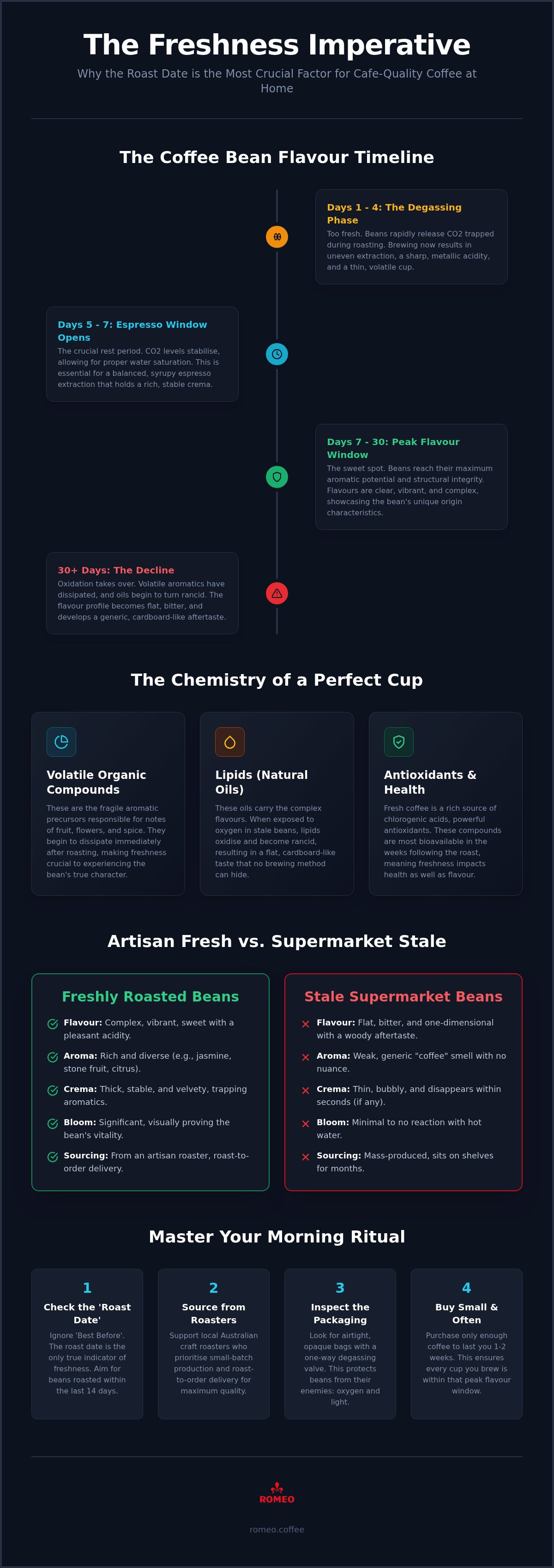
Fresh roasted coffee isn't a vague marketing term. It describes beans used within a narrow window of chemical peak, typically between 7 and 30 days after leaving the roaster. Beyond this timeframe, the volatile profile begins to oxidise. The benefits of fresh roasted coffee are tied directly to this biological timeline. Once the roast ends, freshness becomes a perishable attribute. It's a race against oxygen. Specialty coffee standards demand total transparency. This is why a clear roast date is a non-negotiable requirement for any serious artisan.
The Roasting Transformation and Chemical Development
The transition from a dense green seed to a brittle, aromatic bean is a violent chemical event. Heat triggers the Maillard reaction. This process develops complex sugars and unlocks the aromatic oils hidden within the bean's core. During this phase, the cellular structure becomes significantly more porous. This porosity is essential. It allows water to penetrate the bean and extract flavour with precision. The practice of home roasting demonstrates how these variables shift with even minor adjustments to thermal energy. Specialty roasting is defined as a precise balance of time, temperature, and airflow. It's about guiding the bean to its highest potential without masking its inherent origin characteristics.
The Science of Degassing: Why 'Too Fresh' Exists
Freshness has a functional limit. During the roasting process, carbon dioxide becomes trapped inside the bean's structure. If you brew coffee immediately after it leaves the cooling tray, this gas escapes too rapidly upon contact with water. This "blooming" effect is visually impressive but technically problematic. Excess gas creates a physical barrier between the water and the coffee grounds. This interference leads to uneven extraction and a sharp, metallic acidity. One of the primary benefits of fresh roasted coffee is the ability to manage this degassing phase. For espresso, a resting period of 5 to 7 days is essential for stability. This allows the CO2 to dissipate sufficiently for the water to achieve full saturation. It is the difference between a volatile, thin cup and a balanced, syrupy extraction that holds its crema. Professional roasters understand that patience is as important as the roast itself.
The Chemistry of Flavour: Why Freshness Dictates the Cup
The sensory profile of a bean is a delicate chemical construct. Peak flavour is driven by volatile organic compounds, or VOCs. These compounds are fragile. They begin to dissipate the moment the roasting process concludes. One of the primary benefits of fresh roasted coffee is the preservation of these aromatic precursors. When you brew within the peak window, you experience the bean's true character. It is a precise, uncompromised sensory event.
Lipids, the natural oils within the bean, act as the primary carriers for these complex flavours. In high-quality single origin coffee, these oils hold the specific sweetness and acidity of the region. Once exposed to oxygen, lipids undergo oxidation. This leads to rancidity. Stale coffee loses its vibrancy. It develops a flat, cardboard-like aftertaste that no amount of milk can mask. Freshness ensures these oils remain sweet and intact.
Freshness also dictates the quality of your espresso extraction. Freshly roasted beans contain the carbon dioxide necessary to produce a thick, stable crema. This isn't just for aesthetics. Crema traps aromatics and provides the velvety mouthfeel expected in a premium cup. The Specialty Coffee Association sets rigorous standards for these sensory attributes, recognising that freshness is the baseline for all quality assessments. Without it, the technical skill of the barista is wasted.
Aromatic Complexity and Sensory Experience
Sensory clarity is the hallmark of a fresh roast. The 'bloom', the swelling of the coffee bed during filter brewing, is a reliable indicator of vitality. It signals that the bean still retains its complex gases. Fresh beans offer a broad spectrum of notes. You might detect jasmine, stone fruit, or bright citrus. As beans age, these nuances vanish. The terroir, or the unique taste of the land, is replaced by generic, woody flavours. You can explore our range of artisan espresso beans to experience this clarity firsthand.
Health Benefits: Antioxidants and Nutrient Retention
Freshness impacts more than just the palate. Coffee is a primary source of chlorogenic acids, which are powerful antioxidants. These compounds are most bioavailable in the weeks following the roast. Oxidation doesn't just destroy flavour; it reduces the health-promoting potential of your brew. Stale coffee can also increase acidity in the gut, leading to digestive discomfort for some drinkers. Consuming coffee that hasn't gone stale ensures you maximise the nutritional value of every cup. It is a cleaner, more efficient way to fuel your day.
Beyond the Supermarket Shelf: Freshness vs. Convenience
Supermarket shelves offer convenience. They don't offer quality. Most commercial bags sit in distribution centres for weeks before reaching the aisle. By the time you buy them, they're often months past their roast date. Industrial roasting prioritises stability. It focuses on a long shelf-life rather than a vibrant flavour profile. This approach results in a flat, one-dimensional cup. One of the primary benefits of fresh roasted coffee is bypassing this industrial lag. Specialty roasters operate on a model of rapid turnover. We roast in small batches to ensure the bean reaches you while its chemical profile is still active. It's the difference between a stale commodity and a living craft product.
The Pitfalls of Pre-Ground and 'Best Before' Dates
A 'Best Before' date is a legal safety standard. It tells you when the product is no longer fit for consumption. It says nothing about when the coffee tastes its best. For peak quality, you must look for a 'Roasted On' date. Pre-ground coffee is particularly vulnerable. Once a bean is ground, its surface area increases exponentially. This exposes the delicate oils to oxygen immediately. Most pre-ground coffee loses its aromatic integrity within minutes of opening the bag. Grinding fresh at home is a simple way to preserve the bean's potential. It ensures the volatile compounds end up in your cup, not in the air. Freshness is a fragile state that requires whole beans and a recent roast date.
Specialized Coffee vs. Commercial Grade
Commercial coffee relies on consistency through volume. To achieve this, large-scale roasters often utilise very dark roast profiles. This isn't a stylistic choice. It's a method to mask defects in lower-quality or aged beans. In contrast, Specialized coffee celebrates the specific attributes of each harvest. Freshness is the prerequisite for this transparency. When beans are fresh, roasters can use lighter profiles. These lighter roasts highlight geographic nuance and seasonal variety. You taste the soil, the altitude, and the climate. It's a shift from a generic commodity to a curated experience. Choosing an artisan roaster means choosing a shorter supply chain. It's the only way to guarantee that the complexity of the farm actually makes it to your kitchen.
The Roastery Advantage: Sourcing and Selection Criteria
Choosing a roaster is an exercise in discerning standards. You aren't just buying beans. You're investing in a specific supply chain. One of the primary benefits of fresh roasted coffee is the transparency that comes with artisan production. Established roasters provide the data necessary to verify quality. This includes the farm name, the processing method, and most importantly, the roast date. If a bag only offers a 'best before' date, the roaster is hiding the product's age. Authenticity requires a clear 'Roasted On' stamp.
Technical integrity is equally vital. Look for valved, airtight packaging. These one-way valves allow carbon dioxide to escape without letting oxygen in. This is essential for managing the degassing process discussed in earlier sections. A roaster's choice in packaging reflects their commitment to preserving the bean's biological peak. It ensures the flavour remains intact from the cooling tray to your kitchen. Heritage also plays a role. A roaster with decades of history understands the nuances of the Australian market. We've refined our artisan process since 1999 to ensure every batch meets a professional standard.
How to Read a Coffee Label Like an Expert
A label should be a technical summary. It tells the story of the bean's journey. Expert buyers look for specific metrics to predict the cup profile. Traceable information is a hallmark of quality. Seek out the following details on every bag:
- Farm or Estate: Signals a commitment to direct sourcing and specialty grade Arabica.
- Processing Method: Indicates whether the bean is washed, natural, or honey processed, which dictates the base sweetness.
- Altitude: Higher altitudes typically produce denser beans with more refined acidity.
- Roast Level: Ensure the profile matches your equipment. Light roasts suit filter methods, while medium-dark profiles are ideal for espresso.
Choosing Between Espresso Blends and Single Origins
Your choice depends on your desired outcome. Espresso blends are the workhorses of the industry. They are engineered for consistency and balance. A well-crafted blend uses different origins to create a reliable flavour profile that cuts through milk perfectly. Single origins are different. They are unblended expressions of a specific region. They offer a unique, seasonal taste that varies with every harvest. For those seeking technical precision in their extraction, our espresso beans guide provides deeper insights into mastering your home brew. Whether you prefer a complex single origin or a robust blend, freshness remains the non-negotiable foundation.
Ready to experience the difference that decades of craftsmanship makes? Explore our range of specialty espresso beans and have them delivered fresh to your door anywhere in Australia.
The Romeo Standard: Elevating Your Daily Ritual
Since 1999, Romeo Coffee Roaster has functioned as a standard-bearer for quality. We bring over 25 years of Melbourne-born artisan expertise to every batch. Our process is rooted in heritage and driven by precision. We understand that the benefits of fresh roasted coffee are only realised through meticulous control of the roast profile. It is a commitment to excellence that hasn't wavered in over two decades. We lead by example, focusing on the mastery of the product rather than loud self-promotion.
Our beans are roasted to order. This ensures peak freshness upon arrival anywhere in Australia. We don't believe in warehouse storage or long distribution cycles. Instead, we prioritise a streamlined path from the roaster to your door. This approach bridges the gap between the professional cafe and the home environment. It allows you to experience the quiet authority of coffee roasted with deep technical knowledge. Every bag is a testament to our history and our dedication to the craft.
Artisan Roasting for Home and Wholesale
Quality shouldn't be a variable. We provide the same premium, specialty-grade Arabica to our national wholesale partners as we do to our retail customers. Our roasting process is a craft refined through years of repetition and analysis. For businesses seeking to elevate their offering, we provide customised solutions for a reliable wholesale coffee supply. Consistency is our hallmark. Whether you are serving hundreds of cups a day or brewing a single espresso at home, the standard remains identical. We provide the foundation. You provide the technique.
Your Journey to Better Coffee Starts Here
Transitioning to fresh roasted beans is the single most impactful change you can make to your brewing routine. It is the foundation of a superior flavour profile. The benefits of fresh roasted coffee become undeniable from the first sip. We invite you to explore our curated selection of espresso blends and seasonal single origins. Each bag represents a peak biological moment. Join a community that values high standards, consistency, and the art of the roast. Your daily ritual deserves the integrity of a fresh, artisan product. Experience the difference that decades of experience brings to the cup.
Mastering the Art of the Perfect Brew
Freshness is the foundation of specialty coffee. It isn't a luxury; it's a technical requirement for chemical integrity. By understanding the 7 to 30-day peak window and the necessity of degassing, you've moved beyond the limitations of mass-market commodities. You now possess the criteria to select beans based on their aromatic potential and geographic origin rather than shelf-life convenience. Embracing the benefits of fresh roasted coffee means prioritising flavour clarity and high antioxidant levels in every cup.
Romeo Coffee Roaster has refined this artisan process in Melbourne since 1999. We source only specialty grade Arabica, ensuring every batch meets the highest standards of the craft. Our beans are roasted to order and available for Australia-wide shipping, bringing the professional roastery experience directly to your kitchen. It's time to stop settling for flat, bitter brews and start demanding more from your morning. Experience the difference of artisan freshness at Romeo Coffee Roaster. Your daily ritual is an opportunity for excellence. Start brewing with the standards your coffee deserves.
Frequently Asked Questions
How long does fresh roasted coffee stay fresh?
Peak freshness typically lasts between 7 and 30 days after the roast date. While beans remain safe to consume for months, the volatile aromatics that define specialty quality begin to fade after four weeks. To experience the full benefits of fresh roasted coffee, aim to use your supply within this optimal window. Beyond 30 days, the oils begin to oxidise, leading to a flatter, less complex profile that lacks the vibrancy of a recent roast.
Is it better to buy whole beans or pre-ground coffee?
Whole beans are always superior for quality and longevity. Grinding coffee increases the surface area exposed to oxygen, accelerating the loss of volatile oils and flavour compounds. Pre-ground coffee can lose its aromatic integrity in as little as 15 minutes. By purchasing whole beans and grinding just before brewing, you preserve the bean's structural integrity and ensure a more vibrant, nuanced cup. It is the most effective way to protect your investment in high-quality beans.
Why does my fresh coffee taste sour or bitter?
Sourness often indicates under-extraction, while bitterness suggests over-extraction. Fresh beans are highly reactive and require precise brewing variables. If your coffee is sour, try a finer grind or hotter water. If it is bitter, coarsen the grind or reduce the brew time. Freshness provides the potential for balance, but your technique must match the bean's density and roast profile to achieve a sweet, clean finish. Small adjustments make a significant difference.
What is the best way to store fresh coffee beans?
Store your beans in a cool, dark place inside an airtight container with a one-way valve. Avoid the fridge or freezer, as moisture and odours can penetrate the bean's porous structure. Heat, light, and oxygen are the primary enemies of freshness. Using the original valved bag or a dedicated coffee canister ensures that carbon dioxide can escape while preventing oxygen from entering. This simple habit maintains the bean's integrity and extends the peak flavour window.
Does the roast date really matter for health benefits?
The roast date is a critical indicator of antioxidant density. Freshly roasted beans contain higher levels of chlorogenic acids, which are the primary health-promoting compounds in coffee. As beans age and oxidise, these antioxidants degrade. To maximise the health benefits of fresh roasted coffee, consume beans within their peak window. Freshness ensures you are receiving the most potent dose of nutrients without the digestive irritation often caused by stale oils found in older, supermarket-grade products.
Can I use fresh roasted beans immediately after roasting?
It is best to wait. Beans require a resting period to allow carbon dioxide to escape, a process known as degassing. Brewing immediately after roasting often results in uneven extraction and a sharp, metallic taste. For most brewing methods, a rest of 3 to 5 days is ideal. For espresso, wait 7 to 10 days to ensure the gas doesn't interfere with the water contact. This patience is rewarded with a more balanced, syrupy cup and a stable crema.
Why is specialty coffee more expensive than supermarket coffee?
Specialty coffee reflects the true cost of quality and ethical sourcing. Unlike commercial-grade beans, specialty Arabica is grown at higher altitudes and harvested by hand. The price accounts for a shorter, more transparent supply chain and the artisan roasting process that prioritises flavour over volume. You are paying for a superior product that supports sustainable farming practices and ensures a level of craftsmanship that industrial roasters cannot replicate. It is an investment in better standards.
How often should I have fresh coffee beans delivered?
Most home brewers find a fortnightly or monthly delivery schedule ideal. This ensures you always have beans within their 7 to 30-day peak freshness window. Calculate your weekly consumption and order accordingly to prevent beans from sitting in your cupboard for too long. A regular subscription from an artisan roaster is the most efficient way to maintain a consistent supply of high-quality, recently roasted beans. This ensures your daily ritual never suffers from stale ingredients.