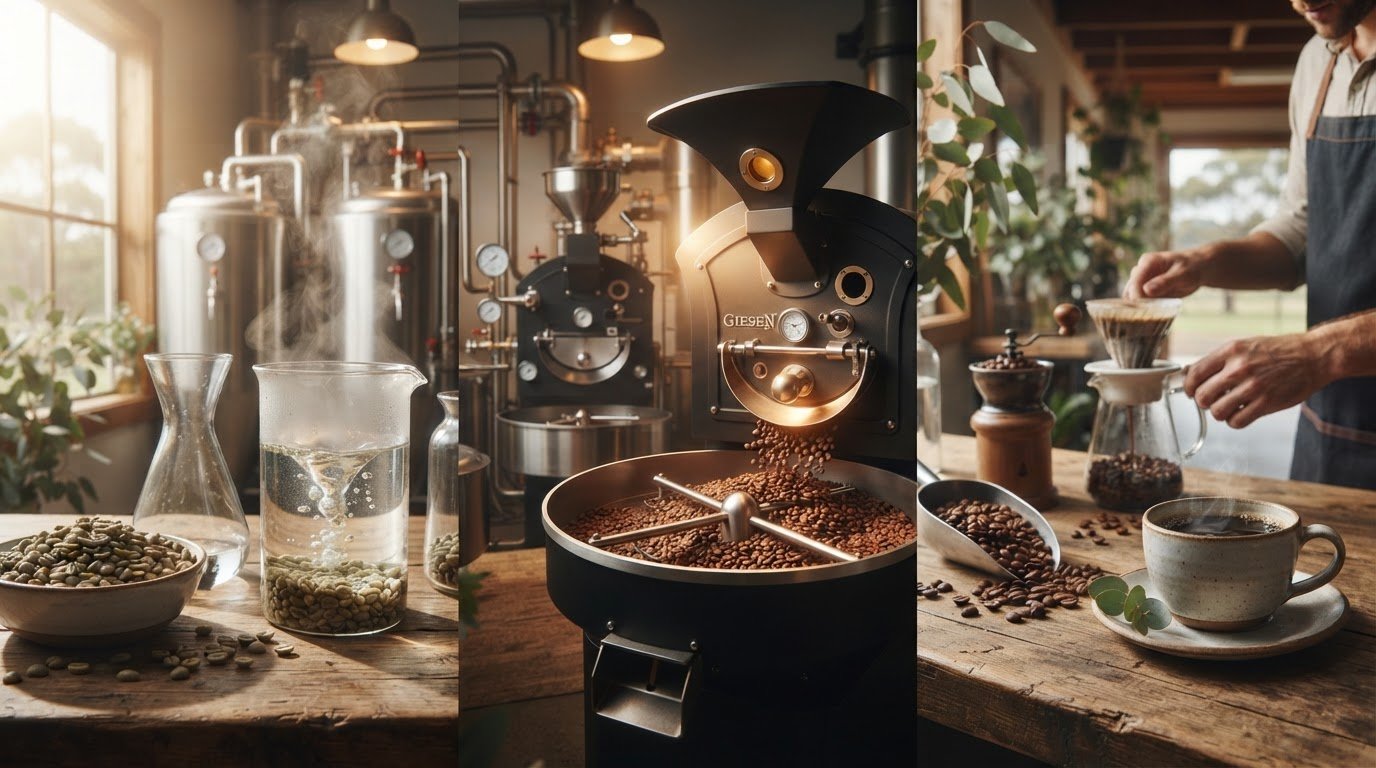
Could a decaf coffee’s flavour be shaped as much by roasting and brewing as by the process that removes its caffeine? If you’ve searched “coffee decaffeinated coffee”, the key question is what happens to the beans before they reach the roaster. Decaffeination takes place while the beans are still green, and the method used can influence how well their original character is preserved.
It’s understandable to wonder whether decaf must taste noticeably different from regular coffee. Decaffeination can affect flavour, but it’s only one part of the process. The coffee itself, the care taken during roasting and the way it’s brewed all matter.
This guide follows decaffeination from green bean to roasted coffee. You’ll see how water-based, solvent-based and carbon dioxide methods extract caffeine, what distinguishes them, and why no single approach is right for every coffee. You’ll also find practical points to check when comparing decaffeinated beans, so you can choose based on product details and your own preferences rather than assumptions about taste or processing.
Key Takeaways
- Decaffeination usually happens to green beans before roasting, and removes most, but not necessarily all, of their caffeine.
- The main processing choices are water, solvents and carbon dioxide, each of which extracts caffeine differently.
- Assess flavour with the whole process in mind. Decaffeination can influence the cup, but bean quality and roasting matter too.
- Before buying, check the processing details, roast date, bean information and whether the coffee suits your preferred brew method.
- Treat processing methods as useful information, not a simple quality ranking. Decaffeination and roasting are separate stages.
What is decaffeinated coffee, and when is caffeine removed?
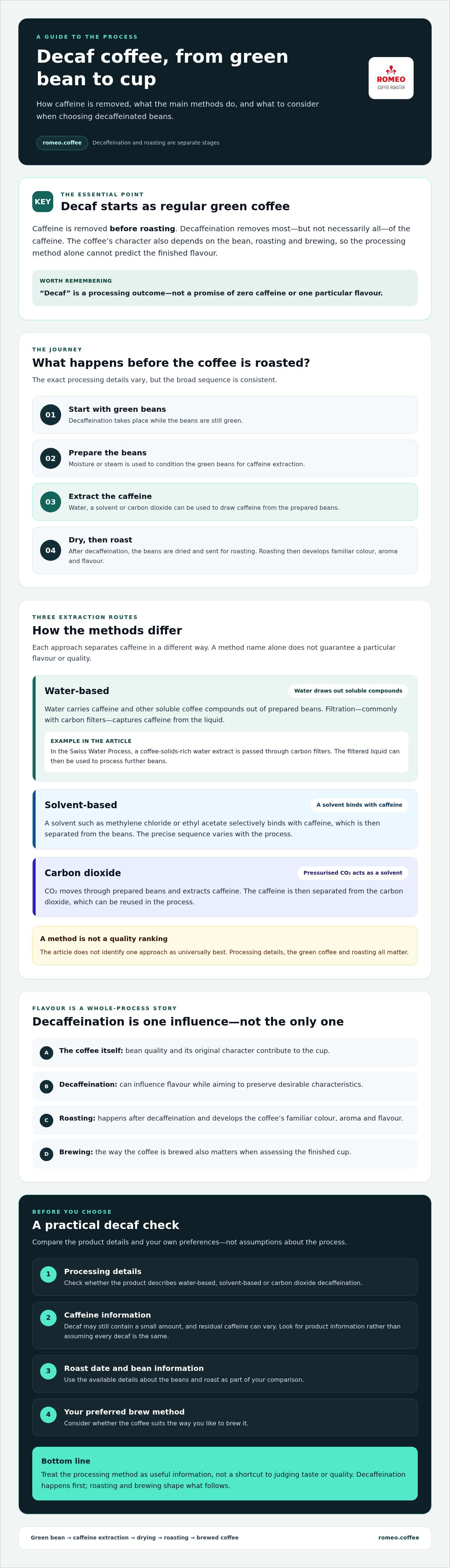
For readers searching “coffee decaffeinated coffee”, the essential point is that decaf starts as ordinary green coffee beans. They’re processed to remove most of their caffeine, but decaffeinated doesn’t necessarily mean caffeine-free. This happens before roasting, while the beans are still green. The aim is to extract caffeine while retaining as much of the coffee’s desirable flavour as possible.
The broad sequence is straightforward: prepare the green beans, extract caffeine, dry the beans, then roast them. The details vary by method. Some processes use water, some use a solvent, and others use carbon dioxide to separate caffeine from the beans. The Decaffeination overview outlines these approaches and provides further background.
What happens to a coffee bean before roasting?
Green beans are the starting point, before roasting develops their familiar colour, aroma and flavour. To prepare them for caffeine extraction, processors use moisture or steam to condition the beans. They then apply the chosen extraction process. Once decaffeination is complete, the beans are dried before being sent for roasting. The roaster therefore works with coffee that has already undergone a distinct processing stage.
Does decaf mean caffeine-free?
No. Decaffeination removes most of the caffeine, but a small amount may remain. The residual amount can vary with the coffee and the process, and standards for describing decaffeinated coffee may differ between markets. Don’t assume every product contains the same amount.
In Australia, check the product description for details about the decaffeination process and any caffeine information provided. If a particular claim matters to you, verify the applicable Australian labelling requirements through an authoritative source rather than relying on a general definition of “decaf”.
It’s also useful to distinguish decaffeination from roasting. Processing aims to remove caffeine while preserving desirable flavour compounds; roasting then develops the cup’s character. Neither stage alone tells you exactly how the finished coffee will taste. The bean and the care taken at each step also contribute.
“Decaf” describes a processing outcome, not a promise of zero caffeine or a single flavour profile. Understanding the green-bean stage gives you a clearer starting point for comparing methods and choosing coffee that suits your preferences.
How coffee decaffeination works: water, solvents and carbon dioxide
For anyone researching “coffee decaffeinated coffee”, the key difference between methods is how caffeine is drawn out of green beans and separated from other coffee compounds. Each approach involves prepared beans, an extraction stage and a final drying stage. The details matter, but a method name alone can’t guarantee a particular flavour or quality.
| Method | How caffeine is extracted and separated |
|---|---|
| Water-based | Water draws soluble compounds from coffee material. Filtration, commonly using carbon filters, separates caffeine from the liquid. |
| Solvent-based | A solvent such as methylene chloride or ethyl acetate selectively binds with caffeine, which is then separated from the beans. |
| Carbon dioxide | Pressurised carbon dioxide acts as a solvent, drawing caffeine from the beans before it is separated from the carbon dioxide. |
How water-based decaffeination extracts caffeine
Water can carry caffeine and other soluble coffee compounds out of prepared green beans. In the Swiss Water Process, a coffee-solids-rich water extract is passed through carbon filters that capture caffeine. The filtered liquid can then be used to process further beans. This approach aims to remove caffeine while limiting the loss of flavour compounds. “Water-based” describes the extraction method; it doesn’t mean the process involves no other substances.
How solvent and carbon dioxide methods differ
In solvent-based processing, compounds such as methylene chloride or ethyl acetate are used to draw caffeine from green beans. The solvent is then separated from the coffee. The precise sequence varies with the process, so the name on a label doesn’t tell you every processing detail.
Carbon dioxide processing uses CO2 under pressure as a selective solvent. It moves through prepared beans and extracts caffeine; the caffeine is then separated from the CO2. The gas can be reused in the process. This is a different extraction route, not proof by itself of better-tasting, safer or more environmentally favourable coffee.
Each method has its own processing conditions. The green coffee, how carefully it’s handled and how it’s roasted also shape the final cup. Treat process information as one useful detail, not a quality ranking. When comparing coffees, review the producer’s description alongside the bean and roast details. For context on roasting styles, explore Romeo’s espresso and single origin coffee.
Does decaffeination change coffee flavour or quality?
Decaffeination can influence flavour, but it doesn’t determine the whole character of a coffee. The process may alter some flavour precursors in the green beans, so the roasted cup can differ from one made with the same coffee before decaffeination. The extent and character of any difference can vary. Decaf isn’t automatically flat, and one processing method doesn’t guarantee the best-tasting result.
Decaf flavour reflects processing, green coffee, roasting and brewing. That’s a more useful guide than judging a coffee by the word “decaf” alone. If you searched “coffee decaffeinated coffee” because you’re concerned about taste, consider the full journey from the bean’s origin to the way it’s prepared in your cup.
Why decaf can taste different from regular coffee
Extraction takes place before roasting and can influence compounds that contribute to aroma and flavour. The result also depends on the green coffee’s origin and variety, the roast profile, freshness and brew method. A coffee might present as chocolatey, nutty, fruity or more delicate, for example. These are possible sensory descriptions, not fixed traits of a particular decaffeination method.
Roasting develops the flavour of the processed beans, and brewing brings those characteristics into the cup. A recipe that suits one coffee may not suit another, so grind size, water and extraction can affect how flavours come through. If a decaf tastes muted, freshness or preparation may be part of the picture, not just the processing method.
Does decaffeination make lower-quality coffee?
No. Decaffeination doesn’t automatically determine the quality of the green coffee. The beans’ underlying quality, how they’re sourced and how carefully they’re handled remain relevant after caffeine is removed. Roasting also calls for attention to the coffee in front of the roaster, rather than assumptions based on its decaf status.
Compare like with like where you can. Look for clear details about the coffee and its roast, then brew it using a method that suits the beans. A tasting note is a helpful guide, not a guarantee that every cup will match it exactly.
Flavour and quality are sensory questions. They’re separate from claims about health, residual substances or chemical safety, which require evidence relevant to those topics. A process label alone can’t settle them, and shouldn’t be treated as proof of a flavour outcome or a safety comparison.
How to assess decaffeinated coffee before you buy
A clear product description can tell you more than a processing name alone. Use this checklist to compare options without treating one method as an automatic mark of quality:
- Decaf status: Check that the coffee is clearly identified as decaffeinated.
- Processing details: Look for the method used, if the roaster provides it.
- Bean information: Note the origin, variety and tasting notes where available.
- Roast freshness: Check the roast date so you can judge how fresh the beans are.
- Brew suitability: Choose a coffee described for your preferred method, or ask the roaster for guidance.
What should a decaf label tell you?
Start with the essentials: confirmation that the coffee is decaffeinated, any disclosed processing method, and useful details about origin and roast. Tasting notes can offer a flavour guide, though they’re not a guarantee of what you’ll experience. If the method or residual-caffeine information isn’t clear, ask the roaster rather than assuming every decaf is processed or labelled in the same way.
If you’ve searched “coffee decaffeinated coffee”, use the description to understand what’s known about the beans, not to rank them by process alone. A detailed label helps you make an informed comparison, but your flavour and brewing preferences matter too.
Which brew method suits decaffeinated coffee?
Decaf can be prepared as espresso, plunger or filter coffee. The right choice depends on the beans and the cup you want. For espresso, begin with a coffee described as suitable for that style, then adjust grind and extraction to taste. For plunger brewing, grind and steeping choices affect the result; the article The Best Coffee Beans for French Press offers a related guide. For espresso basics, see The Ultimate Guide to Espresso Beans.
Don’t assume one recipe will suit every coffee. Make small adjustments to grind size and extraction, changing one at a time so you can judge their effect. Aim for a balanced cup, whether you’re brewing espresso, plunger or filter.
For a closer look at the roastery’s confirmed espresso and single origin beans, explore Romeo Coffee Roaster's range.
What a careful roaster can contribute to decaffeinated coffee
Decaffeination and roasting are separate stages. The green coffee is decaffeinated first, then roasted. A roaster works with beans that have already been processed and makes decisions to develop their flavour. Those decisions can contribute to the finished cup, but they can’t undo or guarantee the effects of the earlier decaffeination process.
For readers searching “coffee decaffeinated coffee”, a useful next step is to look for clear, product-specific information. A process name can help explain how caffeine was extracted, but it isn’t a quality guarantee. The coffee’s origin, roast and intended brew method deserve attention too.
Questions to ask a roaster about decaf
A roaster or retailer should be able to clarify what’s known about a coffee. Consider asking:
- Which decaffeination process was used, and what reliable details are available about it?
- How has the coffee been roasted, and what flavour profile is the roaster aiming to bring forward?
- Which brew methods are recommended, such as espresso, filter or plunger?
- Is any residual-caffeine information available, and where does that information come from?
Clear answers are more useful than broad claims that one method always produces better coffee. If a detail isn’t available, treat it as unknown rather than filling the gap with an assumption.
How Romeo’s roasting experience fits the conversation
Romeo Coffee Roaster is an independent artisan roastery founded in 1999. It sells specialty espresso and single origin coffee beans to retail customers and wholesale partners. Its roasting background provides relevant context for understanding the distinction between processing green coffee and roasting it. Check directly for current availability before choosing a decaf product.
When comparing coffees, give each stage its due. Decaffeination shapes the green coffee; roasting develops it further; brewing brings it to the cup. A careful choice starts with transparent details, not a single label or method name.
To explore Romeo’s specialty coffee range, browse Romeo’s specialty coffee.
Choose your next coffee with clarity
Decaffeination happens while coffee is still green, before roasting. Water, solvents and carbon dioxide offer different ways to extract caffeine, but a method name alone doesn’t guarantee a certain flavour or quality. The green coffee, roast and brewing choices all help shape the cup.
If your search for “coffee decaffeinated coffee” began with questions about taste, look beyond the label. Check the processing details, roast date, bean information and suitability for your preferred brew method. Decaf usually retains a small amount of caffeine, so check product information if that detail matters to you.
Romeo Coffee Roaster is an independent artisan roastery founded in 1999, with specialty espresso and single origin beans for retail customers and wholesale partners. Its roasting background offers useful context, but check current product details before choosing a decaf.
Explore Romeo’s specialty coffee range and use what you’ve learned to choose your next cup with confidence.
Frequently Asked Questions
How is coffee decaffeinated?
Coffee is decaffeinated by extracting caffeine from green beans before they’re roasted. Beans are usually prepared with moisture or steam, then processed using water, a solvent such as ethyl acetate, or pressurised carbon dioxide. Each method separates caffeine from the coffee in a different way. The beans are dried after processing, then roasted. If you’re searching “coffee decaffeinated coffee” methods, look for a product description that explains which process was used.
Is decaffeinated coffee completely caffeine-free?
No. Decaffeinated coffee usually retains a small amount of caffeine, and the amount can vary with the beans and processing method. “Decaf” means most caffeine has been removed, not necessarily all of it. If your caffeine intake is a particular concern, check the product information and ask the seller whether they can provide reliable details about residual caffeine. Don’t assume all decaffeinated coffees contain the same amount.
Does decaffeination use chemicals?
Some methods use solvents, including ethyl acetate or methylene chloride, to extract caffeine from green beans. Other methods use water and filtration, or carbon dioxide under pressure. Water and carbon dioxide are also chemicals in the scientific sense, so “chemical-free” isn’t a precise description. The methods differ in how they extract and separate caffeine. Check the producer’s information for the process used rather than inferring details from broad marketing terms.
Does decaffeinated coffee taste different from regular coffee?
It can, but there’s no single flavour profile shared by all decaffeinated coffee. Processing may influence flavour compounds in the green beans, while origin, variety, roast, freshness and brewing also shape the cup. Some coffees may taste chocolatey or nutty; others may show brighter or more delicate notes. These are examples, not guaranteed results of a specific method. A clear roast date and careful brewing can help you judge a coffee on its own merits.
Which decaffeination method makes the best coffee?
No method guarantees the best-tasting coffee in every case. Water-based, solvent-based and carbon dioxide processes extract caffeine differently, but the name alone doesn’t determine flavour or quality. The green coffee itself, the care taken during processing, roasting and brewing all contribute to the cup. Compare the product details and tasting notes, then choose according to your preferences. If process information is unclear, ask the roaster what they can verify.
Can you make espresso with decaffeinated coffee?
Yes. Decaffeinated coffee can be brewed as espresso, provided the beans suit that style and are prepared accordingly. Start with the roaster’s brew guidance if available, then adjust the grind and extraction to suit the coffee and your equipment. A recipe that works for one bean may not suit another. Look for clear information about roast and intended use, and make small adjustments until the espresso tastes balanced to you.
When are coffee beans decaffeinated?
Coffee beans are generally decaffeinated while they’re still green, before roasting. Moisture or steam prepares the beans for caffeine extraction; the chosen process then removes most of the caffeine. The beans are dried afterwards and roasted as a separate stage. This sequence matters: decaffeination takes place before the familiar colour and roasted flavours develop. Roasting then shapes the character of the processed coffee, alongside the bean’s origin and the way it’s brewed.