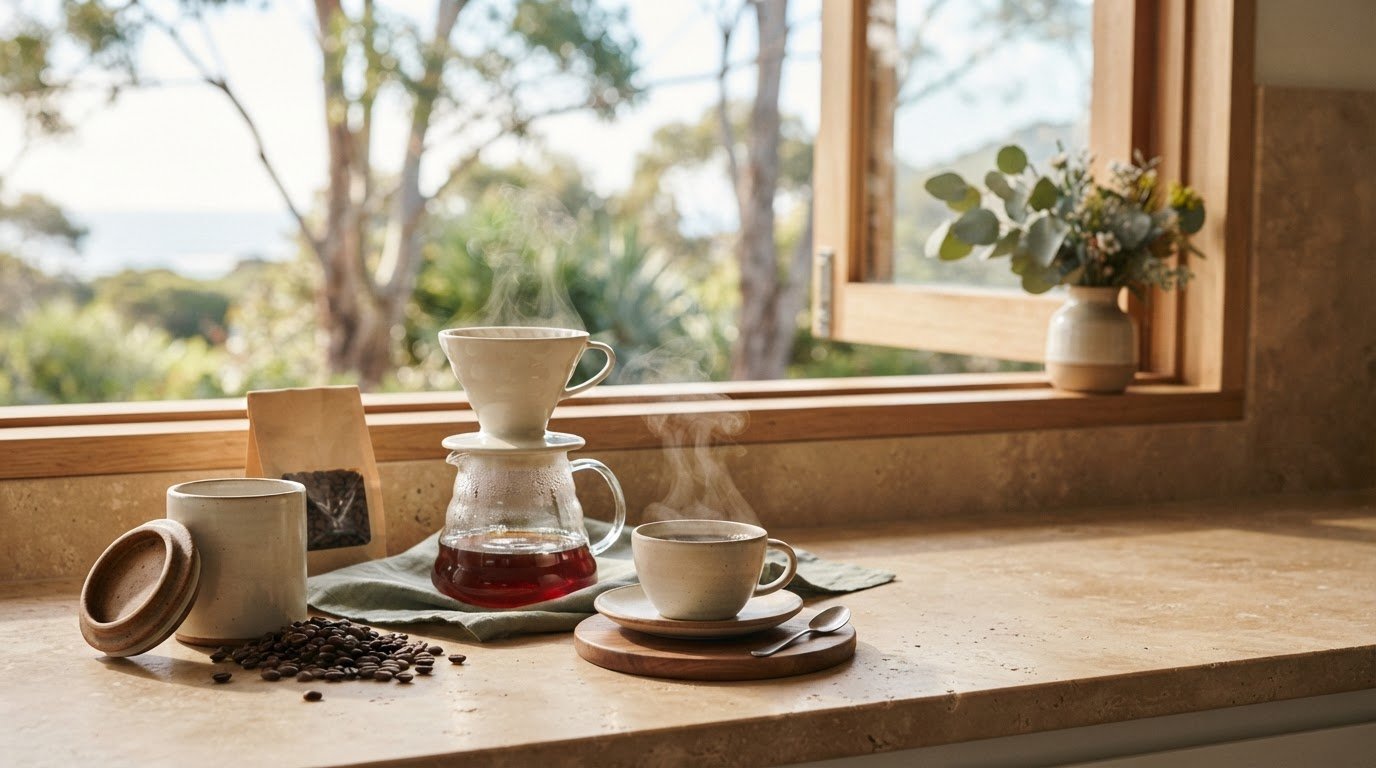
Coffee is best when its freshness, resting time and brewing method work together, so beans roasted yesterday may not yet taste as balanced as you expect.
It’s reasonable to wonder whether to brew a new bag straight away and whether keeping beans fresh calls for special equipment. After roasting, coffee releases carbon dioxide as it rests, which can affect extraction. Storage matters too: air, moisture, light and heat all influence how quickly beans lose aroma and flavour.
This checklist will help you judge when to open a bag, choose beans that suit your preferred brewing method and set up simple storage habits without buying gear you don’t need. You’ll also learn why whole beans generally retain their character longer than ground coffee, and how your taste preferences shape the ideal time to brew. Romeo Coffee Roaster has been roasting since 1999, with a focus on quality that begins with the bean and carries through to the cup.
Key Takeaways
- Coffee is best when its flavour suits your taste and brewing method, not simply because it has the newest roast date.
- Learn what to look for on a coffee bag so you can make a more informed choice for your daily brew.
- Compare whole beans with pre-ground coffee to decide which balance of aroma and convenience works for your routine.
- Use a simple storage checklist to protect your beans without investing in unnecessary equipment.
- Adjust how and when you brew based on the cup you enjoy, using roast information as a helpful guide.
When is coffee best? Start with freshness, taste and your routine
Coffee is best when its flavour suits the person drinking it and the way it’s brewed. Freshness helps preserve the aromas developed during roasting, but a roast date alone can’t tell you whether a coffee will suit your palate or work well in your cup. The useful question isn’t simply “How recently was it roasted?” It’s “Does it taste good brewed the way I like it?”
Coffee freshness describes how much of a roasted bean’s aroma and flavour it retains over time. There’s no single peak that applies to every coffee, brewing method or drinker. A well-roasted coffee and a coffee you personally prefer aren’t always the same thing. Quality reflects the care taken with the beans; preference reflects what you enjoy, from a bright, delicate cup to a fuller, more rounded one.
Does coffee taste best immediately after roasting?
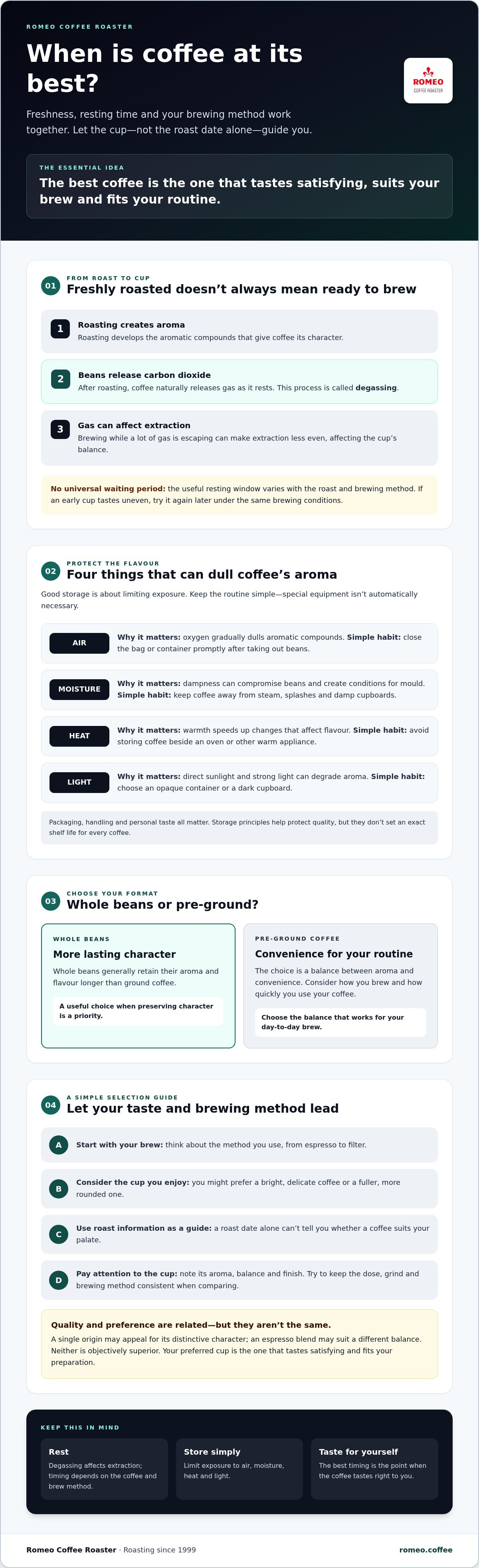
Not necessarily. After roasting, beans release carbon dioxide in a process called degassing. Brewing while a lot of gas is still escaping can affect how water extracts the coffee’s flavours. The useful resting window varies with the roast and brew method, so don’t treat one number of days as a universal rule. For background on the process and ideal home storage for coffee, see this overview of coffee storage.
Try the coffee at different points after roasting, keeping the dose, grind and brewing method consistent. Note the aroma, balance and finish. If the first cup tastes uneven but becomes more balanced later, you’ve found a practical clue about when that coffee works best for your routine.
What does “best coffee” mean for an individual drinker?
Your ideal cup depends on more than freshness. It might be a quick espresso before work, a longer filter brew on a quiet morning, or a familiar style you enjoy every day. A single origin coffee may appeal for its distinctive character, while an espresso blend may suit someone looking for a different balance in their usual preparation. Neither is objectively superior.
Choose coffee with your brewing method and taste in mind, then let the cup guide you. If espresso is your focus, explore this guide to espresso beans for more on selecting beans for that style. The best choice is the one that tastes satisfying, fits your preparation and makes sense for how quickly you use it.
How freshness changes coffee flavour from roast to cup
Roasting creates the aromatic compounds that give coffee its character, but those aromas change as the beans are stored. Oxygen gradually reacts with them, while warmth and light can speed their loss. Moisture can also compromise the beans and, if they become damp, create conditions for mould. The result may be a cup that tastes flatter or less expressive than it did when the coffee was first opened.
Storage conditions affect how well coffee keeps its aroma, and that aroma contributes to the flavour in your cup. For practical advice on limiting exposure to air, moisture, heat and light, see the National Coffee Association storage guidance. These principles help protect quality, but they don’t establish an exact shelf life for every coffee. Packaging, handling and your own taste all matter.
What happens to coffee beans after roasting?
Roasted beans release carbon dioxide over time. This natural process is called degassing. If you brew while a lot of gas is still escaping, it can interfere with how water moves through the coffee and make extraction less even. That may affect the balance of the cup, particularly with methods where water passes through a bed of ground coffee.
There’s no universal point at which every bean is ready. Roast profile and brewing method influence how a coffee behaves, so assess the timing rather than relying on a fixed rule. If an early brew tastes uneven, try it again later under the same conditions. A change in balance or clarity can help you decide whether the coffee has settled to your liking.
Which conditions can dull coffee’s aroma and taste?
Think of storage as limiting four kinds of exposure:
- Air: Oxygen gradually dulls aromatic compounds. Close the bag or container promptly after taking out beans.
- Humidity: Moisture can compromise dry beans. Keep them away from steam, splashes and damp cupboards.
- Warmth: Heat speeds up changes that affect flavour. Avoid storing coffee beside an oven or other warm appliance.
- Light: Direct sunlight and strong light can degrade aroma. Choose an opaque container or a dark cupboard.
A fading aroma or flatter cup can indicate that coffee has lost some quality, but it isn’t a definitive safety test. Stale-tasting coffee isn’t automatically unsafe; taste alone can’t confirm whether something is safe to consume. If beans are damp or show visible mould, don’t brew them. For well-handled beans, simple habits can help protect flavour. Explore espresso and single origin coffee beans from Romeo Coffee Roaster, an independent artisan roastery founded in 1999.
Whole beans or ground coffee: which stays enjoyable for longer?
Whole beans usually retain aroma better before brewing because less of the coffee is exposed to air. Grinding breaks each bean into smaller particles, increasing the surface area that can lose aromatic compounds. Grinding just before brewing helps preserve more aroma until preparation. It won’t guarantee a better cup, though: storage, coffee quality and brewing technique still matter.
Pre-ground coffee is a straightforward option if speed, convenience or access to a grinder matters most. Buy an amount that fits your routine, keep it well sealed and follow the storage advice on the packaging. For either format, an airtight, opaque container kept away from light, moisture and heat can help protect flavour. Harvard’s coffee storage guidelines outline these practical principles.
| Consideration | Whole beans | Pre-ground coffee |
|---|---|---|
| Aroma | More aroma remains within the beans until grinding. | More surface area is exposed after grinding. |
| Convenience | Requires a grinder and an extra preparation step. | Ready to measure and brew. |
| Preparation | Grind to suit your brewing method. | Use the grind supplied; check that it suits your method. |
Is whole-bean coffee fresher than pre-ground coffee?
Whole beans have an advantage in aroma retention, but they aren’t the right fit in every situation. If you have a grinder and enjoy preparing coffee, grinding just before brewing is a considered choice. If you need a quick cup or don’t own a grinder, pre-ground coffee can fit your day better. Coffee is best when its quality and format work with your routine, not when preparation becomes a chore.
How roast style and brewing method shape the choice
Roast preference is personal; a darker or lighter roast isn’t automatically fresher. Grind size affects how water extracts flavour, rather than changing the coffee’s freshness. For example, a plunger brew generally calls for a coarser grind than espresso. If you make coffee with a plunger, read this French press coffee guide for method-specific pointers.
Choose whole beans if you value grinding to order and have the equipment to do it. Choose pre-ground if simplicity matters more. Either can make an enjoyable cup when stored carefully and prepared to suit your brew.
Coffee storage checklist: keep beans away from air, heat, light and moisture
A good storage routine doesn’t need specialist equipment. Choose a cool, dry spot away from the kettle, oven and sunny windowsill, then keep the coffee sealed between uses. Store coffee in an airtight, opaque container in a cool, dry cupboard to help preserve its aroma and flavour.
- Check the bag. Look for roast information where available, and choose an amount you can use comfortably as part of your normal routine.
- Open it carefully. Avoid leaving the bag open while you prepare your brew. Reseal it securely after each use.
- Choose a suitable container. If the original packaging doesn’t reseal well, transfer the beans to a clean, completely dry, airtight and opaque container.
- Find the right spot. Keep the container in a cupboard away from the oven, windows, sink, dishwasher and other sources of heat, light or moisture.
- Grind what you need. If you use whole beans, grind them shortly before brewing and return the remaining beans to storage promptly.
How should you store an opened bag of coffee beans?
Keep the bag closed between brews, gently pressing out excess air before resealing if the packaging allows. If you transfer the beans, make sure the container is clean and dry first. Don’t put a damp scoop or your hands into the beans. There’s no single storage lifespan that suits every coffee and household, so use the roast information and your own taste as guides.
Should you refrigerate or freeze coffee beans?
For everyday use, refrigeration isn’t necessary. A fridge can expose coffee to moisture and surrounding food odours, particularly if the pack isn’t sealed well. Freezing also isn’t essential for a regular supply. Moving cold beans into warm, humid air can cause condensation, so avoid repeated temperature changes. Without a reliable, coffee-specific method for your circumstances, keep the beans in a cool, dry cupboard instead.
Simple habits are enough. Coffee is best kept away from conditions that dull its aroma, without turning storage into a project. If you’re choosing beans to suit your routine, explore espresso and single origin coffee beans from Romeo Coffee Roaster.
Choose coffee that suits your taste, then make freshness easy
Freshness is useful guidance, not a guarantee of a perfect cup. Choose coffee for the way you brew and the flavours you enjoy, then keep it sealed and let taste guide any adjustments. A simple routine is more valuable than chasing a precise roast age or buying storage equipment you don’t need.
A quick checklist before buying coffee
- Match the format to your setup. Whole beans need a grinder; pre-ground coffee is ready to brew. Check that the grind suits your brewing method.
- Look for roast information. If a roast date is shown, use it as helpful context rather than a promise of when the coffee will taste best.
- Choose for your cup. Consider whether espresso or single origin coffee better fits your preferred flavour and preparation. Neither category is automatically the right choice for everyone.
- Think about your routine. Choose an amount that you can use at a comfortable pace, rather than buying more than suits your household.
Romeo Coffee Roaster offers espresso and single origin coffee beans. These categories provide different starting points for choosing a coffee that suits your brewing method and taste.
A simple routine for better-tasting coffee at home
After opening a bag, seal it promptly and return it to a cool, dry place away from light, heat and moisture. If you buy whole beans, grind close to brewing so more aroma remains in the beans until you prepare your cup. Keep your storage habits consistent, which makes it easier to notice whether a change in flavour comes from the coffee or your brewing.
If a cup tastes different than expected, adjust one brewing variable at a time. Try a slightly finer or coarser grind, then taste again before changing anything else. This gives you a clearer sense of what improves the cup. Coffee is best when its flavour suits you, its preparation fits your day and its storage is straightforward.
For a considered next step, explore Romeo Coffee Roaster’s coffee and compare the espresso and single origin options with the way you like to brew.
Make freshness part of your coffee routine
The best cup isn’t defined by a roast date alone. Coffee is best when its flavour suits your taste and brewing method. Freshness matters, but so do careful storage and the way you prepare each brew.
Choose beans or ground coffee to suit your routine, check roast information where it’s available, and treat it as a useful guide rather than a promise of a particular flavour. Keep coffee sealed in a cool, dry place away from heat, light and moisture. If the cup doesn’t taste quite right, adjust one brewing variable at a time and see what changes.
These small habits help you get more from the coffee you choose, without making storage complicated. Romeo Coffee Roaster is an independent artisan roastery founded in 1999, offering espresso and single origin coffee beans. Explore Romeo Coffee Roaster’s coffee to find a category that fits your preferred brew. Then make a cup, trust your palate and refine your routine one brew at a time.
Frequently Asked Questions
When is coffee best after roasting?
There’s no single number of days that suits every coffee. Roasted beans release carbon dioxide as they rest, and this can affect extraction, so a brew made immediately after roasting may not taste as balanced as one made later. Roast style and brewing method both matter. Use roast information as a guide, then taste the coffee over time to find the window you prefer.
Is coffee best when it is freshly roasted?
Not necessarily. Freshly roasted coffee can still be releasing carbon dioxide, which may affect how evenly water extracts flavour. Coffee is best when its aroma and taste suit your preferences and brewing method, rather than simply because it has the newest roast date. Freshness helps preserve character, but it doesn’t guarantee a preferred cup. Try brewing at different points and compare the results using the same method.
How should I store coffee beans to keep them fresh?
Store beans in a clean, dry, airtight and opaque container in a cool, dry cupboard. Keep them away from sunlight, ovens, kettles, sinks and other sources of heat or moisture. Close the container promptly after taking out what you need. If you use whole beans, grind them shortly before brewing. These simple steps help protect aroma without requiring specialised storage equipment or a precise storage deadline.
Should coffee beans be stored in the fridge or freezer?
For everyday use, a cool, dry cupboard is generally the simpler choice. A fridge can expose coffee to moisture and food odours if its packaging isn’t well sealed. Moving cold beans into warm air may also cause condensation. Freezing isn’t necessary for a regular supply, and repeated temperature changes can be unhelpful. Without a suitable method for your circumstances, keep the beans sealed at room temperature instead.
Are whole coffee beans better than pre-ground coffee?
Whole beans generally retain more aroma before brewing because grinding exposes more surface area to air. Grinding just before you make a cup can help preserve aroma until preparation. Pre-ground coffee is convenient and can suit a busy routine or a household without a grinder. Neither format guarantees a better result: storage, grind suitability, brewing technique and personal taste all shape the cup.
Can coffee go stale even if it is stored in an airtight container?
Yes. An airtight container helps limit exposure to oxygen, but it can’t stop coffee changing over time. Aroma may fade and the brewed cup may taste flatter, particularly if beans are also exposed to heat, light or moisture. Keep the container sealed and stored in a cool, dry, dark place. A stale taste is a sign of reduced quality, not by itself a reliable safety test.
What should I check when choosing coffee beans for home?
Check whether the coffee is whole bean or ground, whether the grind suits your brewing method, and whether roast information is provided. Use a roast date as helpful context, not a guarantee of peak flavour. Consider the taste you enjoy and how quickly your household uses coffee. Romeo Coffee Roaster offers espresso and single origin coffee beans, two categories to consider when matching your choice to your preferred brew.