The best coffee-bean trend is one that helps you enjoy your next cup. In 2026, Australian drinkers are weighing origin, roast style, consistency and convenience, but a new label or flavour note doesn’t automatically make a coffee the right fit. A search for premium coffee beans may bring up plenty of choice. The more useful question is which beans suit your palate and the way you brew.
It’s easy to feel caught between new origins, shifting descriptions and claims that sound more like marketing than useful guidance. The lasting changes are practical: people want clearer information about what’s in the cup, reliable results and quality that works at home or in a café. You don’t need to chase every release to make a considered choice.
This article explores the shifts shaping how Australians choose, brew and appreciate coffee in 2026. You’ll learn how to weigh trend claims against your taste and brewing habits, and how espresso and single origin beans offer different experiences. Drawing on Romeo Coffee Roaster’s experience as an independent roastery founded in 1999, we focus on thoughtful selection over passing hype.
Key Takeaways
- Use coffee trends as clues to changing preferences, not rules that dictate what belongs in your cup.
- Learn which origin details add useful context, and why they can’t guarantee a particular flavour.
- Compare blends and single origin coffees by the experience you want and the way you brew.
- When exploring coffee beans melbourne searches, narrow the choices by your taste and brewing needs rather than novelty alone.
- See how a considered selection from an experienced roastery can help turn curiosity into a more confident coffee choice.
Coffee bean trends in 2026: what is changing, and why does it matter?
What coffee-bean trends are shaping what Australians buy and enjoy in 2026? The useful answer isn’t a list of rules to follow. Trends are signals: they can point to changing preferences, practices or expectations, but they don’t determine what will taste good to you.
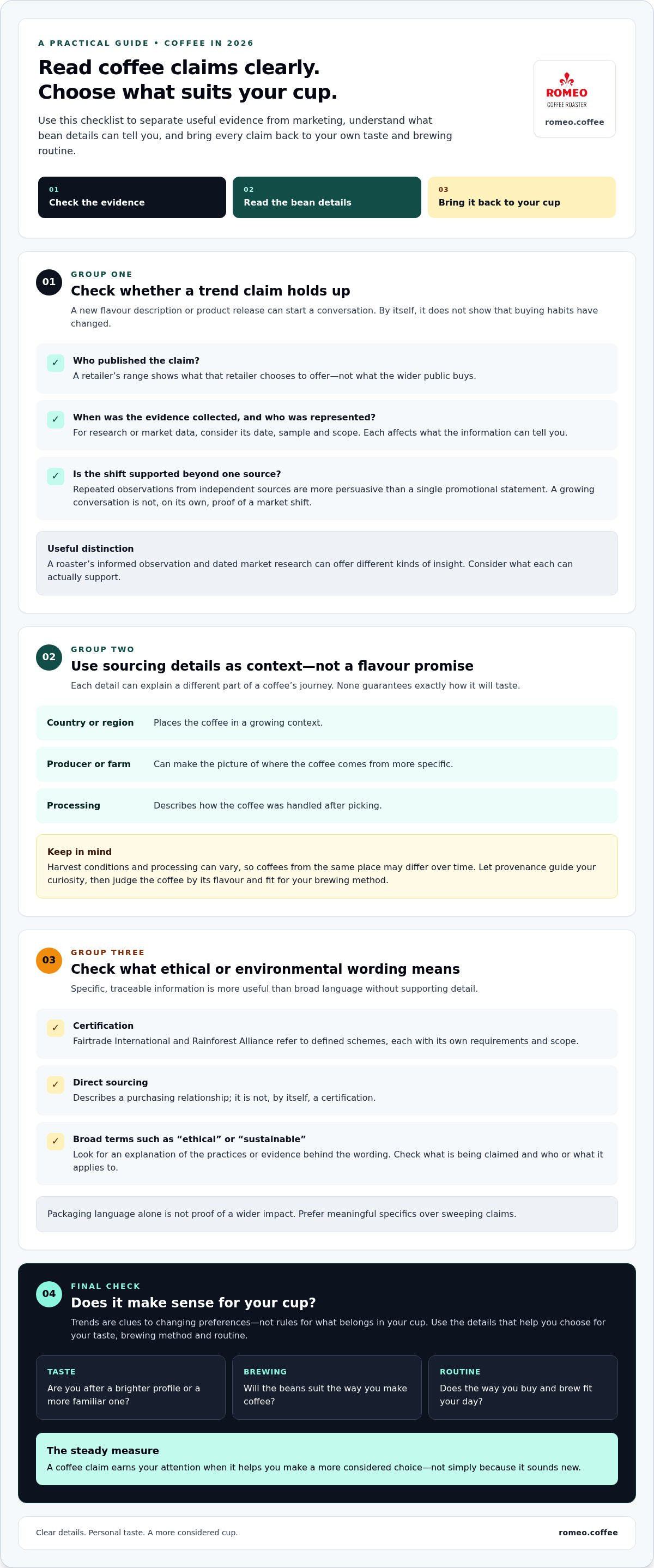
A coffee-bean trend is a sustained shift in how people select, understand or use coffee. A new flavour description can spark conversation, but that alone doesn’t show that buying habits have changed. To identify a broader shift, look for evidence gathered over time and across relevant parts of the Australian market. Distinguish dated research or market data from a roaster’s informed observation, and consider what each can actually tell you.
In brief: the themes to watch are clearer sourcing information, more individual flavour preferences and convenient ways to discover or buy coffee. They’re prompts for closer attention, not proof that every Australian drinker wants the same thing.
Which coffee trends are worth paying attention to?
Start with three questions. Are drinkers seeking more context about a bean’s origin? Are they exploring flavours beyond familiar profiles? Are changes in access making it easier to find coffee that suits a particular routine? These themes are worth investigating, but calling them widespread shifts requires current evidence, not just a compelling story or a prominent new offering.
The Third-wave coffee movement provides useful background to the attention given to coffee’s origin, flavour and craft. It helps explain why these subjects feature in coffee conversations. It doesn’t, by itself, demonstrate that Australian purchasing behaviour is changing now. A growing conversation and a proven market shift are different things.
How to read trend claims without being swept up in hype
Check who published a claim, when its evidence was collected and who was represented. A retailer’s product range shows what it chooses to offer, not what the wider public buys. A survey may offer broader insight, but its date, sample and scope matter. Repeated observations from independent sources are more persuasive than a single promotional statement.
Then bring the claim back to your own cup. If flavour exploration interests you, decide whether you want a brighter or more familiar profile. If convenience matters, consider how you prefer to buy and brew. A search for coffee beans melbourne may offer plenty of options, but a trend only earns your attention if it helps you choose beans for your taste, brewing method or routine. That’s a steadier measure than novelty alone.
Sourcing transparency: why coffee drinkers want more context about the bean
Sourcing transparency means useful, traceable information about where coffee comes from and how it moves through the supply chain. It gives drinkers more context than a country name or a broad claim of ethical sourcing. The Stockholm Environment Institute has examined the challenges of improving transparency in the global trade of coffee, where information can be difficult to follow across multiple stages.
A verifiable sourcing detail identifies something specific; a broad sustainability claim needs evidence explaining what it covers. The distinction matters. Origin information can help you understand a coffee’s journey, but it doesn’t guarantee a particular taste or prove that every part of its supply chain meets the same standard.
What can origin and producer information tell you?
Country and region place a coffee in a growing context. Producer or farm details can make that picture more specific, while processing information describes how the coffee was handled after picking. Each detail adds a different piece of context. None, on its own, tells you exactly how the beans will taste in your cup.
Provenance is an invitation to explore, not a flavour promise. Harvest conditions and processing can vary, so coffees from the same place may differ over time. Use origin details to guide your curiosity, then judge the coffee by its flavour and suitability for your brewing method. A label should inform your choice, not make it for you.
How to assess ethical and environmental language
Read claims precisely. A certification such as Fairtrade International or Rainforest Alliance refers to a defined scheme with its own requirements and scope. Direct sourcing describes a purchasing relationship; it is not, by itself, a certification. Terms such as “ethical” or “sustainable” are broad unless the roaster explains the practices or evidence behind them.
Look for specifics: what is being claimed, who or what it applies to, and whether supporting information is available. Don’t treat packaging language as proof of a wider impact. That same care helps when comparing coffee beans melbourne search results: favour clear, meaningful details over sweeping virtue statements.
For a practical way to explore different coffee styles, browse Romeo Coffee Roaster’s espresso and single origin coffee. Romeo is an independent artisan roastery founded in 1999, with both categories offering useful starting points for choosing by taste and brewing preference.
Flavour, roast and variety: how coffee preferences are becoming more personal
Interest in distinctive flavour profiles is part of the current coffee conversation, but it doesn’t mean every drinker wants an unusual cup. Some prefer familiar, rounded flavours; others enjoy exploring brighter or more complex notes. The useful shift is recognising that preference is personal and choosing beans to suit the cup you want.
Roast level also shapes flavour. A lighter roast can let more of a coffee’s origin character come through, while a darker roast tends to bring forward deeper, roast-led flavours. These are general tendencies, not guarantees. The bean, processing and brewing all influence the result, so use roast descriptions as a starting point rather than a promise.
Blends and single origin coffees offer different kinds of choice
A blend combines coffees selected to create a particular balance or cup profile. Single origin coffee is identified with a particular geographical source, offering a way to explore the character associated with that provenance. Neither is inherently better. A blend may suit someone seeking a familiar style, while a single origin can appeal to drinkers curious about a coffee’s distinct qualities.
For espresso-specific considerations, see the espresso beans guide. It’s a useful next step when comparing beans for your preferred espresso method.
How to use tasting notes as a guide, not a promise
Tasting notes describe perceived characteristics, not ingredients added to the coffee. Descriptors such as chocolate, citrus or stone fruit help communicate what someone may notice, but your perception can differ. For a fairer comparison, brew a few coffees using the same method and pay attention to what stands out in each cup.
Try recording whether you prefer more sweetness, acidity, body or a familiar roast character. That simple reference can be more useful than chasing fashionable descriptors. Surveys such as this overview of Australian consumers' coffee drinking habits can describe broad patterns, but they can’t tell you which flavour you’ll enjoy. If you’re comparing coffee beans melbourne search results, start with your own tasting preferences and brew method.
- Preference: A balanced, familiar cup. Possible style: Blend. Ask: Do I want sweetness and body to feel rounded?
- Preference: A more distinctive profile. Possible style: Single origin. Ask: Which qualities do I notice and enjoy?
- Preference: Deeper, roast-led flavours. Possible style: Darker roast. Ask: Does this taste suit my brewing method?
Coffee buying habits: convenience, discovery and more deliberate choices
Online browsing can make it easier to compare origins, roast descriptions and coffee styles. Recurring orders can simplify buying a coffee you already enjoy. But more choice, or the availability of a subscription option, doesn’t prove that Australian drinkers are changing their habits. Treat these formats as practical options to assess against your routine, not trends you need to follow.
To separate lasting value from promotion, ask what the format improves. Does browsing help you find beans suited to your brew? Does repeating an order save effort without leaving you with more coffee than you can use? Does a new option add variety you’ll genuinely enjoy? The answers matter more than how prominently a format is advertised.
A simple way to decide how to explore coffee
Keep the decision grounded in your household’s needs. Start with how you brew and the flavour you already like, then decide whether you want a dependable choice or a measured change. Try one unfamiliar profile at a time. That makes it easier to notice what’s different, rather than changing several things and guessing which one shaped the cup.
If you use a plunger, the French press coffee guide offers a focused starting point for exploring beans for that brew method.
- 1. Consider household use. Think about how much coffee you can comfortably use while it’s still enjoyable.
- 2. Match the brew. Choose beans with your usual method in mind, whether that’s espresso or plunger.
- 3. Set your appetite for variety. Reorder a familiar coffee for consistency, or introduce one new profile to explore.
When convenience supports a better coffee routine
Repeating a purchase can reduce the effort of restocking a coffee that suits your taste. A subscription may offer a regular routine, but it isn’t automatically the right fit for every household. Your consumption, storage space and interest in trying different coffees all affect whether a recurring order makes sense. Keep beans sealed and away from heat and light, and choose an amount you can use at a comfortable pace.
Convenience is valuable when it supports freshness and fits your brewing routine. Explore Romeo Coffee Roaster’s espresso and single origin coffee to compare options by the way you like to brew and drink.
What coffee trends mean for choosing beans from an experienced roastery
Trends can introduce new ideas, but the final test is still the cup. Origin details might prompt you to try a single origin coffee. Interest in familiar flavour and consistency may lead you towards an espresso style that suits your usual brew. Neither choice needs to follow a trend. Let your taste, equipment and coffee routine guide the decision.
Romeo Coffee Roaster is an independent artisan roastery founded in 1999. Its espresso and single origin beans offer two useful starting points for exploring coffee. Experience isn’t a guarantee of a particular flavour; it provides a foundation for considered selection and artisan roasting. The aim is a coffee you can appreciate, whether you value a dependable daily cup or enjoy discovering a different profile.
A practical checklist for choosing your next bag
Before choosing, pause on three points. First, match the coffee style to your brew method and the flavour qualities you tend to enjoy. Next, use available origin, roast and tasting information as context, not as promises about the finished cup. Then choose one new variable to explore. Keep your familiar coffee as a reference so you can compare what changed.
- Brew method: Does the coffee suit how you prepare it?
- Flavour preference: Are you looking for familiar balance or a profile you haven’t tried?
- One change: Can you compare the new coffee with a known favourite without changing your brewing routine at the same time?
This approach also makes searches for coffee beans melbourne more useful. Rather than choosing by trend language alone, narrow the options by what you want from your next cup.
Explore coffee with Romeo Coffee Roaster
A considered range gives you room to explore without treating every new release or description as essential. Romeo Coffee Roaster’s experience as an independent artisan roastery provides context for choosing between espresso and single origin beans, then using your own tasting experience to decide what belongs in your routine. Start with the style that fits your brew. Explore further if curiosity calls.
Explore Romeo Coffee Roaster’s coffee beans and use the range as a starting point for finding a coffee that suits your preferences.
Choose your next coffee with confidence
Coffee trends can help you discover new origins, flavour profiles and ways to buy, but they’re best treated as prompts, not prescriptions. Look for clear information, match beans to your preferred brew and change one thing at a time. The cup itself is the best guide to what suits you.
Whether you’re comparing coffee beans melbourne searches or exploring options closer to home, focus on taste and routine rather than novelty alone. Romeo Coffee Roaster is an independent artisan roastery founded in 1999, offering espresso and single origin coffee beans for retail customers, alongside wholesale supply for businesses. Its experience reflects the value of considered selection and artisan roasting.
Ready to explore? Explore Romeo Coffee Roaster’s coffee beans and find a starting point that fits the way you like to brew. Take your time, trust your palate and enjoy discovering what makes a coffee your own.
Frequently Asked Questions
What coffee-bean trends are shaping 2026?
Key themes in coffee conversations include more interest in origin information, distinctive flavour profiles, convenient buying options and consistent coffee for home brewing. These are useful areas to watch, but they don’t prove every Australian drinker is changing what they buy. Consider the evidence behind a trend and whether it helps you choose beans that suit your taste, brewing method or routine.
Are single origin coffee beans becoming more popular?
Single origin coffee gets attention because it lets drinkers explore coffee associated with a particular geographical source. That interest alone doesn’t confirm a broad rise in purchases. Choose it if you enjoy exploring differences in origin and flavour, rather than because it’s presented as a trend. A blend may be a better fit if you prefer a particular balance or familiar style.
What is the difference between a blend and single origin coffee?
A blend combines coffees selected to create a particular balance or cup profile. Single origin coffee is identified with a particular geographical source. Each offers a different way to choose: a blend can suit someone seeking a defined style, while a single origin can invite exploration of a coffee’s provenance and character. Neither is automatically superior; your taste and brewing method matter.
How can I tell if a coffee trend is more than marketing?
Check who made the claim, when the evidence was collected and which drinkers it represents. Look for repeated observations across independent sources, rather than relying on one brand’s promotion or product range. A growing conversation isn’t necessarily a proven change in purchasing behaviour. Finally, connect the claim to a real decision: does it help you choose by flavour, brew method or buying routine?
Does a lighter or darker roast mean better coffee?
No. Roast level describes a style, not a quality ranking. Lighter roasts can show more of a coffee’s origin character, while darker roasts tend towards deeper, roast-led flavours. These are broad tendencies, and the final cup also depends on the beans and brewing method. Choose according to the flavours you enjoy and how you prepare your coffee, not a rule about which roast is best.
Are coffee subscriptions worth it for home drinkers?
A subscription can make reordering a coffee you already enjoy more routine, but it won’t suit every household. Consider how much coffee you use, whether you want the same beans regularly and whether you have a suitable place to store them. If you like variety or your needs change, buying as you go may offer more flexibility. Choose the format that fits your actual routine.
How should I choose coffee beans for my brewing method?
Start with the way you brew, then consider the flavour profile you prefer. Espresso beans are a practical category to explore for espresso preparation; for plunger brewing, look for coffee suited to that method. Use roast, origin and tasting notes as helpful context, not guarantees. If you’re comparing coffee beans melbourne options, change one variable at a time and assess the cup against a familiar coffee.