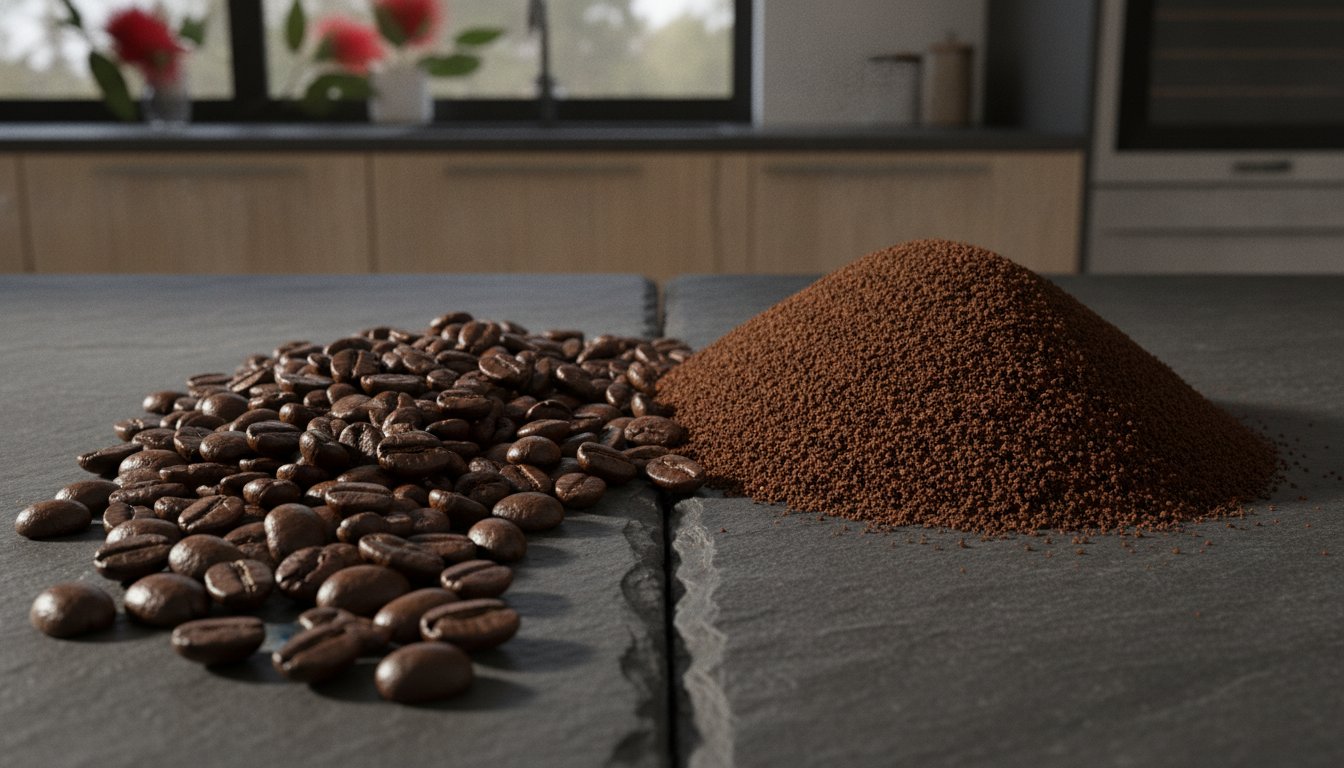
Your coffee is dying. The second those beans are cracked open, a chemical countdown begins. For many home brewers, the choice between whole bean vs ground coffee feels like a simple matter of convenience. It isn't. It's a matter of chemistry. You've likely felt the frustration of a flat, bitter cup despite investing in premium beans. It's a waste of potential. It's a waste of your money. Most importantly, it's a missed opportunity for a superior sensory experience.
At Romeo Coffee Roaster, we've refined our artisan process since 1999. We know that freshness isn't a marketing term. It's a precise, fleeting window of opportunity. This guide explores why the timing of your grind is the single most important factor in your morning ritual. You'll learn how to choose the right format for your setup, preserve delicate single origin notes, and finally achieve a café-quality extraction at home. Excellence requires consistency and a commitment to the craft. We'll show you how to master both.
Key Takeaways
- Understand why oxidation is the primary enemy of flavour. Grinding creates vast surface area that accelerates the loss of volatile aromatic oils.
- Evaluate the practical trade-offs of whole bean vs ground coffee based on your specific brewing equipment and your daily routine.
- Identify why a quality burr grinder is a more critical investment for your home setup than the coffee machine itself.
- Learn how to protect the delicate characteristics of single origin coffee by minimising the time between the grind and the brew.
- Master the artisan variables that prevent bitterness and staleness, ensuring every cup meets a professional standard of excellence.
The Core Distinction: Flavour Preservation vs Convenience
Excellence in coffee is rarely a matter of chance. It is a result of meticulous choices made at every stage of the process. For the home brewer, the most critical decision lies in the format of the bean. The debate of whole bean vs ground coffee isn't merely about preference. It is about physics. From an artisan perspective, convenience is frequently the enemy of excellence. Coffee is a volatile product. Its character is defined by delicate oils and aromatic gases that begin to escape the moment the bean is roasted. Grinding accelerates this process exponentially.
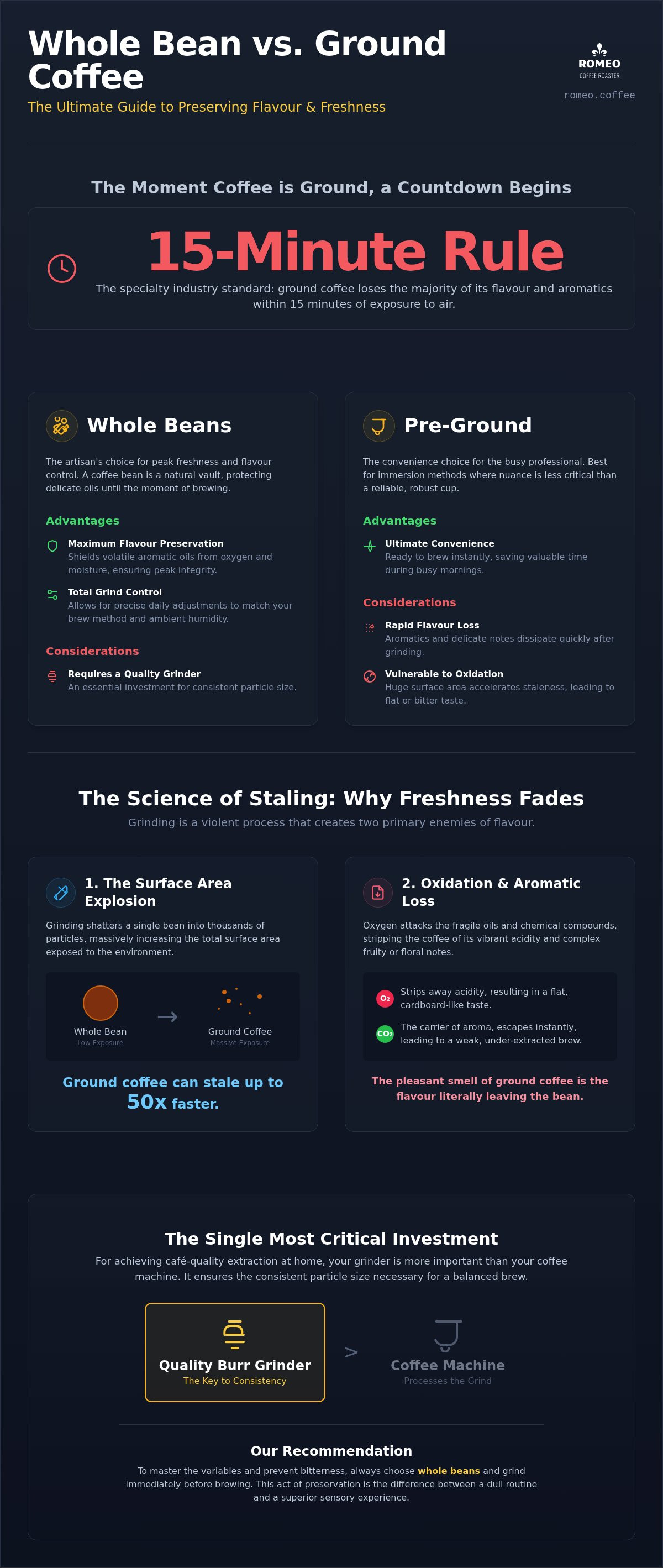
The 15-minute rule is a standard in the specialty industry. It suggests that ground coffee loses the majority of its aromatics within a quarter-hour of exposure to the air. Once these compounds vanish, they cannot be recovered. The result is a cup that tastes flat, woody, or unnecessarily bitter. Choosing whole beans is an act of preservation. It ensures the integrity of the roast remains intact until the very moment you are ready to brew. It's the difference between a dull routine and a sensory experience.
Whole Beans: The Vault of Flavour
A coffee bean is a natural protective capsule. Its cellular structure acts as a vault, shielding volatile oils from the two primary catalysts of staleness: oxygen and moisture. For specialty coffee enthusiasts, whole beans are the only viable choice. They offer a level of control that pre-ground coffee cannot match. Environmental factors like daily humidity and temperature fluctuations affect how water moves through coffee grounds. Using whole beans allows you to adjust your grind size slightly each morning. This precision ensures a consistent extraction and a balanced flavour profile, regardless of the weather. It's about mastery over the variables.
Pre-Ground Coffee: When Convenience Wins
We recognise the demands of modern life. There are mornings when the ritual of grinding is a luxury time doesn't permit. High-quality pre-ground options serve a specific purpose for the busy professional. At Romeo Coffee Roaster, we mitigate the degradation of ground coffee by roasting and grinding to order. This ensures the product arrives at your door as fresh as possible. Pre-ground coffee performs best in immersion brewing methods. The plunger or a standard drip filter are more forgiving of the slight loss in aromatics. While it may lack the vibrant high notes of a freshly ground Single Origin coffee, a well-sourced pre-ground Espresso Coffee Beans selection still provides a reliable, robust cup for those on a tight schedule.
The Science of Staling: Oxidation and Surface Area
Freshness is not a vague concept. It is a measurable chemical state. When comparing whole bean vs ground coffee, the primary enemy is oxidation. Oxidation is the chemical reaction that strips coffee of its vibrant acidity. It transforms complex, fruity, or floral notes into a dull, cardboard-like flatness. This degradation begins the moment oxygen hits the bean's internal structure. For the artisan, managing this reaction is the difference between a mediocre cup and a masterpiece. Every second of exposure counts.
The structural integrity of the bean is its only defence. Once that barrier is breached, the countdown to staleness accelerates. While whole beans can maintain their peak profile for weeks, ground coffee begins to fade in minutes. This isn't just a matter of taste. It is a fundamental shift in the coffee's chemistry. Understanding the physics of this decline is essential for anyone seeking a café-quality extraction at home.
The Surface Area Explosion
Grinding is a violent, transformative process. It shatters a single roasted bean into thousands of microscopic particles. This creates a massive increase in the total surface area exposed to the environment. More surface area means more entry points for oxygen. In technical terms, ground coffee can stale up to 50 times faster than whole beans. Environmental factors act as catalysts in this decay. Light triggers photo-oxidation. Heat speeds up molecular movement, while moisture introduces unwanted chemical reactions. Together, they compromise the integrity of the roast, leaving behind a hollow remnant of the original bean.
Volatile Compounds and Aromatic Loss
Carbon dioxide is the silent carrier of coffee's character. During the roasting process, CO2 is trapped within the bean's cellular walls. When you brew, this gas creates the "crema" in your espresso and aids in the extraction process by creating turbulence. Grinding releases this gas instantly. This is why you can smell ground coffee from across the room. It's a pleasant scent, but it signifies a loss. That aroma is the flavour literally leaving the bean. Without that gas, water cannot penetrate the grounds efficiently. The result is an under-extracted, thin brew that lacks the depth found in our Single Origin coffee selections. Preservation is the only path to a superior cup.
Matching the Format to Your Brewing Method
Your choice of equipment dictates your choice of format. The whole bean vs ground coffee decision is not universal. Some methods demand absolute precision. Others offer a degree of leniency. Understanding where your preferred brewing style sits on this spectrum is vital for achieving a consistent result. Excellence is found in matching the material to the mechanism. It's about respecting the chemistry of the extraction.
Espresso: The Unforgiving Method
Espresso is the most demanding extraction process. It relies on high pressure to force water through a compact bed of coffee. This method amplifies every flaw. Pre-ground coffee rarely succeeds here. It lacks the necessary resistance. Without the trapped CO2 discussed previously, water channels through the grounds too quickly. This leads to shots that are thin, sour, and lack body. It's a waste of quality produce and a frustrating experience for the brewer.
Freshness is the foundation of a balanced shot. Professional results require "dialling in" the grind size daily. Factors like ambient temperature and humidity shift how beans behave. Pre-ground coffee is static. It cannot adapt to these shifts. For those seeking a superior home experience, using freshly ground espresso beans is the only way to ensure the correct pressure and flow rate. It is the difference between a watery mess and a rich, syrupy extraction. Consistency is the hallmark of the artisan.
Filter and Manual Brews: Preserving the Origin
Filter and pour-over methods are celebrated for their clarity. They highlight the delicate, floral, or tea-like qualities of a bean. These nuances are the first to degrade when coffee is ground. If you value Single Origin coffee, whole beans are essential. A consistent grind size is necessary to prevent "muddy" flavours caused by uneven extraction. Manual brewing is a deliberate act. It requires the best possible raw material to reward the effort. You can't shortcut quality.
Immersion methods like the plunger or cold brew are different. They are more forgiving. These methods use a coarser grind and a longer contact time between water and coffee. Because the extraction is slower and less aggressive, the rapid loss of aromatics in pre-ground coffee is less noticeable. It's a practical compromise for a reliable morning brew when time is scarce. However, even here, whole beans will always provide a cleaner finish and a more vibrant cup. High standards deserve high-quality inputs. Choose the format that respects your ritual.
The Coffee Grinder: The Essential Bridge to Quality
A common error in home brewing is over-investing in the machine while neglecting the grinder. This is a fundamental mistake. The grinder is the bridge between the raw potential of the bean and the final extraction. When evaluating whole bean vs ground coffee, the grinder is your most critical tool. It dictates the texture and the surface area. A high-end machine cannot compensate for a poor grind. Precision is the priority. Consistency is the goal.
Adopting a grinder into your morning ritual represents a psychological shift. It marks the transition from consuming a commodity to participating in a craft. This process requires a small investment of time, but the reward is a significant leap in quality. You're no longer at the mercy of pre-ground limitations. You're in control of the variables that define excellence.
Burr Grinders: Precision Over Power
Burr grinders are the industry standard for a reason. They use two oscillating plates to crush beans into uniform particles. This uniformity is essential. Blade grinders, by contrast, act like a blender. They create "fines" (microscopic dust) and "boulders" (large chunks) within the same batch. This leads to uneven extraction. The fines over-extract and become bitter. The boulders under-extract and stay sour. A uniform grind size is the foundation of a balanced cup. It ensures that every particle releases its flavour at the same rate. Without this consistency, your Single Origin coffee will never reach its full potential.
Manual vs Electric: Finding Your Rhythm
Your choice of grinder should reflect your lifestyle. Manual hand grinders are excellent for those who value a tactile connection to their coffee. They are quiet, portable, and perfect for small batches. They're an ideal companion for travel or a peaceful weekend ritual. Electric grinders offer speed and efficiency. They're designed for high-volume households where convenience must coexist with quality. Both options are valid. The important factor is the quality of the burrs themselves. Investing in a standalone grinder is a long-term commitment to coffee quality. It's a tool that will outlast several machines. It's an investment in your daily satisfaction.
Ready to put your equipment to the test? Browse our selection of specialty espresso beans and experience the difference that fresh grinding makes to your daily ritual.
The Romeo Philosophy: Sourcing and Selection
Romeo Coffee Roaster was established in 1999. Over a quarter-century, we've refined a process rooted in deep craftsmanship. Our philosophy is simple. Quality is non-negotiable. When evaluating the merits of whole bean vs ground coffee, we always advocate for the former. It is the only way to preserve the integrity of our artisan roast. Every batch we produce is roasted in small quantities. This allows for meticulous oversight. It ensures peak freshness. It maintains our reputation for consistency. We don't believe in mass production. We believe in mastery.
Transparency is a pillar of our brand. We highlight the roast date on every pack we send. A "best before" date is an industry abstraction. It serves the supply chain, not the consumer. It tells you nothing of the bean's actual vitality. The roast date is a hard fact. It marks the precise beginning of the chemical countdown. Freshness is a fleeting window. We want you to brew while the aromatics are at their most vibrant. It's about respecting the product and the person drinking it.
Roasting for the Home Brewer
Our roasting profiles are designed for clarity. They are sophisticated enough for the connoisseur but remain accessible for the daily home ritual. Our espresso blends are crafted for stability and strength. They provide a reliable foundation for milk-based coffees. Conversely, our Single Origin coffee selections are roasted to showcase the unique terroir of the farm. We understand that not every setup includes a high-end burr grinder. For these instances, we offer bespoke grinding. We specialise in grinding to order immediately before dispatch. This minimises the duration of exposure. It's a pragmatic solution that still respects our high standards of quality.
Storage: Protecting Your Investment
Protecting your coffee is as important as the brewing itself. Heat, light, and oxygen are the primary catalysts of decay. The freezer is a persistent myth. It introduces moisture and absorbs competing odours. This compromises the delicate oils within the bean. A cool, dark pantry is the superior choice. Oxidation doesn't sleep. Even a few hours in an open container can dull the profile of a premium bean. Consistency in storage leads to consistency in the cup.
Our packaging is engineered for preservation. We utilise one-way valves that allow CO2 to escape while preventing oxygen from entering. This ensures the whole bean vs ground coffee you purchase remains stable for longer. Store it correctly. Respect the craft. Enjoy the results. High standards require constant vigilance.
Elevating Your Daily Ritual
The journey to a café-quality cup at home begins with a single choice. Understanding the chemical reality of whole bean vs ground coffee is the foundation of better brewing. By prioritising the timing of your grind, you protect the volatile oils and aromatic gases that define our specialty roasts. Freshness is not a luxury. It is a prerequisite for excellence. You now have the knowledge to match your format to your equipment and store your beans with precision. Mastery is within your reach.
Since 1999, we've focused on the mastery of the roast. Our small-batch approach ensures that every bag of premium single origin or espresso blend arrives at your door with its character intact. It's time to stop settling for flat, bitter results. Explore our range of freshly roasted specialty coffee beans and reclaim the integrity of your morning ritual. High standards deserve a superior bean. We're here to provide it. Your best cup is yet to come.
Frequently Asked Questions
Is whole bean coffee actually more expensive than ground coffee?
No, the price per kilogram is usually identical for the same roast. The perceived cost comes from the initial investment in a grinder. However, whole beans provide better value over time because they don't stale as quickly. Wasting less coffee due to flavour degradation makes whole beans the more economical choice for the discerning drinker. It's an investment in consistency rather than a higher recurring expense.
How long does whole bean coffee stay fresh after the roast date?
Whole beans reach peak flavour between 7 and 21 days after roasting. They remain highly drinkable for up to six weeks if stored correctly. After this window, the volatile oils begin to dissipate significantly. We recommend checking the roast date on our packaging rather than a "best before" date to ensure you are consuming the beans at their sensory peak. Freshness is a measurable state, not a marketing term.
Can I use a blender if I don’t have a coffee grinder?
You can, but we strongly advise against it. Blenders use high-speed blades that hack beans into inconsistent shards rather than crushing them. This creates a mix of dust and large chunks, leading to a brew that is simultaneously bitter and sour. If you lack a grinder, our bespoke grinding service is a far superior option for maintaining the integrity of our specialty espresso selections. Excellence requires the right tools for the job.
What is the best way to store ground coffee to keep it fresh?
Use an airtight, opaque container kept in a cool, dark place like a pantry. Oxygen is the primary catalyst for staleness, so minimising the headspace in your container is vital. While the debate of whole bean vs ground coffee highlights the rapid decline of pre-ground formats, proper storage can slow the process. Never store coffee in the fridge or freezer, as moisture will ruin the delicate profile. Consistency in storage leads to consistency in the cup.
How do I know what grind size to choose for my pre-ground coffee?
Match the grind to your specific brewing method. Espresso requires a fine, powdery texture to create resistance under pressure. Plunger or cold brew methods need a coarse, sandy consistency for slow immersion. If you are unsure, contact us for guidance. We can provide the ideal setting for your setup, ensuring your whole bean vs ground coffee choice results in a balanced and professional extraction. Precision is the foundation of a superior brew.
Is it worth buying a cheap coffee grinder, or should I wait?
It is better to wait and invest in a quality entry-level burr grinder. Cheap blade grinders produce inconsistent results that compromise the flavour of premium beans. A basic manual burr grinder often outperforms an expensive blade model for a fraction of the price. Consistency is the hallmark of the artisan. Saving for a tool that produces uniform particles will yield a much higher return on your coffee investment. Quality equipment is a long-term commitment.
Does the type of bean (Arabica vs Robusta) affect how fast it stales?
Yes, Arabica beans generally stale faster due to their higher lipid and sugar content. These delicate compounds are more susceptible to oxidation. Robusta is hardier but lacks the complex aromatic profile found in our specialty Arabica selections. Because Arabica is more volatile, the importance of grinding just before brewing is even more critical to preserve the nuanced floral and acidic notes that define high-quality coffee. Respect the bean's natural chemistry for the best results.
How often should I clean my coffee grinder to maintain flavour?
Clean your grinder every two to four weeks. Coffee beans contain natural oils that accumulate on the burrs and internal chutes over time. These oils eventually turn rancid and will taint the flavour of fresh beans. A quick brush of the burrs or using specialised cleaning tablets ensures your equipment remains a clean bridge to quality. Regular maintenance is a simple habit that protects your sensory experience. It ensures every cup is as clean as the first.