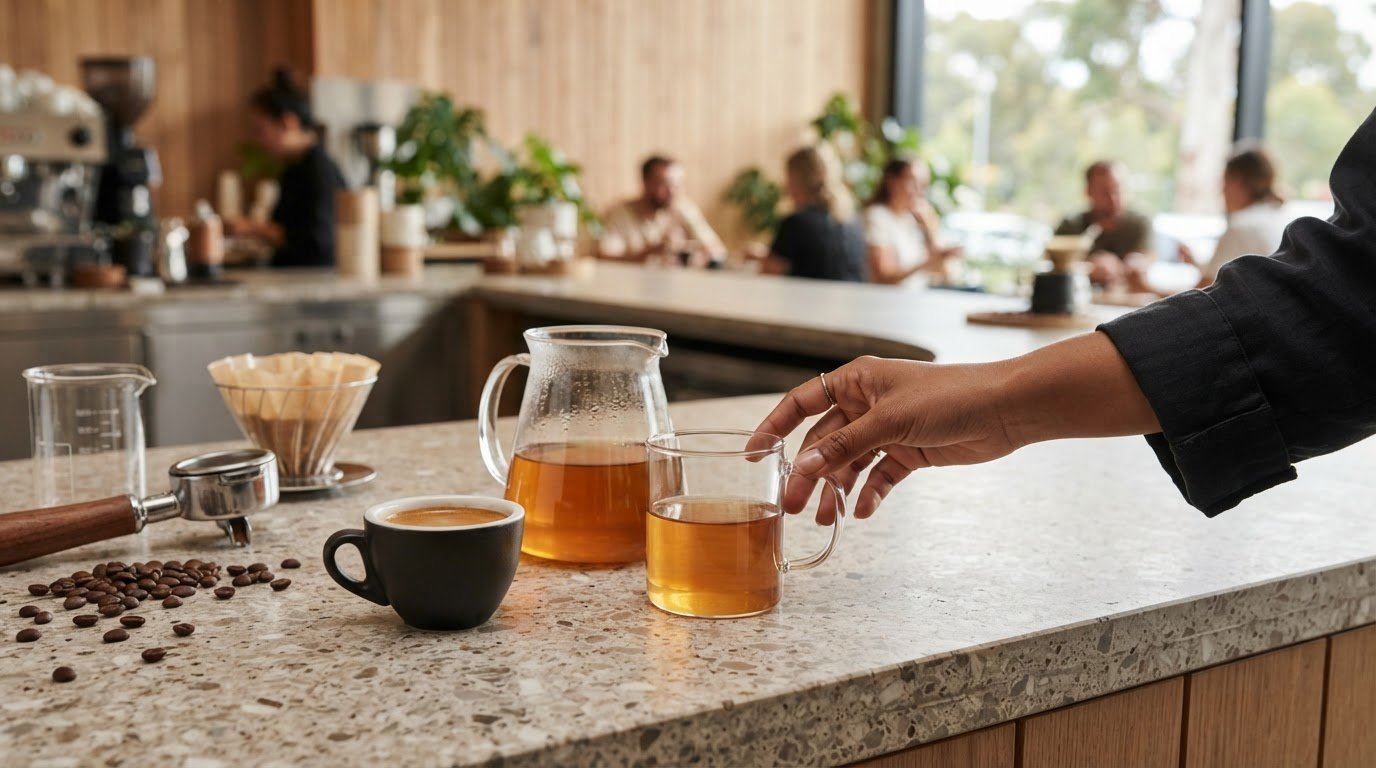
A small espresso can be more concentrated than brewed coffee, yet contain less caffeine overall. A typical 30 mL espresso shot has about 63 mg, while a 237 mL cup of brewed coffee can range from 70 to 140 mg. Serving size changes the comparison.
If you’re asking how much caffeine in a coffee, the answer depends on more than its name or size. Café drinks can vary, and brewing choices aren’t always obvious from the menu. It’s reasonable to want a clear estimate before deciding what suits your day.
This guide explains how caffeine varies across coffee styles and serving sizes, and what bean type and brewing method can change. You’ll find sensible estimates, with the caveat that recipes and preparation differ. We’ll also clarify why espresso’s strength per millilitre doesn’t necessarily mean more caffeine in the cup, and what to know about decaf. The aim is to help you compare options and make informed choices, guided by current health advice and your own needs.
Key Takeaways
- To judge how much caffeine in a coffee, compare the estimated amount with the actual serving volume, not just the drink name.
- Learn which brewing variables can shift caffeine levels, and why bean type is only part of the picture.
- Use a simple record of drink type, size and serves to make your daily intake easier to understand.
- Remember that coffee estimates describe a prepared serve, not a guaranteed caffeine level for every bean or brand.
- Make considered coffee choices around your taste and routine, while checking current health guidance for personal needs.
How much caffeine is in a coffee? Start with a useful estimate
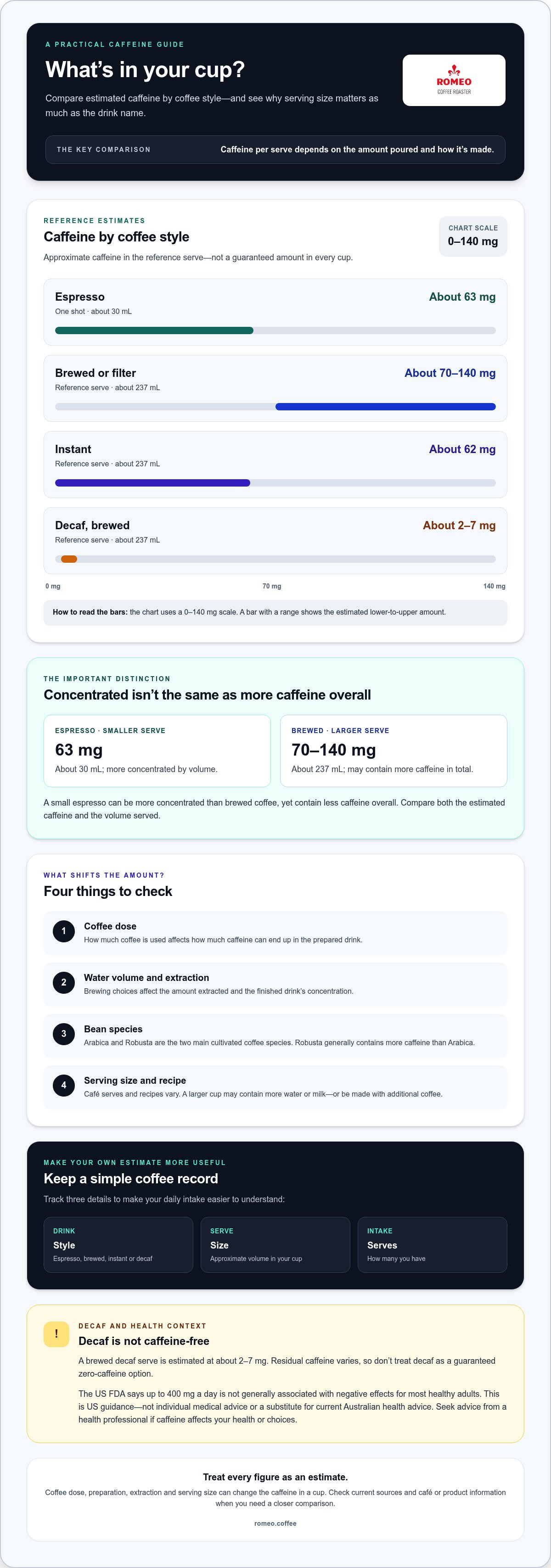
There isn’t one fixed answer to how much caffeine is in a coffee. As a general reference, an 8-ounce (about 237 mL) cup of brewed coffee is commonly estimated at 70 to 140 mg of caffeine, while a 1-ounce (about 30 mL) espresso shot is estimated at about 63 mg. These are broad estimates, not guaranteed amounts for every café drink or home brew.
One universal caffeine figure for coffee is misleading because the amount in your cup depends on the coffee used, how it’s prepared and how much of the finished drink you serve.
Why there is no single caffeine amount for a coffee
Caffeine content means the amount in the prepared drink. It isn’t a fixed value attached to a bean or drink name. The coffee dose, water volume and extraction all affect how much caffeine ends up in the cup. Coffee species matter, too: C. arabica and C. robusta are the two main cultivated species, and Robusta generally contains more caffeine than Arabica. The figures above are broad reference estimates. Check current, reputable sources when you need a precise comparison.
Concentration and total caffeine per serve are different measures. Espresso is more concentrated, meaning it has more caffeine relative to its volume. But a larger serve of brewed coffee may contain more caffeine in total than a small espresso. To compare drinks fairly, look at both the volume served and the estimated caffeine in the whole serve.
What counts as a serving of coffee?
A reference serving is a measurement used to make comparisons, not a universal cup size. The estimates above use 237 mL for brewed coffee and about 30 mL for espresso. Your mug may hold more or less, while Australian café serves can vary by venue, drink and preparation. Check the listed size where it’s available, or measure your usual cup at home.
A larger drink doesn’t automatically contain proportionally more caffeine. It may include more water or milk, or it may be made with additional coffee. The name on the menu and the cup’s capacity alone can’t tell you the full amount. For a useful personal estimate, note the drink style and approximate volume, then compare it with a source that gives caffeine per serve and states the serving size.
Caffeine in espresso, brewed, instant and decaf coffee compared
These figures are useful reference points, not a promise of what every cup contains. The result varies with the coffee dose, preparation and serving size. Treat the figures as estimates, and check current published guidance or, where possible, product or café information for your actual drink.
| Coffee style | Estimated caffeine per serve | Reference serving | Source and check |
|---|---|---|---|
| Espresso | About 63 mg | 1 fl oz (about 30 mL), one shot | General caffeine reference estimate; verify against the café’s recipe and shot size. |
| Brewed or filter | About 70 to 140 mg | 8 fl oz (about 237 mL) | General published reference range; verify for the coffee and brewing method. |
| Instant | About 62 mg | 8 fl oz (about 237 mL) | Mayo Clinic caffeine chart; check the product directions and serving. |
| Decaf, brewed | About 2 to 7 mg | 8 fl oz (about 237 mL) | General published reference range; check the product or café information. |
All figures are approximate and should be checked against current sources. Café recipes, coffee dose and extraction can shift the amount.
Does espresso have more caffeine than brewed coffee?
Espresso is more concentrated by volume, but concentration isn’t the same as total caffeine in the whole drink. For the reference serves above, a 30 mL espresso shot is estimated at about 63 mg, while 237 mL of brewed coffee is estimated at 70 to 140 mg. A single espresso shot can be more concentrated yet contain less caffeine overall than a larger serve of brewed coffee. Neither estimate guarantees the amount in a particular cup.
How much caffeine is in instant and decaf coffee?
An 8-ounce instant coffee is commonly listed at about 62 mg in the Mayo Clinic’s caffeine chart. An 8-ounce decaf serve is estimated at about 2 to 7 mg in published reference ranges. Decaf isn’t caffeine-free, and its residual amount varies. If caffeine sensitivity or a health concern affects your choices, don’t treat decaf as a guaranteed zero-caffeine option. Seek advice from a health professional.
For broader context, the US FDA says up to 400 milligrams a day is not generally associated with negative effects for most healthy adults. This is US guidance, not individual medical advice or a substitute for current Australian health advice.
If you’re exploring different coffee styles, browse espresso and single origin coffee beans, then choose a preparation that suits your taste and routine.
What changes the caffeine in your cup? Beans, dose and brewing
The caffeine in a prepared coffee reflects several choices made before it reaches your cup. The coffee species and amount used, the water and the brewing method all play a part. The National Coffee Association notes that caffeine in your cup of coffee will vary, so a general estimate shouldn’t be treated as a measurement of every brew.
How coffee dose and water affect caffeine
The dose is the amount of ground coffee used. With the same beans and method, using more grounds can increase the amount of caffeine available to extract. The result still depends on how the coffee is brewed, so dose alone won’t give an exact caffeine figure.
Water has two roles. During brewing, it extracts soluble compounds, including caffeine. Its volume also affects the strength and size of the finished drink. Adding water after brewing makes a drink less concentrated, but doesn’t remove caffeine already extracted. Extraction time matters, too. Changing how long water contacts the grounds can change what moves into the brew.
For espresso, dose and preparation are central to the recipe. If you’re refining your approach, Romeo’s guide to espresso beans explores bean choice and espresso brewing. A recipe can help you make a consistent cup, but it can’t establish an exact caffeine amount without testing the prepared drink.
Do bean species and roast level make a difference?
Coffea arabica and Coffea canephora, commonly called Robusta, are different coffee species. Robusta generally contains more caffeine by weight than Arabica, but natural variation and the amount used mean species alone can’t predict the caffeine in a serve. A blend’s name or bean description isn’t a caffeine test.
Roast colour isn’t a reliable shortcut either. Lighter and darker roasts differ in more than appearance, and caffeine in the cup depends on the coffee dose and preparation as well as the bean. Don’t assume a dark roast will necessarily make a stronger or more caffeinated drink.
These factors explain why caffeine in coffee can vary, but none guarantees a specific amount. Romeo Coffee Roaster sells espresso and single origin beans, but product-specific caffeine measurements are not available. Don’t infer the amount in a prepared cup from the brand, origin or roast description alone.
How to understand your caffeine intake without over-reading averages
Caffeine estimates are most useful as a guide to your routine, not as a precise reading of what you’ve consumed. To build a clearer picture, keep a simple record for a few typical days. Include each caffeinated drink or product, its approximate volume, the number of serves and the caffeine estimate from a source that matches the serving.
A simple way to estimate caffeine across the day
For each entry, note the drink type, size and number of serves. Use a published estimate only when its serving size is reasonably close to yours. Café recipes may differ, and an unusually large serve can make a standard reference figure a poor fit. Add the estimates for a broad daily picture, but treat the result as an approximation, not a laboratory measurement.
Coffee isn’t the only possible source. Tea, energy drinks, cola, chocolate and some medicines or supplements can also contain caffeine. Check product labels or ask a pharmacist about medicines if the caffeine content isn’t clear. Your tally is more useful when it accounts for the whole day, rather than coffee alone.
When to seek personalised health advice
General population guidance is a starting point, not an individual caffeine limit or medical recommendation. If you’re pregnant, have a health concern, take medication or are unsure how caffeine may affect you, ask a GP, pharmacist or other qualified health professional for advice suited to your circumstances.
For Australian information, consult current guidance from trusted sources such as Healthdirect and Pregnancy, Birth and Baby, and check that any recommendation applies to your circumstances. Don’t use a broad estimate for how much caffeine in a coffee to diagnose symptoms or decide on a personal limit. A health professional can consider your situation and other relevant factors.
Once you understand your usual routine, you can make choices based on both taste and preparation, without assuming a particular bean guarantees a specific caffeine level. Explore Romeo’s espresso and single origin coffee beans as you consider which styles suit the way you like to brew.
Choosing coffee with confidence: what caffeine figures can and cannot tell you
Caffeine estimates are most useful when read as descriptions of a particular prepared serve. They aren’t universal properties of a brand, bean or roast. Two coffees with the same name can differ because their recipes and serving sizes differ. A figure can help you compare like with like, but it can’t confirm the exact amount in your cup unless that prepared drink has been measured.
Choose a brewing style for your preferences
Start with the experience you want from your coffee. Consider flavour, body, serving size and how you prefer to prepare it. Espresso offers a compact, concentrated drink. A plunger brew gives you a different style of extraction, while a larger serve may suit a slower morning routine. These are choices about taste and ritual, not guarantees of a particular caffeine result.
For plunger inspiration, Romeo’s guide to coffee beans for French press explores beans suited to that brewing style. A bean’s origin or flavour description can help you decide what to try, but it doesn’t provide a verified caffeine measurement. If you’re comparing estimates, check that they refer to similar drink styles and serving volumes.
Consistency can make your own comparisons more meaningful. Keeping your usual preparation much the same, including the amount of coffee and water, helps you notice differences in flavour and strength. Still, a change in taste or perceived strength doesn’t establish how much caffeine is present. Treat published caffeine figures as estimates, not a precise control for your daily intake.
Explore carefully roasted coffee beans
Romeo Coffee Roaster is an independent artisan roastery founded in 1999. Its confirmed coffee offerings include espresso and single origin beans for retail customers and wholesale partners. Its coffee expertise can support exploration of different styles and preparation, but product-specific caffeine measurements are not available. Don’t infer the caffeine content of a Romeo coffee from its category, origin or roast.
Choose beans for the flavours and brewing routine you enjoy, and use reliable, serve-specific caffeine information when you need an estimate. If you’re ready to explore, explore Romeo’s coffee beans.
Make your next coffee choice with confidence
So, how much caffeine in a coffee? There’s no single figure that fits every cup. A useful estimate depends on the prepared drink, its serving size and how it was brewed. Espresso is more concentrated, but a larger brewed serve can contain more caffeine overall.
Use published figures as guides, not exact readings. Note the type and size of your usual drinks, and remember that other sources of caffeine can contribute to your daily intake. Choose beans and brewing styles for the flavour and routine you enjoy, rather than assuming they guarantee a particular caffeine amount.
Romeo Coffee Roaster is an independent artisan roastery founded in 1999, with espresso and single origin coffee beans for people exploring different coffee styles. Explore Romeo’s espresso and single origin coffee beans and find a coffee that suits your preferences.
A little attention to serving size and preparation makes estimates easier to interpret. Enjoy your next cup with greater confidence.
Frequently Asked Questions
How much caffeine is in one cup of coffee?
There’s no single caffeine amount for a cup of coffee. Volume, coffee dose and brewing method all affect the result. The Mayo Clinic lists about 96 mg for 8 fl oz (237 mL) of brewed coffee, a reference serve rather than a standard Australian café mug. A café serve may be larger or prepared differently, so how much caffeine in a coffee you drink may differ from this estimate. Check current figures against the source and serving size.
Does espresso have more caffeine than a regular coffee?
Espresso is more concentrated, but that doesn’t mean every espresso drink contains more caffeine overall. The Mayo Clinic lists about 63 mg in a 1 fl oz (30 mL) espresso and about 96 mg in 8 fl oz (237 mL) of brewed coffee. These are estimates to verify, not guarantees for every recipe. The espresso has more caffeine per volume, while the larger brewed serve has more total caffeine in this comparison.
How much caffeine is in a double espresso?
A double espresso generally uses more coffee than a single, but its caffeine content can’t be reliably calculated by simply doubling a standard single-shot estimate. Dose, bean choice, grind and extraction all affect the prepared drink, and café recipes aren’t identical. Use a published figure only if it clearly states the double-shot volume and coffee dose, and check it against the café’s information. The drink name alone can’t confirm an exact amount.
Does decaf coffee contain caffeine?
Yes. Decaffeinated coffee can retain a small amount of caffeine, so it shouldn’t be described as caffeine-free. The Mayo Clinic lists about 2 mg in an 8 fl oz (237 mL) brewed decaf serve. Verify the current estimate and compare it with the product or café serving. Residual caffeine can vary. If you have a medical concern or particular sensitivity, ask a qualified health professional rather than relying on a general estimate.
Does dark roast coffee have more caffeine than light roast?
Roast colour alone isn’t a reliable way to tell how much caffeine is in a prepared cup. Dose, bean species, grind, serving size and brewing method also influence the result. Avoid assuming that dark roast has more or less caffeine than light roast unless a directly relevant, controlled comparison supports the claim. Check how a published figure was measured, including the coffee dose, preparation method and volume of the finished drink.
How can I work out how much caffeine I drink in a day?
List each coffee and other caffeinated drink or product you consume, note the approximate serving size, then add estimates from reliable sources that match those serves. Café drinks and recipes vary, so the total is a guide, not a precise measurement. For personal concerns, check current Australian health guidance and speak with a qualified health professional. Remember to include possible sources such as tea, energy drinks, chocolate and some medicines or supplements.
How much caffeine is safe to have during pregnancy?
For advice during pregnancy, check current Australian health guidance and speak with your pregnancy care professional. Recommendations can change, so verify any numerical limit with an authoritative, up-to-date Australian source before relying on it. Count caffeine from all sources, not coffee alone. Tea, chocolate, energy drinks and some medicines or supplements may contribute. Your health professional can help interpret guidance for your circumstances. A general estimate isn’t individual medical advice.