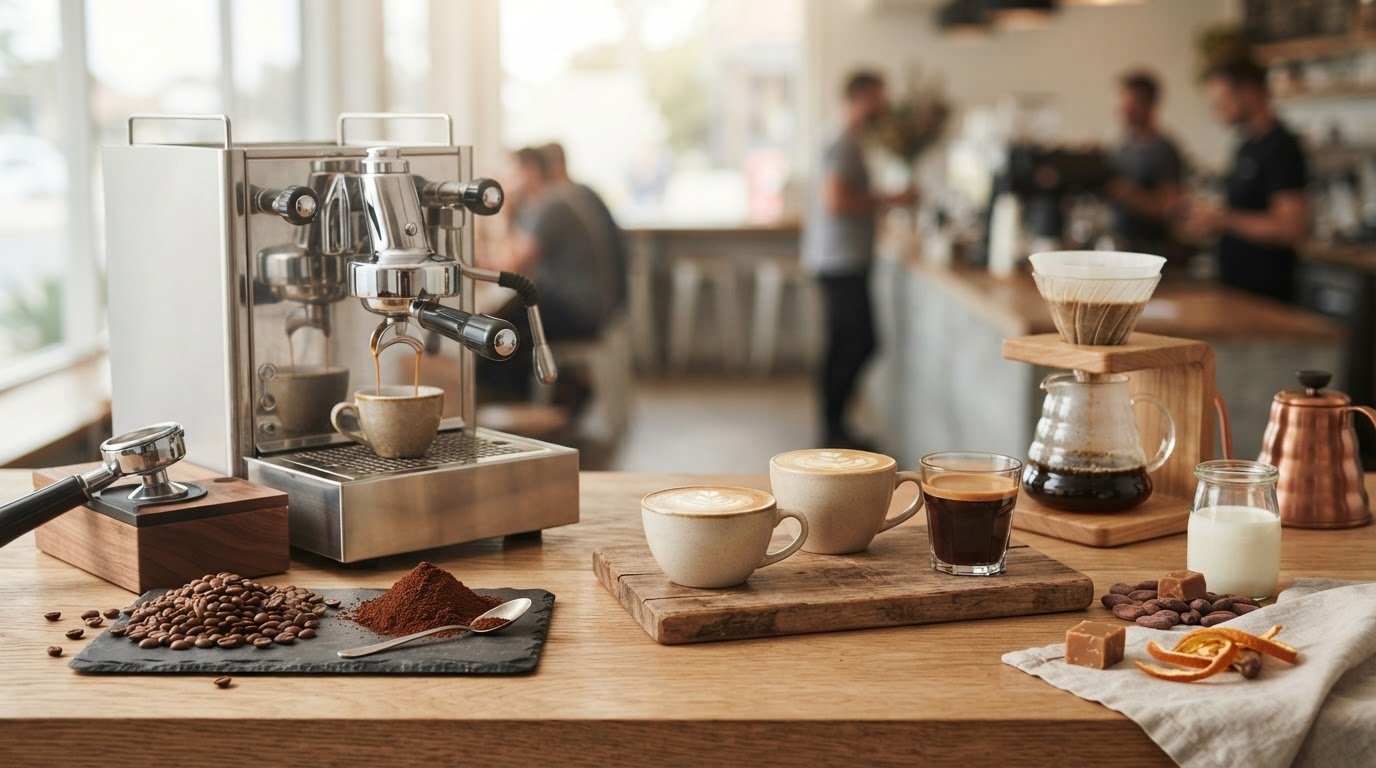
A darker roast isn’t the only way to make coffee that stands up to milk. Medium roast coffee blends can suit Australia’s espresso-led coffee culture, balancing sweetness, body and acidity in milk drinks and black coffee. Their character depends on the beans and roast profile, not just the roast label.
If you enjoy a flat white or latte, you’ll know the coffee needs enough presence to complement milk without overwhelming it. A well-chosen medium roast can offer that balance while bringing flavour and clarity to a long black or filter brew. The best fit depends on your taste and how you make coffee at home.
This guide explains what medium roast means, how blends bring together different flavour qualities, and why this style works across espresso and other brew methods. You’ll also learn how to choose beans by tasting notes, freshness and format, so you can find an option for your daily coffee ritual.
Key Takeaways
- Learn how roast level and blend composition shape the balance of sweetness, body and acidity in your cup.
- Match your beans and grind to the brewing method, from espresso to French press and pour-over.
- Use roast date and storage conditions to make a more informed choice about freshness.
- Explore how different flavour notes can complement milk or bring character to black coffee.
- Compare whole-bean and pre-ground formats to find the option that suits your routine.
Is Medium Roast Coffee Good For Australia’s Coffee Culture?
Yes. Medium roast coffee blends can suit Australia’s espresso-led café culture, where flat whites and lattes sit alongside long blacks. Their appeal lies in balancing sweetness, body and acidity, with the beans and their origins shaping the result.
Balancing Acidity, Body and Flavour
A medium roast sits between light and dark roasting: the beans spend longer in the roaster than light-roast beans, but less time than dark-roast beans. This middle ground can preserve origin character while developing sweetness and body. In a blend, coffees can be selected for complementary qualities such as sweetness, body and acidity.
Read the tasting notes alongside the suggested brew method. A blend described as balanced may bring enough body for espresso while keeping acidity present rather than sharp. In a long black, that balance can make sweetness and origin character easier to notice. The beans and roast profile shape the cup, not the label alone.
Roast Levels and Flavour Notes
Roast level is a useful starting point, but it doesn’t tell the whole flavour story. Medium-roast beans are usually brown and often have a dry surface, unlike darker-roasted beans, which may look oily. Notes such as chocolate, citrus or fruit describe qualities in the coffee, not added flavours.
Compare the tasting notes with flavours you already enjoy. Chocolate and nuts may appeal if you prefer a rounded, familiar cup. Citrus or fruit notes may suit you if you’re after brighter character. Use the notes as a guide, then consider how you’ll brew the coffee.
Origin adds another layer. Brazilian coffees often bring chocolatey, nutty flavours and low acidity. Colombian coffees may show caramel, red-fruit notes and balanced acidity. Ethiopian coffees can offer floral, citrusy or fruity character. These are common profiles, not a guarantee that every coffee from an origin tastes the same.
Central American coffees often show clean sweetness, cocoa, apple or honey notes. A blend can combine beans from different origins to create a more consistent flavour. One coffee, for example, may contribute sweetness while another adds body or acidity. The roaster’s choices shape the balance, so compare blend notes rather than choosing by country alone.
These qualities work across Australia’s familiar coffee choices. In a flat white, sweetness and body can complement milk; in a long black, origin notes remain more exposed. Coffee aroma contains more than 700 substances, contributing to the complexity behind each cup. Start with the brew you drink most, then choose a profile that suits it.
Choosing beans by freshness and brew method
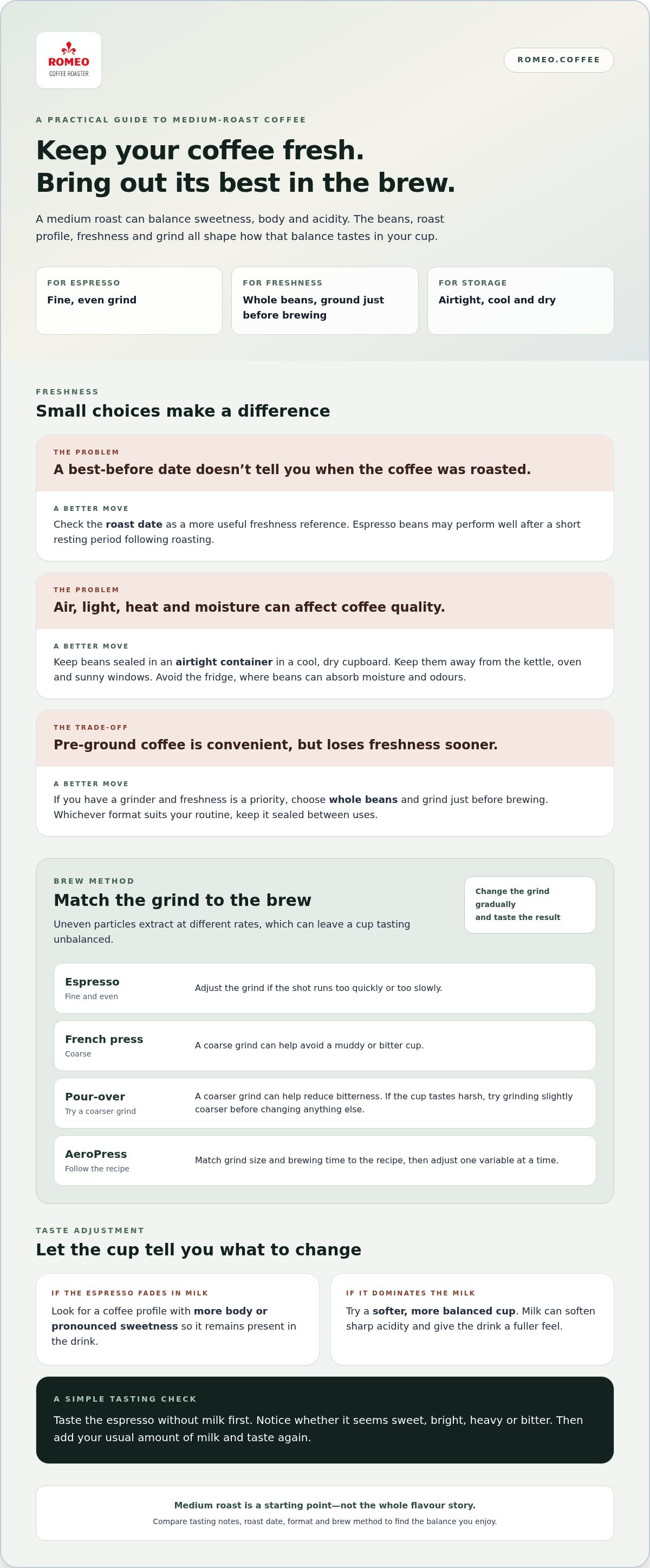
Store coffee beans in an airtight container in a cool, dry cupboard, away from air, light, heat and moisture. Avoid the fridge, where beans can absorb moisture and odours. Freshness depends on storage and whether the coffee is whole or ground. Whole beans retain freshness longer.
Start with the roast date. It’s a more useful freshness reference than a best-before date because it tells you when the coffee was roasted. Espresso beans may perform well after a short resting period, allowing the coffee to settle after roasting. For filter brewing, freshness and grind size also affect how clearly the cup expresses its flavour.
Let your brewing method guide the format and grind. Whole beans are a sound choice if you have a grinder, since grinding just before brewing helps preserve flavour. Pre-ground coffee is convenient but loses freshness sooner. Choose a format that suits your routine, then keep it sealed between uses.
- Espresso: Use a fine, even grind. Adjust it if the shot runs too quickly or slowly.
- French press: Choose a coarse grind to help avoid a muddy or bitter cup.
- Pour-over: A coarser grind can help reduce bitterness. Change the grind gradually and taste the result.
- AeroPress: Match grind size and brewing time to the recipe, then adjust one variable at a time.
For medium roast coffee blends, keep the beans whole until brewing if freshness is a priority. A consistent grind matters too: uneven particles extract at different rates, which can make a cup taste unbalanced. If a pour-over tastes harsh, try grinding slightly coarser before changing anything else.
Keep storage simple. Close the bag or container firmly after each use and return it to a cool, dry cupboard. Keep beans away from the kettle, oven and sunny windows, where heat and light can affect their quality. Avoid transferring them repeatedly between containers, as each opening exposes them to air.
Choose a roast date that fits your planned brewing method, then store the beans carefully and grind them just before use. To explore options suited to espresso, compare the coffee bean selection with your brewing routine.
Coffee for milk-based drinks
Medium-roast coffee can work well in flat whites, lattes and cappuccinos. Its developed sweetness and body give espresso presence alongside milk, while the roast can retain flavour character that darker profiles may obscure. The right choice depends on how you want the coffee to come through in the finished drink.
Milk changes the taste of espresso. Its sweetness can soften sharp acidity, while its texture gives the drink a fuller feel. A coffee that tastes balanced as a short espresso may seem gentler in a latte, where a larger volume of milk shares the cup. Consider the drink you make most before choosing beans.
Start by tasting the espresso without milk. Notice whether it seems sweet, bright, heavy or bitter. Then add your usual amount of milk and taste again. If the coffee becomes faint, look for a profile with more body or pronounced sweetness. If it dominates the milk, try a softer, more balanced cup.
- Flat white: Choose espresso with enough body and sweetness to remain present beneath textured milk.
- Latte: A rounded profile can complement the larger volume of milk without losing all coffee character.
- Cappuccino: Taste the espresso with milk and foam, as their combined texture changes the cup’s balance.
- Long black: Compare the same espresso without milk to identify which flavours become less prominent in milk drinks.
Blend composition matters as much as roast level. Coffees selected for sweetness, body and acidity can create a more consistent flavour across espresso shots. That consistency helps when you prepare a flat white each morning and want a familiar balance from cup to cup. Read tasting notes as a guide, then assess the blend in your own recipe.
When assessing a new bag with a home espresso machine, keep your variables steady. Use the same coffee dose, milk and cup size, then change one brewing adjustment at a time. If the espresso tastes thin in a latte, adjust the grind or extraction before changing several settings together. This makes the result easier to assess.
Milk choice also affects the final impression. A flat white made with dairy milk may taste different from one made with oat milk, because sweetness and texture vary. Test the coffee with the milk you actually use. A profile that suits one combination may not have the same balance in another.
Choose medium roast coffee blends based on the drink you make most, not roast colour alone. A tasting note that appeals in espresso should still suit your flat white, latte or cappuccino. Make a cup, assess the coffee through the milk, then refine your recipe.
Tasting notes and aroma of recommended blends
Tasting notes give you a vocabulary for comparing coffee, while aroma adds another dimension. Use both to assess whether a blend suits your preferred cup.
Blend Tasting Notes
Treat tasting notes as a guide to the coffee’s natural character, not a promise of identical flavours in every brew. Start with one cup and identify your first impression, then notice how sweetness, acidity and body develop. For example, record whether the finish seems clean, rounded or lingering.
Compare coffees under consistent conditions. One tasting compared medium-roast beans from 10 brands, brewing one cup of drip coffee for each. It used five ounces of each coffee bean and brewed each cup at 205°F. Keeping the method steady helps make differences easier to assess.
A simple scorecard can bring structure to your own tasting. Rate each coffee from one to five across four criteria, then write a short note beside each score. For example, record “sweet finish” rather than relying on a general impression. Repeat with the same brew method before comparing results.
Blend Aroma
Aroma can suggest what to look for in the cup, but it is a separate sensory impression. Coffee aroma contains more than 700 substances. Smell the freshly ground coffee first, then assess the brewed cup. Notice whether the scent changes from dry grounds to the finished drink.
Use the same sequence for each sample: smell the grounds, brew the coffee, then pause briefly before tasting. A chocolate-like aroma, for example, may prompt you to look for sweetness, while a floral scent can draw attention to lighter, more delicate impressions. Record what you detect without treating a note as an added ingredient.
Compare aroma and taste side by side. If a blend smells bright but tastes rounded, note both qualities rather than forcing them into one description. Use the same cup and brewing method for each sample, and write your observations straight away. This makes it easier to distinguish a lasting preference from a first impression.
Keep flavour notes in perspective when choosing a blend: they describe natural qualities in the coffee, not added flavours. If you’re unsure where to begin, the page recommends coffees marked Best Seller as a first pick. Use the note as a prompt for your own tasting, then decide whether the coffee’s aroma and cup character suit your preferences.
For an espresso comparison, the Elements Blend espresso recipe recommends 18-20g of coffee in the portafilter and a 25-32-second extraction time. Keeping to that recipe gives you a consistent basis for noticing how the blend tastes, rather than changing several brewing variables at once. If you want to sample several options, the tasting boxes are shown with a 9% discount. Record the aroma and flavour impressions that stand out, and use those observations to decide which blend you would be happy to brew again. Notes can guide your choice, but your own preference remains the most useful measure.
Whole-bean and pre-ground availability
Choose whole beans if you have a grinder and want to grind just before brewing. Whole beans retain freshness longer than pre-ground coffee, and grinding immediately before preparation helps preserve flavour. Pre-ground coffee makes for a simpler routine, but its flavour is more exposed to air after grinding. Match the format to your equipment and how often you brew.
For espresso, grind size affects how water passes through the coffee. A grinder lets you adjust the texture to suit your machine and recipe. With pre-ground coffee, the grind is already set, so make sure it suits your brewing method. A fine espresso grind won’t suit a French press, which calls for a coarse grind.
Filter methods also benefit from a suitable grind. For pour-over, a coarser grind can help reduce bitterness. AeroPress recipes may use different grind sizes, so follow your recipe and adjust gradually. If your cup tastes harsh, change the grind before altering several brewing variables at once.
Storage matters for both formats. Keep coffee away from air, light, heat and moisture. An airtight container in a cool, dry cupboard works for beans or ground coffee. Avoid the fridge, where coffee can absorb moisture and odours. Close the container after each use and return it to the cupboard.
The roast date is more useful than a best-before date when comparing freshness. For espresso, medium-roast beans may perform well after a short resting period following roasting. Filter coffee can be brewed from day three after roasting. These timings vary by brewing style, so consider how you plan to use the coffee alongside its roast date.
- Choose whole beans if you own a grinder and want to grind close to brewing.
- Choose pre-ground coffee if convenience matters more than adjusting grind size yourself.
- Match the grind to the method, such as coarse for French press or a suitable filter grind for pour-over.
- Store either format in an airtight container, in a cool, dry cupboard.
For a practical decision, name your brewing method first, then choose the format and grind that fit it. If you’re setting up for espresso, explore espresso coffee beans and consider how whole beans fit your grinder and daily routine.
Romeo Coffee Roaster: Espresso Coffee Beans
Romeo Coffee Roaster offers espresso coffee beans for home espresso and milk-based drinks. Choose a coffee to suit your preferred balance, then consider how you’ll prepare it, from a flat white to a long black. For a different expression of origin and flavour, explore its single origin coffee. Cafés and other businesses can also consider Romeo Coffee Roaster’s wholesale coffee supply.
The practical next step is to match the coffee format to your equipment and routine. Whole beans suit those who grind fresh for each brew, while your usual recipe helps guide your choice of espresso coffee. Explore Romeo Coffee Roaster’s coffee range and select an option that fits your cup.
Visit romeo.coffee to explore the coffee range.
Make your next cup a considered choice
Let your daily coffee guide your next choice. If you mostly make espresso at home, judge a coffee by how it tastes in your usual cup, not only by its tasting notes. Keep your recipe consistent while comparing coffees. That gives you a clearer sense of which qualities you value and which profile you’ll want to brew again.
For a more deliberate tasting, note your first impression, the flavour as the cup cools, and how the finish feels. These observations can help you choose between medium roast coffee blends with greater confidence. Your preferences may shift with the season, the milk you use or a change in brewing routine. Keep exploring, but let your palate lead.
Romeo Coffee Roaster offers coffee options for home drinkers and businesses. Explore the range or contact Romeo Coffee Roaster to take the next step towards a coffee that suits your routine. A thoughtful choice is a good place to begin.
Frequently Asked Questions
What does medium roast mean for coffee beans?
Medium roast describes a profile between light and dark, with flavour shaped by roasting and bean origin. Treat the label as a guide, not a complete flavour description. For a useful comparison, choose coffees from the same origin with different roast profiles, then brew them using the same method. This helps reveal what the roast changes and what the beans contribute.
Which medium-roasted blends are worth considering in Australia?
There’s no single best blend for every Australian coffee drinker. The best medium roast coffee blends suit your preferred flavour and brewing method. Romeo Coffee Roaster’s Premium Blend is a medium roast with full body, thick texture and nutty, cocoa tones. It works with or without milk. Compare tasting notes and consider whether you mainly make espresso or filter coffee.
How do medium roast blends compare with light and dark roasts in flavour and caffeine?
Light roasts tend to preserve more distinct origin character, while dark roasts develop deeper, more roast-led flavours. Medium roasts sit between these profiles. Roast level alone doesn’t give a dependable caffeine comparison. The amount in your cup also depends on the coffee dose, bean choice and brewing method. For a fair taste comparison, brew each roast with the same equipment and recipe.
What are the best medium roast blends for filter, plunger and drip brewing?
For filter, plunger or drip, choose among medium roast coffee blends by matching their flavour notes to the cup you prefer. Use a coarse grind for plunger to help limit sediment and harshness. For drip or filter brewing, select a grind suited to your equipment and adjust it if the coffee tastes unbalanced. A side-by-side tasting can help you decide which profile works for you.
How do I choose and brew a medium roast blend for my coffee maker?
Start by identifying your coffee maker and the grind it needs. Choose a blend with notes you enjoy, then follow the machine’s brewing instructions and keep your coffee dose consistent. Taste the result before changing anything. If it seems weak or overly intense, adjust the grind or dose in small steps, changing one variable at a time. This makes it easier to find a repeatable cup.