Most coffee drinkers assume "good" is a matter of opinion. It isn't. Quality is a measurable standard. It's defined by sourcing integrity, roasting precision, and the chemistry of freshness. You've likely felt the frustration of paying a premium for a bag of beans, only to find the results in your cup are sour, thin, or unpleasantly burnt. It's a common struggle for home baristas who want consistency but find themselves lost in a sea of specialty terminology and vague marketing claims. Finding genuinely good coffee beans shouldn't be a game of chance.
Since 1999, we've focused on the mastery of the craft. This guide cuts through the noise. It shows you exactly how to identify quality using the same standards we've refined over twenty-five years of artisan roasting. You'll learn to decode roast profiles, understand the impact of single origin sourcing, and master the variables that lead to cafe-quality espresso at home. We're moving past the labels to look at the hard facts of flavour. Here is how you select, store, and brew with absolute confidence.
Key Takeaways
- Identify the objective markers of specialty grade coffee to distinguish premium quality from mass-market commodity beans.
- Discern when to choose a complex single origin or a balanced espresso blend based on your desired flavour profile.
- Master the relationship between roast levels and brewing methods to get the best performance from your home espresso machine.
- Discover how artisan roasting processes unlock the natural sugars and acids within good coffee beans for a refined taste.
- Apply professional selection criteria used by roasters with over twenty-five years of experience in the Australian coffee industry.
Defining the Standard: What Makes Coffee Beans 'Good'?
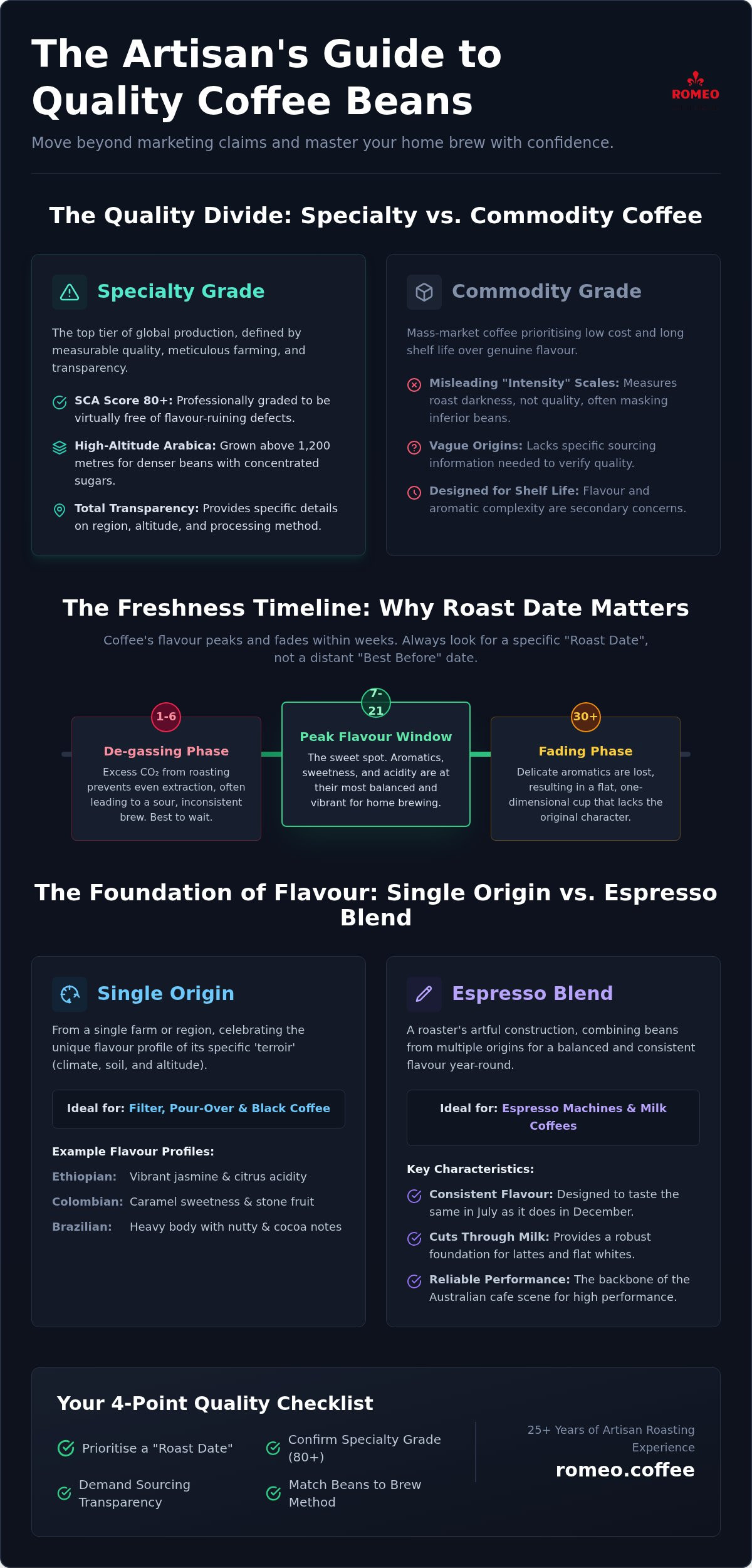
Quality in coffee is often misunderstood as a matter of personal preference. It isn't. In the industry, "good" refers to a specific set of measurable criteria. Commodity coffee dominates supermarket shelves, prioritising shelf life and low cost over character. Specialty coffee, however, represents the top tier of global production. This is the result of meticulous farming and precise roasting.
You've likely seen "intensity" scales on retail packaging. These numbers are often misleading. They typically measure the darkness of the roast, not the quality of the bean. A high intensity rating usually signifies a heavy, bitter profile designed to mask low-grade green coffee. Genuinely good coffee beans rely on transparency instead of vague scales. You should know the region, the altitude, and the processing method. This data provides a roadmap of what to expect in the cup. If a roaster can't tell you exactly where the beans were grown, they likely aren't specialty grade. Transparency is the hallmark of an artisan product.
The Specialty Grade Difference
Professional Q-graders use a rigorous 100-point system established by the Specialty Coffee Association (SCA). To be classified as specialty, coffee must score 80 points or higher. This process ensures the beans are virtually free of primary defects like mould, sour beans, or insect damage. These defects are the primary cause of inconsistent, unpleasant flavours in mass-market coffee. High-altitude Arabica beans are the standard for this grade. Growing at elevations above 1,200 metres slows the maturation process. This results in a denser bean with concentrated sugars and a more refined, complex acidity that survives the roasting process.
Freshness: The Non-Negotiable Attribute
Freshness is the foundation of flavour for good coffee beans. Never rely on a "best before" date, which is often set twelve months into the future. Always prioritise a specific "roast date" on the bag. Coffee is a seasonal, organic product that begins to lose its aromatic complexity the moment it leaves the roaster. The peak window for consumption is narrower than most consumers realise.
- Days 1 to 6: The beans are often too volatile for consistent espresso extraction due to high gas content.
- Days 7 to 21: This is the peak window where sweetness and clarity are most prominent for home brewing.
- Day 30 and beyond: Delicate aromatics begin to fade, leaving a flat, one-dimensional cup.
Degassing is the natural release of carbon dioxide trapped inside the bean during roasting; if brewed too early, this gas prevents even water contact and leads to a sour, under-extracted espresso.
The Foundation of Flavour: Single Origin vs Espresso Blends
The distinction between single origin and blends is fundamental. It's the difference between a curated exploration and a reliable standard. Both have a place in a sophisticated home setup. Selecting good coffee beans requires understanding how these two categories serve different purposes. Terroir is the primary catalyst. Soil composition, altitude, and regional climate shape the raw green bean before it ever reaches the roaster. These environmental factors dictate the potential for sweetness, acidity, and body.
Single Origin: Exploring Unique Terroir
Single origin coffee is sourced from a single farm, estate, or cooperative. It celebrates the specific characteristics of its origin without compromise. Ethiopian beans often present vibrant jasmine notes and citrus acidity. Colombian varieties offer a classic balance of caramel sweetness and stone fruit. Brazilian beans tend toward a heavier body with nutty, cocoa-driven profiles. These beans are inherently seasonal. They reflect the harvest cycles of the global coffee belt. Because of their delicate and distinct nature, they are often the preferred choice for light roast coffee and gravity-fed brewing methods. This approach allows the nuanced terroir to remain the focal point of the experience.
Espresso Blends: The Art of Consistency
Blends are a deliberate roaster's construction. We combine beans from multiple origins to achieve a specific flavour profile that remains stable year-round. This is the art of balance. A well-crafted blend ensures that your morning coffee tastes the same in July as it does in December. In Australia, premium espresso beans are designed specifically to cut through milk. They provide a robust foundation that isn't lost in a flat white or latte.
This consistency is why blends are the backbone of the national cafe scene. They provide a reliable, high-performance option for home espresso machines where consistency is often difficult to master. If you value a predictable, rich, and chocolatey result every morning, a signature blend is the logical choice. Our commitment to good coffee beans means even our blends utilise specialty grade components, ensuring that consistency never comes at the expense of quality. Exploring our current range of Single Origin coffee or signature blends allows you to tailor your home setup to your exact taste.
The Roaster’s Craft: Understanding Roast Profiles
Roasting is the bridge between raw potential and the final cup. It's a meticulous process of chemical transformation. Heat application isn't just about changing the colour of the bean. It's about managing the degradation of acids and the caramelisation of sugars. Our approach is rooted in twenty-five years of craftsmanship. We focus on highlighting the inherent characteristics of the green bean, not obscuring them. A roaster’s skill lies in finding the exact second when flavour peaks.
Lesser roasters often use high heat to hide defects in low-quality stock. This results in a one-dimensional, ashy flavour. Genuinely good coffee beans require a more nuanced hand. The goal is to reach the peak of development without crossing into carbonisation. Your chosen brewing method should dictate your roast choice. The heat profile must match the extraction time of your equipment to achieve a balanced result.
Light to Medium: Preserving the Bean’s Identity
Light roasts are designed for clarity. They retain the vibrant acidity, floral aromatics, and tea-like body often found in high-altitude African origins. For many Australian home brewers, medium roasts represent the sweet spot. They offer a sophisticated balance. You get the sweetness of caramelisation without losing the bean's geographic identity. These roasts provide enough body for espresso while remaining clean enough for a long black. The first crack is the audible signal that the bean's internal moisture has turned to steam and the cell structure has expanded, marking the beginning of the development stage.
Dark Roast: Boldness Without the Bitterness
There's a significant difference between a developed dark roast and a burnt one. A quality dark roast focuses on heavy body and deep, chocolatey notes. It provides the necessary punch to cut through milk in a flat white or latte. However, we avoid the oily, over-carbonised beans often found in supermarkets. Surface oils are a warning sign. They indicate the bean has been pushed too far or stored poorly. This leads to a rancid taste and can damage the internal components of your home espresso machine. Artisan dark roasts remain matte and dry, preserving the structural integrity of the good coffee beans while delivering a rich, bold experience.
Selecting Beans for Your Brewing Method
Brewing is an exercise in solubility. Your equipment determines how efficiently you can extract flavour compounds from the bean. It is the filter through which all quality must pass. Choosing good coffee beans requires matching the bean's physical properties to your machine's capability. High-pressure espresso systems behave differently than gravity-fed pour overs. A flat white needs a bean that can withstand milk dilution. A long black requires a bean with enough clarity to stand alone. You must align your selection with your preferred daily ritual.
Home Espresso Machines
Espresso is volatile. Nine bars of pressure force water through a compressed puck in under thirty seconds. This intensity demands a developed bean structure that can release its sugars quickly. Blends are the practical choice for home baristas. They offer a wider window of forgiveness during the extraction process. When dialling in, aim for a 2:1 ratio; yielding 40g of liquid from a 20g dose in approximately 25 to 30 seconds. This balance ensures you capture the peak sweetness before the bitterness of over-extraction takes over. For those seeking consistency, our Espresso Coffee Beans provide a stable foundation for high-pressure brewing.
Filter, French Press, and Pour Over
Slow-brew methods rely on gravity and time. These techniques are gentler. They are designed to highlight the subtle aromatics that espresso often overwhelms. Single origins are the natural partner here. You should select beans with high clarity and bright, fruit-forward acidity. These methods typically use a coarser grind. This requires a bean with a consistent density to ensure an even flow of water. If the bean structure is inconsistent, the resulting cup will taste muddy and lacks the refined finish expected of specialty coffee.
The grinder remains the most critical hardware in your kitchen. It is the tool that unlocks the potential of good coffee beans. Without a precise, uniform grind, even the most expensive specialty beans will fail to perform. Consistency is the hallmark of a professional brew. Ensure your grinder is capable of the specific micron range required for your chosen method. This synergy between the bean, the grind, and the equipment is what creates a cafe-quality experience at home.
The Romeo Coffee Standard: Sourcing and Freshness
Romeo Coffee Roaster is built on technical mastery. Since 1999, we've operated as a dedicated artisan roastery. Our focus remains on the product. We specialise in high-quality espresso and single origin beans for wholesale partners and home enthusiasts across Australia. This dual expertise is vital. Supplying the national wholesale market requires absolute consistency. It demands a rigorous approach to quality control. When you choose our good coffee beans, you access the same standards required by professional cafes.
A Legacy of Artisan Roasting
Twenty-five years in the industry provides a perspective that cannot be fast-tracked. It's about understanding the seasonal shifts in green coffee. We maintain a meticulous artisan roasting process for every batch. This ensures our flavour profiles remain stable regardless of environmental variables. Our Authoritative Artisan philosophy means we lead by example. We don't rely on loud marketing; we rely on the measurable quality of the roast. This heritage allows us to manage complex acidity and sweetness with a level of precision that only comes from decades of experience.
Freshness Delivered Nationally
Freshness is a logistical challenge we've mastered. To ensure peak flavour, we maintain a streamlined roasting schedule. This ensures your coffee arrives within the optimal window for degassing and brewing. You can buy coffee beans online with the certainty that the product was roasted specifically for quality, not for shelf life. We operate as a national provider, ensuring that premium specialty coffee is accessible to every kitchen in Australia. Our wholesale background means we understand how to maintain these standards at scale.
The Romeo Coffee Roaster promise is straightforward. High standards. Every bag. Every time. We source only top-tier good coffee beans from reputable estates and cooperatives. We roast with precision. We deliver with efficiency. By buying direct from the roastery, you eliminate the delays of traditional retail. You receive a product that is vibrant, complex, and ready for your machine. This is the culmination of twenty-five years of craft, delivered directly to your door.
Elevating Your Daily Ritual
Quality isn't subjective. It's a measurable standard. It's the result of sourcing integrity and technical precision. You now understand how SCA scores distinguish specialty grade from commodity stock. You know that matching a roast profile to your brewing method is the key to balance. Most importantly, you know that freshness is the foundation of flavour. Sourcing good coffee beans is the first step toward cafe-quality results at home. It's about moving past labels to focus on the craft behind the cup.
Since 1999, we've refined an artisan process rooted in consistency. Our specialty grade sourcing ensures every bag meets high industry standards. We provide national delivery to ensure peak freshness reaches your kitchen. Experience the difference of artisan roasting with Romeo Coffee. Take the guesswork out of your morning. You have the knowledge to brew with confidence.
Frequently Asked Questions
How can I tell if coffee beans are high quality just by looking at them?
Look for uniformity in size and colour across the entire bag. High-quality beans are free from visible defects such as chips, insect holes, or sour-looking patches. Avoid oily surfaces on medium roasts, as this often indicates age or poor storage conditions. Specialty grade beans should look clean and remarkably consistent. If the packaging lists a specific farm and harvest date, it's a strong visual indicator of professional sourcing and roasting integrity.
What is the difference between Arabica and Robusta beans?
Arabica beans are the global standard for specialty flavour. They grow at higher altitudes, resulting in a denser bean with complex acidity and refined sweetness. Robusta contains significantly more caffeine and grows at lower elevations. It's often used in mass-market products for its harsh, rubbery profile and high yield. For genuinely good coffee beans, Arabica is the only choice because of its superior chemical composition and the sophisticated taste it provides.
How long do coffee beans stay fresh after the roast date?
Coffee reaches its peak flavour between 7 and 21 days after the roast date. During the first few days, beans release carbon dioxide, which can interfere with the extraction process. After three weeks, the delicate aromatics begin to oxidise and fade. While still safe to consume for months, the complexity that defines specialty coffee disappears. We recommend purchasing smaller quantities more frequently to ensure you are always brewing within this optimal freshness window.
Is it better to buy whole bean coffee or pre-ground coffee?
Always buy whole bean coffee to preserve the integrity of the product. Grinding increases the surface area of the bean, exposing it to oxygen and accelerating the staling process. Pre-ground coffee loses its aromatic intensity within minutes of being opened. To get the best results from good coffee beans, you must grind them immediately before brewing. This simple step preserves the volatile oils and ensures the clarity of flavour intended by the roaster.
What does "Single Origin" actually mean for the flavour?
Single origin refers to coffee sourced from a specific farm, region, or cooperative. For flavour, this means a pure expression of terroir. You'll taste the unique influence of the soil, climate, and altitude of that exact location. Unlike blends, which aim for a consistent and balanced profile, single origins highlight distinct characteristics like citrus acidity or floral notes. It is a seasonal, unblended journey through the geography of global coffee production.
Why does my coffee taste bitter even with expensive beans?
Bitterness is usually a result of over-extraction during the brewing process. This happens if your water is too hot, your grind is too fine, or your brew time is too long. If you're using high-quality espresso beans, check your temperature and ratio first. Even the best beans will taste ashy if the water extracts too many tannins. Adjust one variable at a time until the natural sweetness of the bean becomes the dominant feature.
How should I store my coffee beans to keep them fresh?
Store your beans in a cool, dark, and dry place away from direct sunlight. Oxygen, light, heat, and moisture are the primary enemies of freshness. An airtight container with a one-way valve is the ideal solution. This allows gas to escape while preventing oxygen from entering. Avoid storing coffee in the fridge or freezer. Temperature fluctuations cause condensation, which damages the cell structure of the bean and compromises the delicate flavour profile.
Are organic or fair trade beans always better quality?
Not necessarily. These certifications focus on environmental and social standards rather than the final cup quality. While many specialty roasters prioritise ethical sourcing, the SCA score is the only true measure of bean quality. A bean can be certified organic but still possess primary defects that lead to a poor flavour profile. Always look for specialty grade markings and transparent sourcing data alongside ethical certifications to ensure a premium coffee experience.