What if the most expensive bag of beans on the shelf is actually the wrong choice for your kitchen? It's a common frustration for many Australian enthusiasts. You invest A$40 in a premium bag, only to find the result at home is inconsistent, sour, or flat. Much of this confusion stems from the fundamental debate of coffee blend vs single origin and how these profiles interact with your specific equipment. Wasting money on beans that don't suit your method is a mistake of the past.
We understand the pursuit of the perfect extraction. Since 1999, Romeo Coffee Roaster has focused on the mastery of the artisan process to eliminate this guesswork. This guide provides a technical framework for selecting your ideal cup. We will compare bean species, the solubility of different roast profiles, and the distinct characteristics of global origins. You'll learn to buy coffee online with the confidence of a seasoned professional. Our goal is to ensure every extraction meets the highest standards of clarity and balance. Consistency is not a matter of luck; it's a result of informed selection.
Key Takeaways
- Prioritise Arabica. It is the non-negotiable standard for specialty coffee and the foundation of a premium home brew.
- Match the roast to your method. Using the correct profile prevents the sourness often found in poorly paired espresso extractions.
- Master the choice of a coffee blend vs single origin. Opt for curated consistency or explore the unique, regional character of a specific farm.
- Verify the roast date on every bag. Peak flavour typically requires a degassing period of 7 to 14 days after roasting.
- Use professional flavour descriptors to guide your purchase. Selecting the right profile ensures cafe-quality results with your specific equipment.
Understanding the Foundation: Arabica vs. Robusta Beans
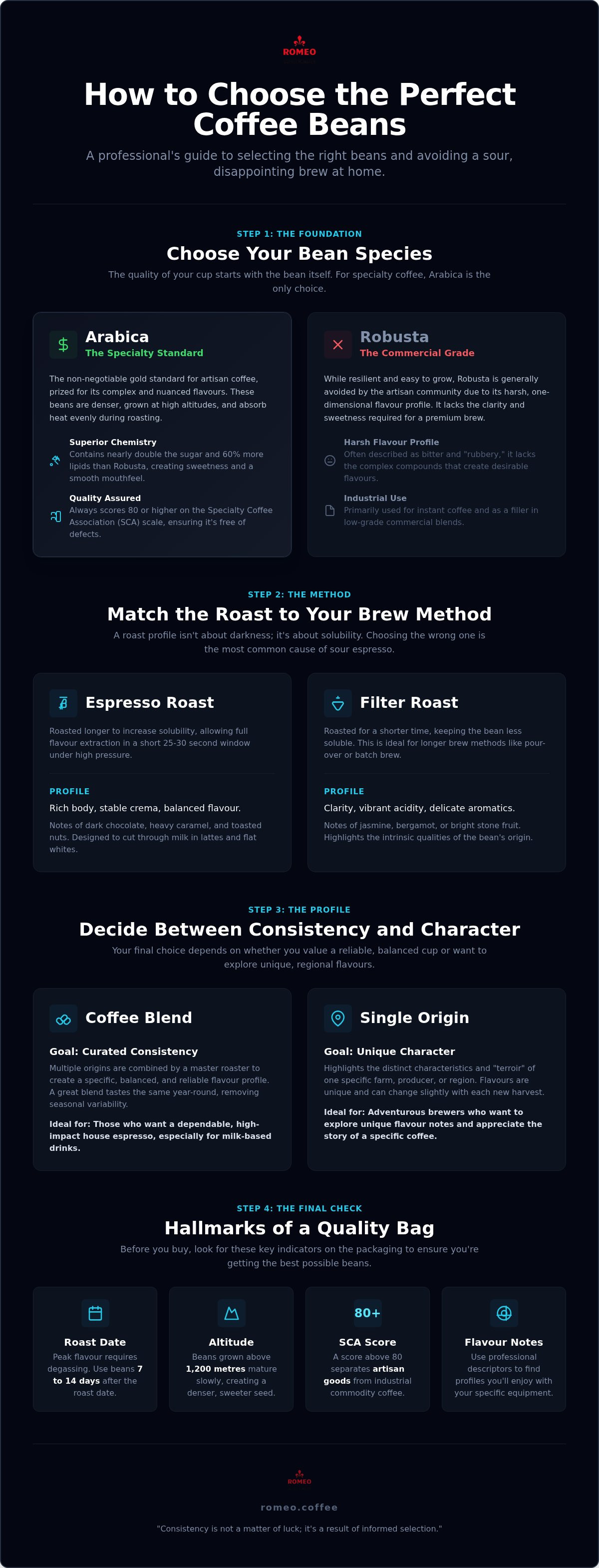
Quality begins at the farm. For the specialty roaster, Arabica is the non-negotiable gold standard. It contains nearly double the sugar and 60% more lipids than its counterpart, Robusta. These chemical compounds are essential for the nuanced flavours we prize. Robusta is generally avoided in the artisan community. It is resilient and easy to grow, but the trade-off is a bitter, rubbery profile. It lacks the clarity required for a premium brew. Since 1999, Romeo Coffee Roaster has maintained a strict commitment to 100% high-grade Arabica sourcing. This ensures every bag we roast delivers a sophisticated experience, regardless of whether you are choosing a coffee blend vs single origin profile.
The Anatomy of a Specialty Bean
A specialty coffee bean is defined by its physical integrity and density. Beans grown at altitudes above 1,200 metres develop slowly. This slow maturation creates a harder, denser seed. Density is critical during the roasting process. It allows the bean to absorb heat more evenly, facilitating complex chemical reactions that develop sweetness and acidity. Commercial grades often lack this uniformity. They are prone to defects that taint the final cup. We only select beans that achieve a Specialty Coffee Association (SCA) score of 80 or higher. This classification separates industrial commodity coffee from the artisan goods we provide.
Why Geographic Origin Matters
Terroir is not a concept reserved for wine. The soil composition and climate of a specific region leave an indelible mark on the bean. African origins, such as Ethiopia or Kenya, are celebrated for their vibrant acidity and floral aromatics. In contrast, South American beans from Brazil or Colombia typically offer a heavier body with notes of caramel and cocoa. These distinct markers are the primary consideration when choosing a coffee blend vs single origin purchase. A single origin highlights the unique characteristics of one farm. A blend uses these regional traits as building blocks to create a balanced, reliable flavour profile. Ethical sourcing is our baseline. We partner with top-tier producers who prioritise sustainable practices and fair labour. For those seeking to master their home setup, The Ultimate Guide to Espresso Beans provides further technical insight into bean selection. We provide the foundation; you provide the craft.
Espresso Roasts vs. Filter Roasts: Matching the Bean to the Method
The technical distinction between roast profiles is often misunderstood. It is not merely about darkness or strength. It is about solubility. Roasting for espresso requires a longer development time to break down the bean's cellular structure. This makes the coffee more soluble. It allows the high pressure of an espresso machine to extract flavour in a short 25 to 30 second window. Conversely, filter roasts are dropped from the roaster earlier. They remain less soluble. This is ideal for the longer contact times found in pour-over or batch brewing. Understanding these Espresso Roasts vs. Filter Roasts is the first step toward achieving professional results at home.
Using a filter roast in an espresso machine often results in overwhelming sourness. The water cannot penetrate the dense, lightly roasted cells quickly enough. You end up with an under-extracted shot that lacks sweetness. When deciding on a coffee blend vs single origin, consider your equipment first. A house blend is typically roasted for espresso. It provides the reliable structure needed for milk-based drinks. Single origins can be roasted for either method. Always check the label before you commit. Matching the roast to your method is the only way to avoid wasting premium beans.
The Espresso Profile: Richness and Crema
An espresso roast prioritises body and balance. You will find notes of dark chocolate, heavy caramel, and toasted nuts. These beans are designed to produce a stable crema and a viscous mouthfeel. They possess the intensity required to cut through milk in a flat white or latte without losing their character. If you value a rich, traditional cup, our espresso coffee beans provide the perfect starting point for your morning ritual. Consistency is the hallmark of this profile. It is crafted for those who want a reliable, high-impact flavour every day.
The Filter Profile: Clarity and Acidity
Filter profiles celebrate the delicate, intrinsic qualities of the bean. Think jasmine, bergamot, or bright stone fruit. These roasts suit methods like the V60, Chemex, or plunger. The goal is clarity. You want to taste the specific terroir of the farm. These beans are often more challenging to brew but offer greater rewards for the patient enthusiast. If you are curious about the technicalities of these lighter profiles, read our guide on What is a Light Roast Coffee? to see why purists prefer this approach. It is a snapshot of time and place.
Blends vs. Single Origins: Consistency vs. Character
Choosing between a coffee blend vs single origin is often the most significant decision for a home barista. It's a choice between the comfort of a repeatable profile and the thrill of discovery. A blend is a deliberate, curated experience. Roasters meticulously select components to build a flavour that is greater than the sum of its parts. Conversely, a single origin coffee is a snapshot of a specific farm or region. It celebrates the unique terroir of a single harvest. While a house blend offers year-round reliability, single origins provide a rotating seasonal variety that keeps the palate engaged. For those starting their journey, a blend provides a stable baseline. Seasoned drinkers often gravitate toward single origins to explore the subtle nuances of different global regions.
The Art of the Artisan Blend
Crafting coffee blends requires deep technical expertise. The roaster must maintain a consistent flavour profile even as individual crop components change throughout the year. If a Brazilian component becomes unavailable, a similar profile from Colombia might be used to preserve the signature taste. This reliability makes blends the preferred choice for milk-based coffees in Australia. They possess the structural integrity to cut through milk in a flat white or latte. They provide a familiar, chocolatey, or nutty foundation that consumers trust every morning. It's a mastery of consistency. It's why our wholesale partners rely on these profiles for high-volume service.
Exploring Single Origin Nuance
Single origins are best enjoyed as black coffee. Whether it's a long black or a meticulous pour-over, the absence of milk allows the bean's character to shine. Reading the label is essential here. You'll encounter terms like washed or natural processing. Washed beans usually offer a cleaner, more acidic profile. Natural processes often yield heavy fruit notes and a syrupy body. The excitement lies in seasonal micro-lots. These small-batch releases tell the story of a specific producer and a specific plot of land. They're fleeting. Once a micro-lot is gone, that exact flavour profile may never be replicated. It's the ultimate expression of the coffee blend vs single origin debate: choosing a unique moment in time over a timeless classic.
The Hallmarks of Quality: Sourcing and Freshness
Precision in sourcing. Excellence in timing. The roast date is the most critical information on any bag. Commercial producers hide behind "Best Before" labels. They want to obscure the months spent in warehouses or on shipping containers. Artisan roasters operate with total transparency. We provide the "Roast On" date because we respect the product's lifecycle. Ethical sourcing also directly impacts the final taste. When farmers are paid fairly, they invest in meticulous harvesting and processing. This translates to fewer defects and cleaner, more vibrant profiles in your home brew.
Freshness is a moving target. Whether you select a coffee blend vs single origin, the chemical stability of the bean dictates the final result. Single origins, with their delicate aromatics and floral notes, are particularly sensitive to oxidation. Blends, though often more robust, still require careful timing to maintain their structural balance. Consistency demands fresh raw material. Since 1999, we've prioritised this window of excellence to ensure our wholesale and retail partners receive only the finest harvests.
Degassing is an essential part of the process. Freshly roasted coffee is saturated with carbon dioxide. If brewed too early, this gas creates a barrier that prevents water from extracting the flavour compounds. Most specialty beans reach their peak between 7 and 14 days post-roast. This is the sweet spot for home brewing. It's the point where the gases have subsided and the aromatics are at their most expressive.
Freshness Standards for Australian Coffee
Buying local Australian roasted coffee is a matter of practical chemistry. International imports often spend weeks in transit and customs. By the time they reach your kitchen, the delicate oils have begun to oxidise. Always look for a "Roast On" date rather than a generic expiry. Specialty freshness is the specific window between degassing and oxidation.
Storing Your Beans in the Australian Climate
The Australian climate presents unique challenges for coffee storage. You must protect your investment from the four primary enemies of flavour: light, heat, moisture, and oxygen. The original valved bag is often the superior storage choice for home use. It allows residual gases to escape while preventing oxygen from entering. Keep your beans in a cool, dark pantry. Avoid the fridge. Temperature fluctuations cause condensation every time the door opens. This moisture destroys the bean's cell structure and mutes the flavour. Respect the craft by protecting the product.
Experience the difference of artisan freshness with our premium roasted coffee beans, delivered across Australia.
Selecting Your Perfect Profile: The Romeo Coffee Roaster Approach
Excellence is never accidental. It is the result of 25 years of technical refinement. At Romeo Coffee Roaster, we don't chase fleeting trends. We set standards. Our philosophy is rooted in quiet authority and a deep respect for the raw product. When you navigate the choice of a coffee blend vs single origin, you aren't just purchasing beans; you're accessing a legacy of artisan craftsmanship. We provide the same wholesale-grade quality to home baristas that we supply to premium cafes across Australia. This ensures your morning ritual is supported by professional-standard results.
Our flavour descriptors are precise tools. They aren't marketing fluff. If a label identifies specific stone fruit or nut profiles, that is exactly what you will experience in the cup. Use these markers to guide your online selection. If you prefer a heavy mouthfeel for a morning flat white, prioritise descriptors of richness and spice. If you enjoy a clean, tea-like finish in your filter brew, look for brightness and floral aromatics. Experimentation is the only path to finding your signature profile. Don't be afraid to stray from your usual choice to discover something exceptional.
Why Experience Matters in Roasting
Since 1999, we've remained a pillar of the Australian specialty coffee scene. Every batch is roasted with meticulous attention to detail. We don't rely on automated, set-and-forget systems. Our roasters utilise sensory feedback and decades of data to ensure the perfect development of every bean. We only source the highest grade specialty Arabica. This commitment to quality means our national customers receive a product that is consistently superior. Heritage and craft are baked into every roast we produce.
Ready to Elevate Your Brew?
Start with a versatile blend. It is the most reliable way to dial in your home equipment and establish a baseline for quality. Once you've achieved a consistent extraction, begin your single origin exploration. Transition based on your favourite flavour markers. The nuances of the coffee blend vs single origin debate become clearer with every shot you pull. Browse our current seasonal range of roasted beans to find your next perfect cup. We provide the expertise; you enjoy the result.
Master Your Home Brew
Achieving cafe-quality coffee at home is a matter of technical precision. It requires more than just high-end equipment. You must understand the alignment between your chosen bean and your extraction method. Prioritise 100% specialty grade Arabica. Respect the degassing period. These small details separate a mediocre cup from a masterpiece. Whether you prefer the reliable structure of a house roast or the vibrant acidity of a micro-lot, the coffee blend vs single origin debate ultimately comes down to your personal palate and brewing ritual. Consistency and character are both valid pursuits.
Since 1999, we've focused on the mastery of the artisan roast. Our meticulous process ensures that every bag reflects a heritage of craftsmanship. We provide Australia-wide delivery of premium beans, ensuring you never have to settle for commercial-grade quality in your kitchen. Take the next step in your specialty journey. Browse our premium range of roasted coffee beans and find the profile that speaks to your standards. Excellence is a choice you make with every purchase. We're here to guide that choice. Enjoy the discovery.
Frequently Asked Questions
How long do coffee beans stay fresh after roasting?
Coffee beans reach their peak flavour between 7 and 21 days after the roast date. During this window, the beans have degassed sufficiently but have not yet begun significant oxidation. After 30 days, the delicate aromatics and volatile oils start to dissipate, resulting in a flat or stale cup. To maintain the highest standards, we recommend purchasing smaller quantities regularly to ensure you are always brewing within this window of excellence.
Can I use espresso beans for filter coffee?
You can use espresso beans for filter methods, but the profile will be distinct. Espresso roasts are developed longer to increase solubility, which typically produces a heavier body with notes of dark chocolate and caramel. While this works well in a plunger or stovetop, it lacks the vibrant acidity and floral clarity found in dedicated filter roasts. It is a matter of matching the bean's development to your preferred flavour outcome.
Should I buy whole beans or ground coffee?
Whole beans are the non-negotiable choice for any dedicated home barista. Once coffee is ground, the increased surface area leads to rapid oxidation and the loss of essential oils within minutes. Grinding fresh for every cup preserves the integrity of the flavour profile. If you value the artisan craft and want to achieve cafe-quality results, investing in a quality burr grinder is the most significant upgrade you can make to your setup.
What is the best way to store coffee beans in Australia?
The ideal storage solution is a cool, dark pantry away from heat sources and direct sunlight. The Australian climate requires extra care to prevent beans from sweating or drying out. Keep your beans in their original valved bag, which is designed to let carbon dioxide out without allowing oxygen in. Never store daily-use coffee in the fridge. The constant temperature fluctuations cause condensation, which introduces moisture and ruins the bean's delicate cell structure.
Why is specialty coffee more expensive than supermarket beans?
Specialty coffee is priced to reflect the meticulous care taken at every stage of the supply chain. Unlike commodity supermarket beans, specialty Arabica is hand-picked at peak ripeness and sorted to ensure zero primary defects. Roasters pay a premium to secure these high-grade harvests, supporting sustainable farming practices and ethical labour. You are paying for a superior sensory experience, total transparency, and a product that is roasted in small batches rather than industrial volumes.
What does "washed" or "natural" process mean on a coffee bag?
These terms refer to the processing method used to remove the coffee cherry from the seed. Washed coffees are cleaned with water before drying, yielding a crisp, acidic profile. Natural coffees are dried inside the fruit, resulting in heavy sweetness and berry-like notes. Understanding these processes is vital when deciding on a coffee blend vs single origin purchase, as the processing method often defines the core character of a single origin bean.
How much coffee should I use per cup for a plunger?
We recommend a starting ratio of 60 grams of coffee per litre of water for a plunger. For a standard 250ml cup, use 15 to 17 grams of coarsely ground coffee. A coarse grind is essential to prevent over-extraction during the four-minute steep time. Using a digital scale provides the precision needed for a consistent brew. If the flavour is too intense, reduce the coffee dose slightly rather than shortening the brewing time.
Are single origin coffee beans better than blends?
Neither is superior; they simply offer different experiences. A single origin is a snapshot of one farm's terroir and is often best enjoyed black to appreciate its unique nuances. A blend is a curated profile designed for balance, making it the ideal choice for milk-based coffees. When navigating the coffee blend vs single origin choice, consider your routine. Use a blend for your daily flat white and a single origin for your weekend pour-over.