
A "Single Origin" label is no longer a guarantee of excellence. In 2026, it's often little more than a geographic coordinate. You've likely stood before a shelf of beans, confused by conflicting ethical claims and frustrated by inconsistent flavour profiles. Understanding single origin coffee sourcing shouldn't feel like guesswork. Paying a premium should yield a superior experience. Often, it just buys better marketing. We understand the value of a meticulous process. True quality is rooted in heritage and consistency. Not just a trendy sticker.
You deserve clarity. This article explores the reality of modern sourcing to help you distinguish genuine speciality grade from industry noise. We'll strip away the myths surrounding direct trade and the latest 2026 Fairtrade minimum price adjustments. Drawing on over 25 years of sourcing experience, we'll show you how to choose beans based on verified standards and transparent journeys. Expect better tasting coffee through informed purchasing. Let's look beyond the label.
Key Takeaways
- Learn how to distinguish between broad regional labels and specific micro-lots to ensure precise traceability in every cup.
- Understand why single origin coffee sourcing via direct trade often provides superior financial returns for growers compared to traditional ethical logos.
- Recognise that processing methods, such as natural or washed, frequently dictate flavour more than the soil of the origin country.
- Identify seasonal freshness by looking for specific washing station names and clear harvest dates on speciality coffee labels.
- Apply 25 years of sourcing mastery to confidently select beans that prioritise consistency and craftsmanship over fleeting marketing trends.
What is Single Origin Coffee Sourcing, Really?
At its core, What is single-origin coffee? It is the practice of procuring beans from a single known geographic location. This goes beyond mere map coordinates. It represents a commitment to a specific environment. Unlike commodity coffee, which blends beans from various regions to maintain price stability and hide defects, single origin coffee sourcing celebrates uniqueness. Single origin sourcing is the pursuit of unadulterated terroir and transparent supply chains.
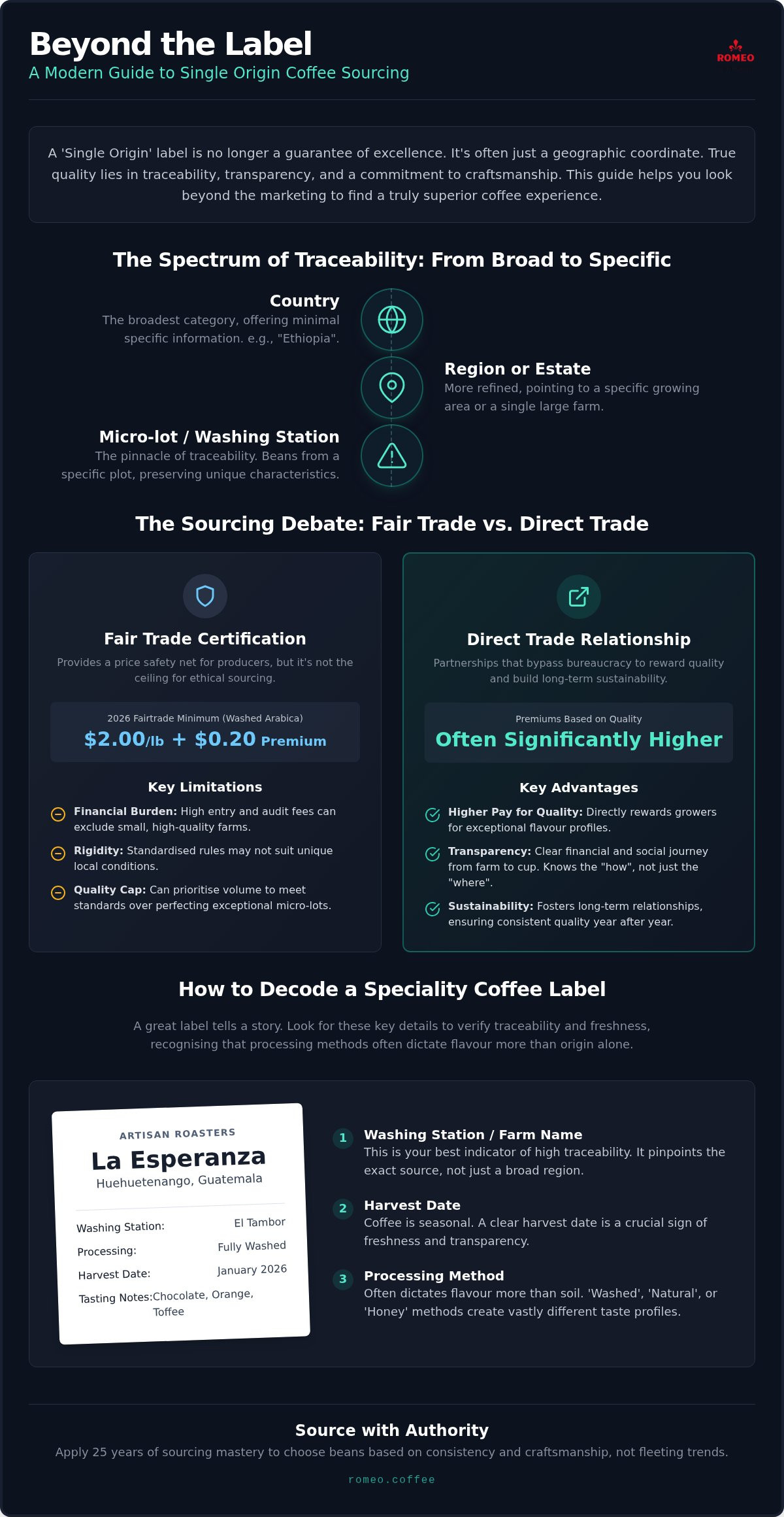
Traceability exists on a spectrum. A bag might be labelled by country, such as "Ethiopia," which is broad. More refined sourcing drills down to a specific region or estate. The pinnacle of this process is the micro-lot or washing station. Here, beans are harvested from a specific plot of land on a single farm. This level of detail ensures that the unique characteristics of the soil, altitude, and climate are preserved. It allows for a profile that is distinct and unrepeatable. It moves the focus from a generic commodity to a specific craft.
The Myth: Single Origin is Always Better Than a Blend
A single origin label is a marker of identity. It is not an automatic certificate of quality. Poorly managed farms or flawed processing can result in a single origin bean that tastes flat or fermented. High-end roasting requires more than just a famous name on a sack. It demands a meticulous eye for grading. In some cases, a blend is the superior choice for a specific result. For instance, espresso beans often benefit from blending to achieve a balanced, syrupy body that a single origin might lack. Consistency is the true hallmark of craft.
Traceability vs. Transparency: Knowing the Difference
These terms are often used interchangeably. They shouldn't be. Traceability is the ability to track a bean back to its source. It answers the question of "where." Transparency is deeper. It reveals the "how." It focuses on the financial and social reality of the transaction. It ensures that the premium you pay reaches the producer. Roasters with a long heritage understand that transparency is the key to long-term supply. An Authoritative Artisan doesn't just trust a label. They verify the claims through decades of established relationships. This ensures that the speciality quality remains consistent year after year, regardless of market volatility.
The 'Fair Trade' vs. 'Direct Trade' Sourcing Debate
Many believe a Fair Trade logo is the only path to ethical consumption. This is a common misconception. While certifications provide a safety net, they aren't the ceiling. In single origin coffee sourcing, the most ethical results often come from direct, uncertified relationships. These partnerships bypass the bureaucratic overhead of traditional certifications. They focus on the producer's actual needs rather than a standardised checklist. This is where true speciality quality begins.
The 2026 Fairtrade Minimum Price for washed Arabica is set at $2.00 per pound, with an additional $0.20 premium. For many speciality producers, these figures represent a baseline, not a target. Direct trade often pays significantly higher premiums based on cup quality and relationship longevity. This ensures a "Fair Go" for farmers. It creates a sustainable ecosystem where exceptional flavour is rewarded financially. Understanding the nuances of Fair Trade vs. Direct Trade Coffee is essential for any discerning buyer. Sustainable pricing isn't just about charity. It is about ensuring the future of speciality beans. Without it, farmers may switch to more profitable, lower-quality crops.
The Limitations of Traditional Certifications
Certification isn't free. Small-scale farmers often face prohibitive entry costs and ongoing audit fees. This can exclude the very micro-lots that offer the most distinctive profiles. Certifications can inadvertently prioritise volume over excellence. A farmer might focus on meeting a specific standard for a large yield rather than perfecting an exceptional micro-lot. Consider these factors:
- Financial Burden: Annual fees can consume a significant portion of a small farm's profit.
- Rigidity: Standards may not account for local environmental variations.
- Quality Cap: High volume requirements often dilute the focus on speciality grading.
Many of the world's finest beans carry no official logo. Their quality is verified by the palate, not a sticker. True transparency comes from knowing the person behind the crop, not just the organisation behind the stamp.
The Power of the Direct Relationship
Direct trade is a bespoke partnership. It is a two-way street. Roasters provide quality feedback loops that help farmers refine their processing methods. Farmers receive the capital needed to invest in better infrastructure, such as raised drying beds or improved irrigation. This results in fresher crops and more unique profiles for the Australian market. Romeo Coffee has spent over 25 years cultivating these industry connections. We prioritise the mastery of the product. Our single origin coffee sourcing strategy relies on heritage and integrity. It is about quiet authority. We let the coffee speak for itself. If you value this level of craftsmanship, you might explore our range of Single Origin coffee to taste the difference that relationship-driven sourcing makes. Every bean tells a story of a partnership built on mutual respect and a shared commitment to excellence.
Why Geographic Origin Isn't a Proxy for Flavour
Geographic origin is a label, not a flavour profile. Many enthusiasts assume that all beans from a specific country share a singular taste. This is an oversimplification that ignores the complexity of modern single origin coffee sourcing. You cannot judge a coffee solely by the country printed on the bag. A high-altitude Colombian bean could be bright and acidic, or rich and chocolatey, depending on factors that occur long after the seed is planted. Terroir is a foundation, but roasting is the final act of craft.
Processing methods often change the character of a cup more than the soil itself. A "Washed" process involves removing the fruit before drying, which clarifies the bean's inherent acidity and regional identity. In contrast, "Natural" processing leaves the cherry intact. This allows the sugars to ferment and penetrate the seed, resulting in heavy body and wine-like fruitiness. Relying on origin alone ignores these critical distinctions. True mastery in sourcing involves selecting the right process to complement the specific environment of the farm.
The Impact of Processing on Sourcing Decisions
Washed coffees are the purist's choice. They offer a clean window into the coffee's genetic potential. Natural processing requires more meticulous sourcing to avoid defects. The risk of over-fermentation is high. We look for producers who manage this risk through precise climate control and constant monitoring. To understand how we protect these delicate profiles during production, you can read our guide on what is a light roast coffee and how it preserves sourced flavours. A light touch in the roaster ensures that the hard work at the farm is never obscured by smoke or carbon.
Variety and Altitude: The Unsung Heroes
Altitude acts as the silent architect of density. Coffee grown at higher elevations matures slowly. This slow growth allows more complex sugars to develop within the bean. Sourcing from these heights ensures a more flavourful and resilient product. Variety also plays a vital role. Traditional Heirloom varieties in Ethiopia offer unmatched floral complexity. Modern hybrids like Castillo in Colombia provide disease resistance without sacrificing the syrupy body required for a balanced espresso. We select specific lots based on how these varieties respond to different brewing methods. Some are destined for the clarity of a filter brew, while others are sourced specifically for their performance under pressure. This level of detail is what separates an Authoritative Artisan from a bulk importer. It ensures that every bag delivered to our wholesale partners meets a standard of excellence that has been refined since 1999.
How to Decode a Speciality Coffee Label
A speciality label is a technical data sheet. It offers a window into the roaster's single origin coffee sourcing standards. To find the best beans, look beyond the branding. Start with the specific farm or washing station name. The more granular the information, the higher the quality. If a bag only mentions a country, it's likely a bulk commodity blend. A reputable roaster will proudly name the estate, such as "Fazenda Santa Inês" or the "Gatuyaini" station. This level of detail confirms a transparent and direct supply chain.
Check for the harvest date. Coffee is an agricultural product. It's seasonal. Freshness matters. In 2026, top-tier roasters provide the specific harvest year to ensure you aren't buying past-crop beans. Next, identify the altitude, usually listed as metres above sea level (masl). High-altitude beans, typically those grown above 1,200 masl, mature slowly. This creates density. Density creates complexity. Finally, note the processing method. This allows you to predict the body and acidity before you even open the bag.
Reading Between the Lines of Flavour Notes
Flavour notes are a guide. They aren't an ingredient list. Roasters use these terms to signal the sourcing intent. If you see "lemon" or "green apple," expect a bright, acidic profile. Notes like "milk chocolate" or "hazelnut" suggest a more balanced, sweeter cup. Match these notes to your preferred brewing style. Acidic beans often shine as filter coffee. Sweeter, heavier beans are usually better for espresso. Understanding these cues helps you choose a bean that fits your morning routine.
The Importance of the Roast Date
Sourcing excellence is wasted on stale beans. Oxygen is the enemy of flavour. Even the most meticulously sourced micro-lot will taste flat if it's been on the shelf for months. The roast date is your guarantee of peak vitality. We believe in a streamlined timeline from the roaster to your door. This ensures the delicate aromatics are preserved. Our commitment as an Authoritative Artisan means we never compromise on freshness. We supply Single Origin coffee that is roasted to order, ensuring you experience the true potential of every bean. Don't settle for supermarket dates. Demand transparency and drink coffee at its absolute peak.
Sourcing with Authority: The Romeo Coffee Standard
Expertise isn't built overnight. It's forged over decades of cupping, roasting, and relationship building. Since 1999, we've managed the complexities of single origin coffee sourcing with a singular focus on quality. We avoid the loud marketing hype that often clouds the speciality industry. Instead, we practice "Quiet Authority." We let the clarity and character of our beans speak for our standards. Heritage provides the perspective needed to distinguish a fleeting trend from a truly exceptional harvest.
Consistency is our benchmark. Anyone can source a single great lot once. The challenge lies in delivering excellence across every season and every shipment. Whether it's a retail bag or a large-scale Wholesale Coffee Supply, we ensure the 100th bag is as precise as the first. This reliability is the result of meticulous roasting and a deep understanding of bean morphology. We don't just buy coffee. We master it.
A Legacy of Craft Since 1999
Twenty-five years in the Australian coffee scene has refined our palate. We've seen the industry evolve from basic blends to the highly specific micro-lots of 2026. This history allows us to spot exceptional lots that others might overlook. We've built long-term partnerships with producers who share our commitment to high standards. These relationships aren't just transactions. They are the backbone of our sourcing programme. In an era of automated labels and digital hype, established authority matters. It ensures that the beans you receive have been vetted by professionals who have mastered their trade through years of experience.
Your Partner in Speciality Coffee
Sourcing integrity is our priority. This applies whether you are brewing a single cup at home or managing a busy cafe. We bring our sourcing expertise to businesses Australia-wide. Our goal is to provide an accessible yet premium experience. We offer a curated range of Single Origin coffee that reflects the best of global harvests. We invite you to experience the difference that expert sourcing makes. It's the difference between a generic label and a cup that truly represents its origin. Trust in a standard that has been proven over a quarter-century of dedication to the craft.
Elevate Your Sourcing Standards
True quality in single origin coffee sourcing requires more than reading a label. It demands an understanding of the meticulous work occurring at the farm level. You've now gained the tools to look past marketing hype. Identify the impact of processing. Value the transparency of direct relationships. Choose beans based on seasonal freshness and verified speciality standards. Mastery over hype ensures a superior cup.
Romeo Coffee has been roasting with authority since 1999. Speciality grade beans. Sourced with integrity. Meticulous roasting. Our legacy is built on these standards. We prioritise the mastery of the craft over fleeting industry trends. Every batch reflects a quarter-century of experience. We provide Australia-wide shipping for all retail and wholesale orders. This ensures that peak freshness is accessible regardless of your location.
Explore our current range of ethically sourced Single Origin coffee and experience the difference that a disciplined sourcing philosophy makes. Your journey toward better coffee begins with an informed choice.
Frequently Asked Questions
Is single origin coffee better than a blend for espresso?
Single origin is not inherently better than a blend for espresso; it is simply different. Single origin beans offer a unique, unblended profile that highlights specific terroir. Blends are crafted for balance and syrupy body, which helps them perform consistently under pressure. If you value clarity and distinct fruit notes, choose single origin. If you prefer a reliable, chocolatey base for milk-based drinks, a well-sourced blend remains the industry standard for consistency.
How often does single origin coffee sourcing change?
Single origin coffee sourcing changes according to the global harvest calendar. Coffee is a seasonal agricultural product. Beans from Ethiopia typically arrive mid-year, while Central American crops land later. We rotate our selection to ensure we only provide beans at their peak vitality. Sourcing is a continuous cycle of evaluation. We monitor harvest dates to avoid past-crop beans, ensuring every bag reflects the freshest possible profile from its respective region.
What does 'Direct Trade' actually mean in Australia?
Direct Trade in the Australian market refers to a relationship-based procurement model. It means the roaster negotiates directly with the producer or a transparent export partner. This bypasses the commodity market. It ensures that the premiums paid for speciality quality reach the farmer. Unlike broad certifications, Direct Trade focuses on quality feedback loops and long-term sustainability. It is a bespoke partnership built on mutual respect and shared standards for excellence.
Can I buy single origin coffee for my office or cafe?
You can certainly secure single origin coffee for your office or cafe through a wholesale coffee supply arrangement. Providing speciality beans in a professional environment elevates the experience for both staff and clients. We supply businesses Australia-wide with beans that meet the same high standards as our retail range. Whether you need high-volume consistency or rotating micro-lots, our sourcing integrity ensures your business serves a product that reflects true craft.
Why is single origin coffee more expensive than supermarket beans?
Speciality single origin coffee is more expensive because it prioritises quality and ethics over volume. Supermarket beans are often commodity grade, sourced for the lowest possible price and roasted in bulk. Speciality beans must score 80 or above on the SCA scale. They command higher premiums, such as the 2026 Fairtrade washed Arabica minimum of $2.00 per pound. This investment covers meticulous sorting, artisanal roasting, and a transparent supply chain that supports the producer.
How do I know if my coffee is ethically sourced?
Ethical sourcing is verified through transparency and traceability. Look for roasters who can name the specific farm, washing station, and harvest date. Reliable roasters provide clear data on their relationships with producers. In 2026, many use digital traceability to prove where premiums are paid. We rely on over 25 years of industry connections to ensure our single origin coffee sourcing remains ethical. Integrity is proven by the longevity of the partnership, not just a logo.
Does the altitude of the coffee farm really affect the taste?
Altitude significantly affects the flavour profile of the bean. Coffee grown at higher elevations, typically above 1,200 metres, matures more slowly due to cooler temperatures. This extended growing period allows the cherry to develop complex sugars and organic acids. The resulting beans are denser and more flavourful. High-altitude sourcing is a primary indicator of speciality potential. It results in a cup with superior acidity, clarity, and a more refined finish than low-grown varieties.
What is the difference between single origin and single estate coffee?
Single origin is a broad term, while single estate is more specific. Single origin can refer to coffee from a specific region or even an entire country. Single estate coffee comes from one specific farm or plantation. Every bag of single estate coffee is single origin, but not every single origin bag is single estate. Choosing single estate beans offers the highest level of traceability. It allows you to experience the exact terroir of a single producer.